Facebook To Instagram, How Indian Women Are 'Renting-A-Boyfriend' Hourly
Rent-a-boyfriend once sounded like a quirky plot from a Japanese drama; however, it is now slowly becoming a real, searchable service around the globe, even in India
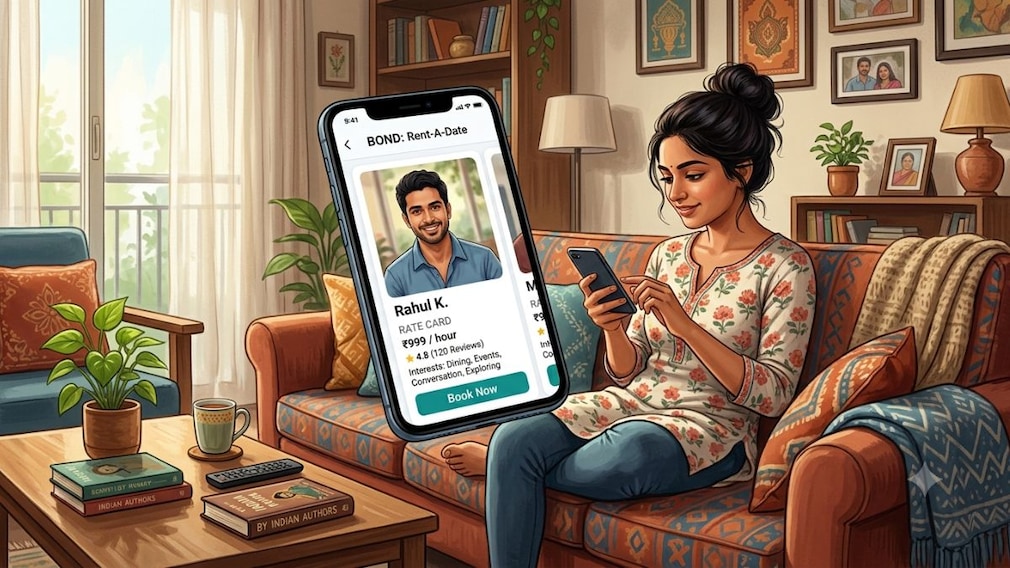
Imagine booking a "boyfriend" the same way you'd book a cab, a fitness trainer or a freelance designer.
You pick a profile, choose a time slot, decide whether you want someone to watch a movie with, accompany you shopping, join you for coffee, or be around so you don't have to eat alone. The meter starts running by the hour.
What once sounded like a quirky plot from a Japanese drama is now slowly becoming a real, searchable service worldwide, including in India.
From Facebook groups and Instagram pages to companionship apps and online profile marketplaces, the idea of renting a boyfriend by the hour is no longer confined to Tokyo. The business is still niche, but it is visible enough that platforms are advertising "movie partners", "shopping buddies", and even "medical support companions" with clearly listed hourly rates.
But how did it even start?
Japan's "Rental Person" Economy
The rent-a-boyfriend industry did not appear overnight. Its roots go back to Japan's broader rental person economy of the early 1990s, which included borrowed family members, stand-in relatives, listeners, and companions for social situations.
The original idea was surprisingly practical: borrow a social role for a few hours when real life felt awkward, unavailable, or emotionally complicated.
Need someone to attend a wedding with? Hire a companion. Want a listener after a difficult breakup? Book a session. Need a plus-one for a family gathering where everyone keeps asking why you're still single? Japan had a service for that too.
By the early 2010s, agencies began packaging these interactions under more recognisable labels such as "rental girlfriend" and "rental boyfriend".
So, What Exactly Is A Rental Boyfriend?
Contrary to what the name suggests, these services are generally not marketed as prostitution. Clients usually meet the companion in public places such as cafes, parks, museums, restaurants, or shopping districts. Agencies often have strict rules:
- No sexual activity
- No hotel rooms
- No isolated locations
- No overnight stays
- Respectful behaviour at all times
What the customer is paying for is attention, conversation, and the company.
Think of it as emotional outsourcing with a dating-themed interface.
Why Did It Become Popular In Japan?
To outsiders, paying someone to pretend to be your boyfriend can seem bizarre. Within Japan's social context, however, it makes more sense.
Japanese culture often emphasises politeness, emotional restraint, and not burdening others with personal problems. Many people find it easier to open up in a clearly defined, role-based interaction than in an informal friendship.
Add to that:
- Increasing solo lifestyles,
- Demanding work schedules,
- Urban loneliness,
- And the desire for low-pressure social interaction,
And the service begins to look less like a novelty and more like a structured response to modern isolation.
A typical booking in Tokyo can cost 3,000 Yen to 6,000 Yen per hour (roughly Rs 1,700 to Rs 3,500), with longer outings becoming significantly more expensive once food, travel, and activities are added.
In other words, companionship may be temporary, but the bill is very real.
Enter Influencers
For years, rental-boyfriend services remained a niche part of Japanese urban culture. Then came YouTube, Instagram, and TikTok.
Travel influencers began filming "I rented a boyfriend in Tokyo" videos, and the internet did what it does best: it turned a social phenomenon into a content genre.
One creator on YouTube documented meeting her rental boyfriend at a convenience store, paying him about $100 (around Rs 8,500) per hour, holding hands, taking photo booth pictures, eating lunch together, and eventually extending the booking because she was "having too much fun".
All these videos follow a familiar arc:
- Discover the service online,
- Get nervous before the meeting,
- Enjoy surprisingly natural conversation,
- Wonder whether the feelings feel a little too real,
- And then return to "single life" when the timer runs out.
The 'boyfriend' in one of these viral videos revealed that they meet around 10 (and more) clients a month, many of them university students, recently divorced women, or married women seeking companionship.
Influencers have effectively rebranded rent-a-boyfriend as a travel experience rather than a social service.
The result? Millions of viewers around the world have now seen the booking process, the public-date format, and the emotional awkwardness of paying for romance-adjacent attention.
And soon such services travelled to India.
Making It To Indian Timelines
India has not imported the Japanese agency model in its exact form. Instead, the trend has arrived through a patchwork of social media communities, online marketplaces, and companionship platforms.
NDTV's quick search reveals Facebook groups where men and various 'groups' openly advertise themselves as "rented boyfriends" for outings, events, or casual company. These groups function almost like local classified boards, with users posting photos, city names, availability, and expectations.
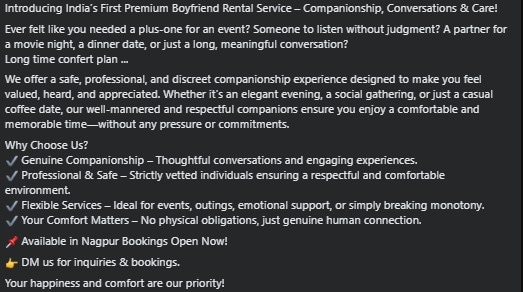
Indian Facebook groups offering 'boyfriend renting' services. Photo: Facebook
Then there are websites like KoPartner, which describes itself as offering "Professional Social Support Services". The site allows users to create profiles and wait to be hired for specific activities.
Its listed services include:
- Hanging Out: Rs 1,500 per hour
- Clubbing: Rs 2,000 per hour
- Movie Partner: Rs 2,000 per hour
- Shopping Buddy: Rs 2,000 per hour
- Medical Support: Rs 2,000 per hour
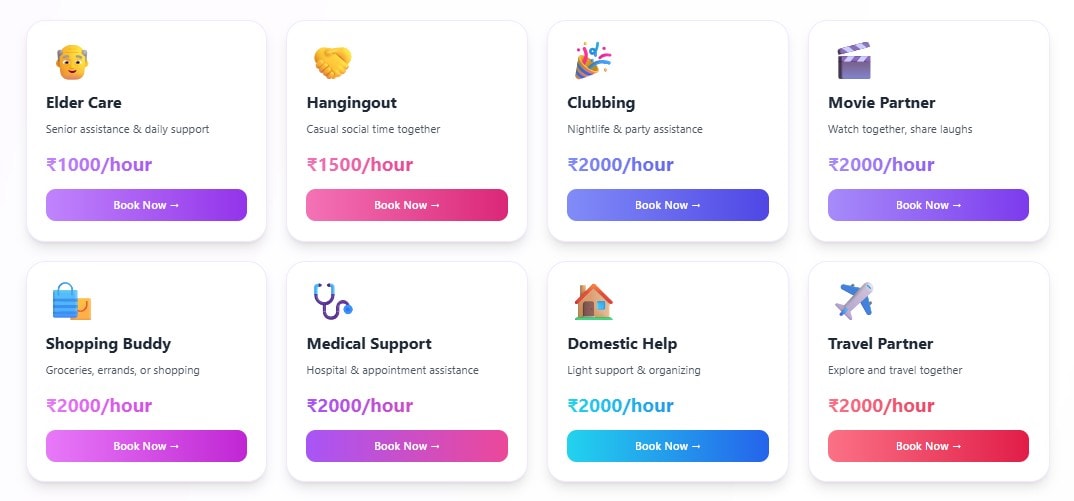
Websites like KoPartner often describe themselves as offering "Professional Social Support Services". Photo: KoPartner
The language is carefully chosen. Instead of "date" or "boyfriend", the platform frames the interaction as social assistance and companionship. But on social media, these apps and sites are heavily marketed as "renting a boyfriend/girlfriend services."
Marketplaces And Sites
Another similar platform, Knell, allows users to upload profiles (for renting boyfriends) much like a job portal. Knell is officially a job site. Several profiles feature Indian men offering themselves as companions for social events, conversations, and outings.
International website RentAFriend operates on a similar principle. Its tagline: Need a platonic friend to accompany you to an event, show you around town, dine out, hang out, or share a common interest? Hire one.
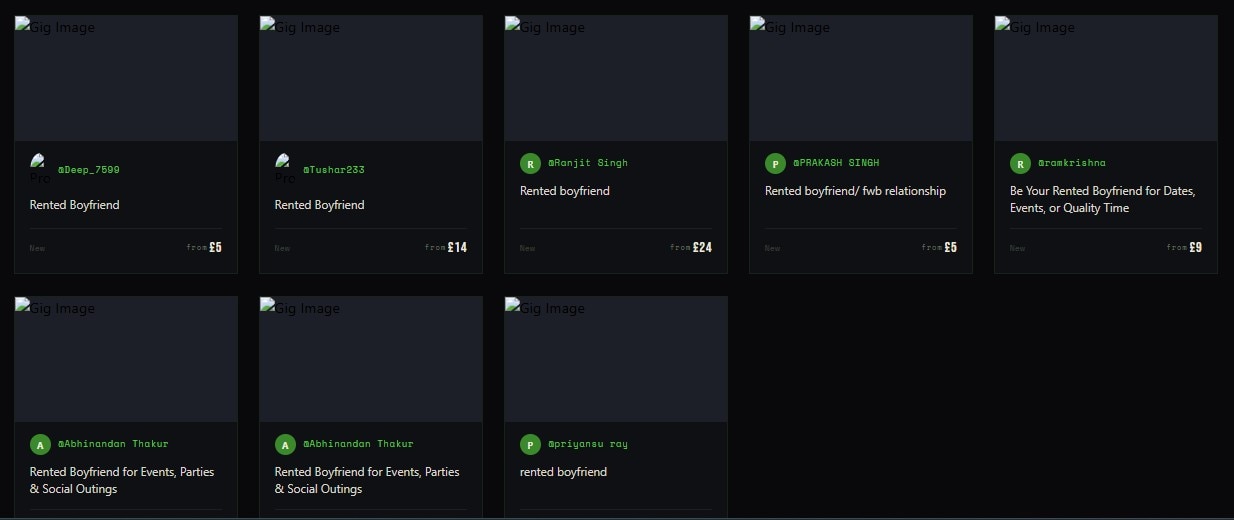
Knell allows users to upload profiles (for renting boyfriends) much like a job portal.
We found that many profiles are priced in dollars (around $11 to $15 per hour), however several listings appear to be from Indian users.
The line between friend-for-hire and boyfriend-for-hire is often blurred by how people present themselves.
Desi Instagram Enters The Chat
Soon, people started using social media platforms, especially Instagram to promote themselves as rent-a-boyfriend.
Brands also joined Instagram to promote their services.
Pages such as "Rent Your Own Boyfriend India" (@ryob_india) have built followings of more than 10,000 people by posting curated AI photos, playful captions, and promotional content.
The aesthetic is familiar: coffee dates, shopping trips, car selfies, and the promise of a charming companion who will listen to your rants and pose for your Instagram stories.
Some users also reportedly use Tinder profiles to advertise companionship services, adding phrases such as "available for events", "travel companion", or "paid company only" in their bios.
Who Is Actually Signing Up?
According to anecdotal information shared by people offering these services, many rental boyfriends are university students or young professionals looking for side income.
We checked the comment sections for these services to identify who is interested, and we found women across all age groups, particularly urban women in their 20s, signing up. Reasons vary: some may use the service to film content, or some just to experience the service, while others may genuinely seek companionship.
On the other side, boyfriends who are presenting themselves as rented boyfriends are majorly looking to make a side income. Even five movie-partner bookings at Rs 2,000 per hour can add up to a meaningful monthly earning. The job requires grooming, conversation skills, punctuality, and the ability to make a stranger feel comfortable.
In a gig economy where people already rent out their time as tutors, gamers, consultants, and fitness coaches, renting out companionship is being positioned as just another service category.
Is This Really About Loneliness?
A woman booking a shopping companion for two hours may not be looking for romance at all. She may simply want company in a city where friends are busy, family lives elsewhere, and eating alone still carries social stigma.
Similarly, a movie partner or hospital companion can be viewed as a practical service rather than an emotional one.
But the "boyfriend" label adds something extra: the performance of care.
The rented boyfriend is expected to be attentive, polite, responsive, and emotionally available for the duration of the booking. He is not just accompanying someone to a cafe; he is temporarily playing a role that real relationships often fail to perform consistently.
That is what makes the trend both fascinating and slightly unsettling.
The Business Behind It
For now, India's rent-a-boyfriend scene remains fragmented and largely unregulated. There is no single dominant platform, and many listings operate through social media or informal arrangements.
Yet the fact that companies are openly advertising hourly companionship rates suggests that the idea has moved beyond a joke.
In 2026, you can order food in ten minutes, a cab in five, and a shopping companion by the hour. The algorithm can recommend a movie, a restaurant, and now, potentially, a person to sit across from you while you talk about your day.
The rented boyfriend may leave when the timer ends, but the trend leaves behind a more complicated question: in a world where time is money, has companionship become a subscription service too?
-
Tea With Taliban, Art With Afghan Women: Indian Influencer's 13-Day Solo Trip Across Afghanistan

In an exclusive NDTV interview, travel influencer Ankita Kumar described her 13-day solo trip to Afghanistan, where she had tea with the Taliban, roamed the streets of Kabul and met Afghan women
-
'Rs 370 Biryani' And Dead People: When Does Comedy Stop Being Funny?
Over the years, Indian comedy has repeatedly found itself at the centre of debates about sexism, objectification and shock humour
-
Ram Charan Says He Felt "Mentally Low" During COVID, Recalls How SS Rajamouli's Advice Helped Him
Ahead of the release of his upcoming film Peddi, Ram Charan spoke candidly about the emotional toll the pandemic took on him
-
Ghaziabad Triple Suicide And How Korean Culture Is Reshaping Teen Lives In India
The Korean Wave in India is a complex cultural exchange shaped by technology, aspiration, and globalisation
-
Radhe-Radhe Guru Ji: How Gen Z Push Made Religion A Market Worth Rs 4.86 Lakh Crore In India
Astrology and religion are becoming cool again for Gen Z thanks to technology, AI, and social media
-
Can Anti-Ageing Drugs Cause Cardiac Arrest? Doctors Explain Shefali Jariwala Death
Reports suggest that Shefali may have taken a cosmetic anti-ageing injection on an empty stomach, which could have caused a cardiac arrest
-
Adolescence And The Double Lives Of Teenagers: What Parents Don't See Online
Adolescence is not just about growing up; it is about shaping the adults these teenagers will become