'Ek Kachori, Do Samosa': Why Indian Women Are Using Quirky Slogans To Protest Against Rape
From protest sites to Instagram Reels, catchy, rhyming slogans are giving women's protests in Delhi a new language
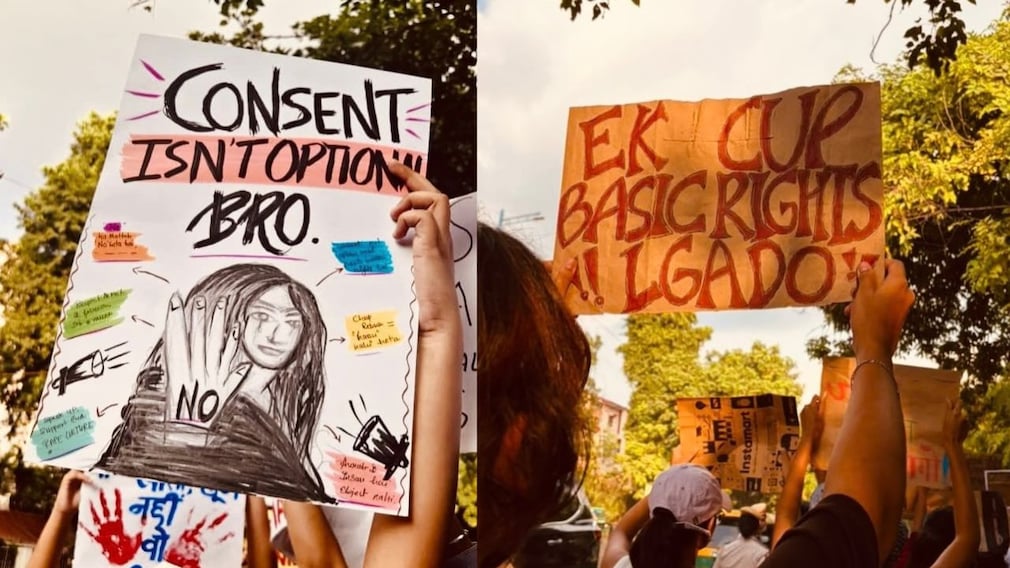
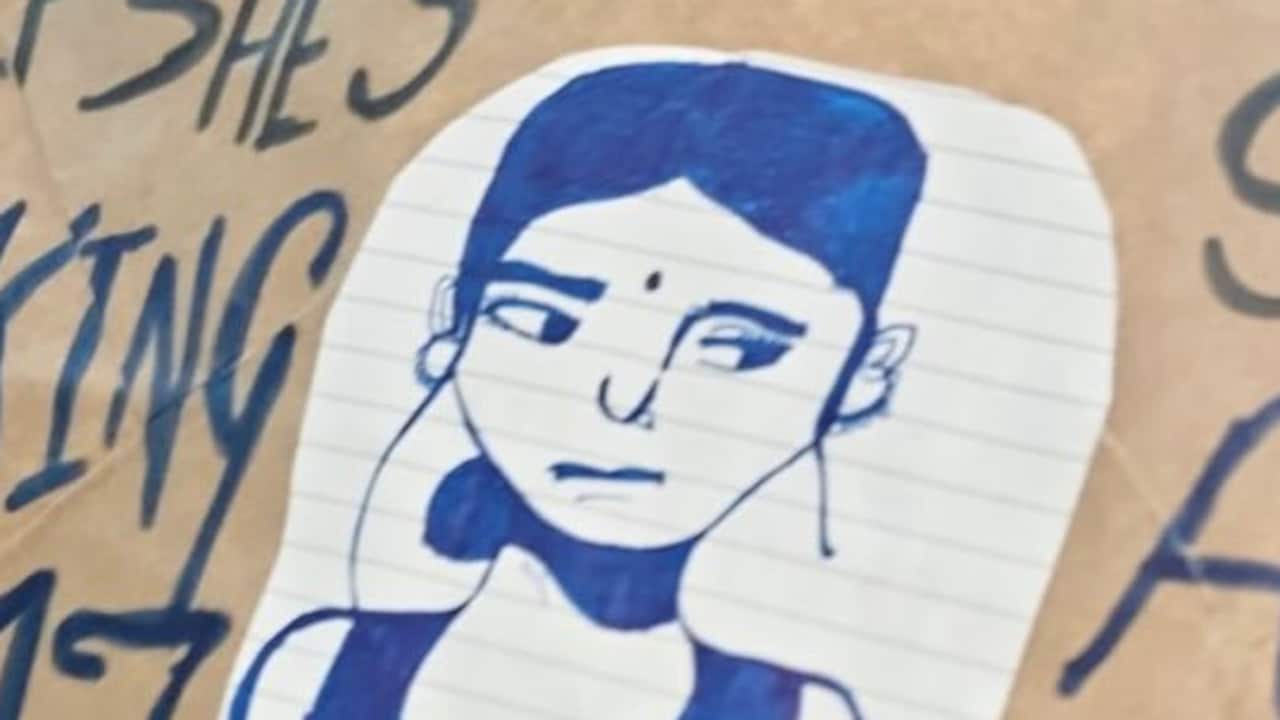
Something unusual is happening on the streets of Delhi right now. Women have taken over the streets to protest against rape and sexual assault cases, demanding something that should hardly need to be demanded in the first place: the right to feel safe in public spaces.
But alongside the familiar chants of azaadi, justice and accountability, a new kind of protest language has emerged. Rhyming, cheeky and distinctly Indian, these slogans are making their way from protest sites to Instagram Reels, just like the CJP protests that led to the then education minister Dharmendra Pradhan's resignation. Two months later, a new set of slogans is echoing through Delhi streets as remixes, even finding an audience online. Scroll through Instagram, and you will hear women chanting and men 'vibing' to slogans like:
"Ek Kachori, Do Samosa, Inn Mardon Ka Kya Bharosa?"
"Ek Aloo, Do Pyaaz, Bhaad Mein Jaye Mard Samaj."
"Aloo Lo, Puri Lo, Inn Mardo Se Duri Lo."
"Paani Ka Rang Neela, Inn Mardon Ka Character Dheela."
The protests, which have involved women and queer students from several Delhi University colleges, have followed a series of reported sexual assaults in Delhi and elsewhere. The protesters are demanding safer public spaces, better infrastructure and accountability, while pushing back against the idea that women's freedom should be restricted in the name of safety.
From 'Votes For Women' To '#MeToo'
The language of feminist protest has always reflected what women were fighting for at a particular point in history.
The first wave of feminism, emerging in the late 19th and early 20th centuries in the US and Europe, largely centred around legal and political equality, including voting rights and legal personhood. Its slogans were direct and political: "Votes for women" captured the demand for something women had been denied for generations.
The second wave, emerging in the 1960s and 1970s, particularly in the US and Western Europe, expanded the conversation to equal pay, reproductive rights, bodily autonomy and freedom from violence. "The personal is political" became one of its defining phrases.
The third wave, emerging in the 1990s, particularly in the US, brought diversity and intersectionality into the conversation, challenging the idea that women's experiences could be represented by a single narrative. "Girl power" became one of the phrases associated with this era.
Then came the fourth wave, emerging in the 2010s globally and shaped heavily by social media and digital activism. Hashtags became protest tools, with #MeToo turning individual accounts of sexual harassment and violence into a global movement.
Today, the language is changing again. This time, it is rhyming, meme-friendly and made for the Internet, especially social media.
From Protest Slogans To Instagram Reels
For Gen Z, a protest does not necessarily end when the march does.
The streets are being documented on Instagram, with protestors filming their chants, creators turning them into Reels and other users picking up the slogans and giving them a life of their own online.
That means a chant heard outside a Delhi University college can quickly become something for the people who were never at the protest to watch it, share it, and recreate it for social media.
The phenomenon has also drawn a very Gen Z response: dark humour.
And it is not only women participating in the protests who are taking these slogans online.
Creator Ashutosh Agrawal, for instance, made a video rating some of the slogans that have gone viral, adding his own humorous commentary to them.
Another male influencer responded to the discourse around the slogans by saying, "Hum toh ladkiya nahi chhedte, hum kyu offend hue, hum toh vibe karenge (we don't eve-tease women, so why will we be offended by these slogans, we will vibe to them)."
Sidharth Bhardwaj, an influencer with more than two lakh followers, made a Reel in which he came up with similar 'rhyming slogans for women to use during the protests'.
This Reels format itself is telling: what began as a chant on the street is now becoming social media content, with creators participating in and extending the language of the protest and, in a way, supporting the cause.
The irony is that the protesters themselves have also had to push back against the idea that they are on the streets simply to make Instagram content. One placard at the Delhi University demonstrations read: "Generation Z didn't come out in the rain just to shoot Instagram Reels."
'We Deserve To Use Our Creative Liberties'
For Aanya Wig, a 26-year-old lawyer and LSR alumna whose videos from the protests have received millions of views, the focus on the slogans risks distracting from what women are actually demanding.
Wig says she has herself faced relentless online abuse since she began posting about the LSR Solidarity March, including what she describes as more than 5,000 rape threats, threats of sexual violence and sexually abusive messages.
For her, the humour does not cancel out the seriousness of the protest.
Women, she argues, have spent years taking part in serious protests, candle marches and public demonstrations against sexual violence. Yet, in her view, the persistence of violence despite legal changes has left women exhausted.
"We deserve to use our creative liberties to ask for things that we have been demanding since time immemorial," she says.
The 'Chatpate' Slogans Are Part Of The Message
Calling the slogans "chatpate" or simply funny, however, is something Wig strongly disagrees with.
"I would say this is women using their creative liberty to use art forms to demand something as basic as being safe on the streets," she says.
She further adds that 'as a woman who's been facing this every day, I think I should be free to demand for my safety in the words that I want to use and not just the expectation that society has in the way that I should look or the things that I should say because all of that has been done before as well and nothing has changed.'
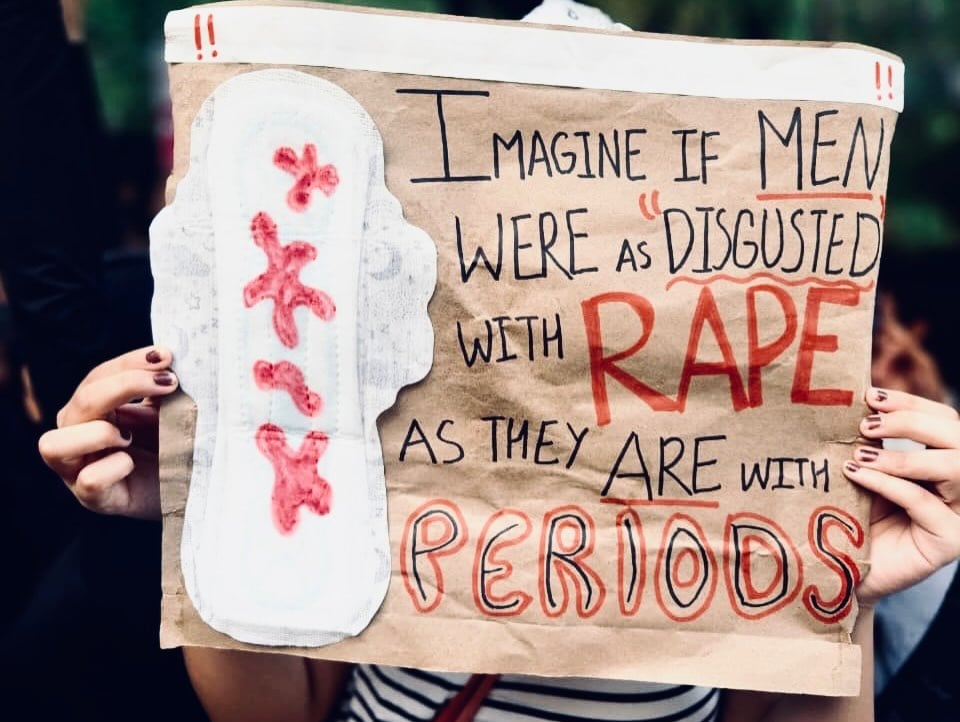
Calling the slogans "chatpate" or simply funny, however, is something Wig strongly disagrees with. Instagram:
And perhaps that is what makes these slogans interesting. A protest does not necessarily have to sound solemn to be serious.
The slogans also make the protest particularly suited to Instagram, where a 15-second Reel can reach audiences far beyond the streets where the original chant was raised.
Some of the other slogans being shared from the protests include "Rapist ko andar karo, ladkiyon ko nahi", "Beti ki location nahin, bete ka intent check karo" and "Girls just wanna have fundamental rights". There are also slogans such as "Cutie nahin, kranti hoon" and "Hamari skirt nahi hai chhoti, inn mardon ki soch hai chhoti", which use humour and wordplay to make a much more pointed argument about victim-blaming and restrictions on women.
The food references, rhymes and Instagram-friendly phrasing may make the slogans easier to remember. But their target remains serious: the idea that women should have to change their behaviour because men may harm them.
From The Street To The Feed
This is not the first time young protesters have blurred the line between activism and social media.
With Instagram and short-form video becoming part of everyday communication, protests are increasingly being documented as they happen. People do not simply attend a march; they film the chants, upload the placards, share their experiences and turn moments from the protest into content.
The same thing happened during the CJP protests, when young protesters were not only taking over the streets but also documenting themselves, making Reels and joking about Jantar Mantar as a kind of "hangout place".
The format has now travelled into the women's safety protests.
Only this time, the content carries a distinctly feminist vocabulary, one that can move from a protest march to a Reel without losing its central message.
The Seriousness Is Still There
The danger of viral protest language is that the meme can sometimes become bigger than the message.
But the women on the streets are making demands that are anything but frivolous. The protests have called for better lighting, safer public transport, greater security in parks and public spaces, and accountability from authorities. Protesters have also challenged restrictions on women's movement, arguing that curfews and bans on entering public spaces after certain hours do not address the violence itself.
Women on the streets are making demands that are anything but frivolous. Photo: Instagram/@Aanya Wig
The protests have also revived comparisons with the 2012 Nirbhaya case, with demonstrators questioning what has changed after years of protests, legal reforms and public outrage. Placards have included "Nothing changed since Dec 16, 2012" and "We should not need a protest to feel safe". And that is perhaps why the Instagram-friendly slogans have struck such a chord.
"Ek Kachori, Do Samosa, Inn Mardo Ka Kya Bharosa" might sound like something you would hear at a street food stall. It might make people laugh when it first appears on their feed. It might even become a meme.
But it is still a protest slogan.
And beneath the rhyme is a demand that has remained remarkably unchanged: women want to be able to walk home unafraid.
-
The Rise Of Finsta: How Gen Z Is Making Multiple Instagram Accounts To 'Avoid Boomers'

For Gen Z, Instagram, which once felt like your little corner of the Internet, is crowded with everyone you were trying to avoid
-
Facebook To Instagram, How Indian Women Are 'Renting-A-Boyfriend' Hourly
Rent-a-boyfriend once sounded like a quirky plot from a Japanese drama; however, it is now slowly becoming a real, searchable service around the globe, even in India
-
Tea With Taliban, Art With Afghan Women: Indian Influencer's 13-Day Solo Trip Across Afghanistan
In an exclusive NDTV interview, travel influencer Ankita Kumar described her 13-day solo trip to Afghanistan, where she had tea with the Taliban, roamed the streets of Kabul and met Afghan women
-
'Rs 370 Biryani' And Dead People: When Does Comedy Stop Being Funny?
Over the years, Indian comedy has repeatedly found itself at the centre of debates about sexism, objectification and shock humour
-
Ram Charan Says He Felt "Mentally Low" During COVID, Recalls How SS Rajamouli's Advice Helped Him
Ahead of the release of his upcoming film Peddi, Ram Charan spoke candidly about the emotional toll the pandemic took on him
-
Ghaziabad Triple Suicide And How Korean Culture Is Reshaping Teen Lives In India
The Korean Wave in India is a complex cultural exchange shaped by technology, aspiration, and globalisation
-
Radhe-Radhe Guru Ji: How Gen Z Push Made Religion A Market Worth Rs 4.86 Lakh Crore In India
Astrology and religion are becoming cool again for Gen Z thanks to technology, AI, and social media
-
Can Anti-Ageing Drugs Cause Cardiac Arrest? Doctors Explain Shefali Jariwala Death
Reports suggest that Shefali may have taken a cosmetic anti-ageing injection on an empty stomach, which could have caused a cardiac arrest
-
Adolescence And The Double Lives Of Teenagers: What Parents Don't See Online
Adolescence is not just about growing up; it is about shaping the adults these teenagers will become