NDTV Ground Report: China's Unconventional War Against India On Northeast Border
The problem of Nagaland and the northeastern states stems from an aggressive China that has, over the years, waged a non-conventional war against India directly and indirectly, using Myanmar.

On the surface, life appears normal in Dimapur, Nagaland. But scratch a little, and decades of decay and turmoil are evident.
The problem of Nagaland and the northeastern states stems from an aggressive China that has, over the years, waged a non-conventional war against India directly and indirectly, using Myanmar. Smuggling is rife here - narcotic drugs, sophisticated weapons, wildlife parts, live wildlife, betelnut - they are all fueled by China's money and the strategy of 'Three Warfares'.
The ravaged northeastern society is struggling to find a voice to deal with generations of their sons and daughters lost to drug addiction and armed violence.
To understand the non-conventional war and its ramifications, it is important first to understand what China's 'Three Warfares' strategy is and how it is being executed.
Three Warfares
The days of Sun Tzu's Art of War are long gone. The Chinese Army and the government have now adopted a new strategy - this ensures Chinese blood is not spilt in conventional war; rather, proxies engage in violence against the intended target.
The 'Three Warfares' comprise the following:
1. Psychological warfare
2. Public opinion warfare
3. Legal warfare
Highly placed sources told NDTV that China's fingerprints were all over the Pahalgam attack. Using Pakistan and its terror networks as a proxy to attack India has China written all over it, said the sources.
The rationale behind this becomes clear when we look at what China has done since 2010. China has wooed India's neighbours with gifts of infrastructure projects and loans. Pakistan is a prime example of how a Chinese puppet functions, as is Myanmar and now Bangladesh.
At least 80 percent of Pakistan's arsenal is Chinese. 25 percent of Pakistan's debt is by China, its largest creditor. China has even rolled over a $2 billion loan as the struggling Pakistanis attempt to get funding from the International Monetary Fund. Two-thirds of the entire debt of $42.9 billion given to various countries in South Asia by China, as of 2022, was to Pakistan. This is as per World Bank data.

We have also witnessed how, since Pahalgam, China has unabashedly and openly backed Pakistan at international forums.
The same is true of Myanmar and Bangladesh. Coups, overturning democratically elected governments, funding for the ruling military junta or SAC (State Administration Council) government in Myanmar as well as the utility value of Bangladesh's interim Prime Minister Mohammed Younus in espousing China's ambitions over the 7 Sisters of the North East, all point to a need for China to keep a growing India in check.
China has not only nurtured governments of neighbouring countries. Highly placed sources say China has also funded and armed several violent groups that serve its purposes. For instance, it is no secret that China funds and arms the Myanmarese Arakan Army and the Wa State Army, groups that are extremist and violent.
Top official sources told NDTV that China has and continues to fund and arm violent insurgent groups in India's North East - primarily the NSCN-IM, the ZRA and the PLA.
Who Are The NSCN I-M, The ZRA And The PLA?
The NSCN-IM stands for the National Socialist Council of Nagaland - Isak-Muivah, a breakaway group from the NNC (Nagaland National Council), which advocates a separate Nagaland country that includes parts of Myanmar where Nagas live.
The ZRA stands for the Zomi Revolutionary Army, which is made up predominantly of the Paite community, active in Manipur and Myanmar.
The PLA is the People's Liberation Army, a Meitei armed insurgent group formed in 1978, which is fighting for the "liberation" of Manipur from India.
The NSCN was originally formed in 1980 in opposition to the signing of the Shillong Accord, which was supposed to end hostilities between the Nagas and the Indian government. The agreement gave the Nagas statehood in return for putting down their weapons.
In 1988, the NSCN broke up into more factions. NSCN-IM was the most prominent one, led by Isak Chisi Swu and Thuingaleng Muivah. In the late 1980s, this group travelled to South China to train as fighters and embraced the Mao ideology. They were given funding and arms by China. Subsequently, they returned to Nagaland to wreak havoc.
"The NSCN-IM was trained in South China," said SC Jamir, former Chief Minister of Nagaland and a key member of the Naga National Council, which negotiated and got statehood for the Nagas. "They have changed the whole objective of the Naga National Council. NSCN-IM got trained and came from China and used the Mao ideology - power at the barrel of a gun. They eliminated many of the leaders of the Naga National Council. When the group fell into the hands of Muivah, I opposed them loudly and naturally, I became a target. They have attempted to kill me four times," he told NDTV.

SC Jamir, former Chief Minister of Nagaland. Credit: Sandhya Ravishankar.
The Zomi Revolutionary Army, on the other hand, operates in South Manipur and in the Chin State of Myanmar. They came together as an armed group in 1997 when ethnic clashes broke out between the Kukis and the Paite communities in Manipur.
"Both these groups are armed and funded by China," said a top official source to NDTV, on condition of anonymity. "Both of them smuggle narcotics and betelnut from Myanmar into India. They also facilitate smuggling of wildlife - ivory, tiger skin, tiger claws, live pangolins - all these are done by the NSCN-IM and the ZRA mainly. Earlier, we had to deal with only these two groups, but now there are 26 such armed insurgent groups in the Northeast. And the Chinese are arming and funding them and fueling conflict in India," said the official.
The ZRA is, in fact, fighting alongside the military junta against rebel groups in Myanmar. NDTV reached out to a pro-democracy rebel group called the Chin National Army in Myanmar. "More than 85% of Chin state is controlled by Anti-SAC," a spokesperson for the Chin National Army replied to NDTV's questionnaire. The SAC or the State Administration Council is the ruling military junta in Myanmar. "There are three places where the SAC has camps, namely Haka, Thantlang and Tedim. ZRA works and collaborates with SAC. The ZRA stayed together with SAC in Tedim and Tonzang townships. Last year, we captured SAC camps in Tonzang and Cikha. ZRA attempted to retake Tonzang township from us." (sic)
The ZRA also engages in poppy cultivation and encourages and protects farmers who cultivate poppy in Myanmar. Rebel groups like the Chin National Army have burnt down many poppy fields protected by the ZRA. "Yes, it is true that there has been extensive poppy cultivation in these areas for a long time. Myanmar army, ZRA and some IIGS (Indian insurgent groups) from Manipur collected taxes from the farmers," the CNA spokesperson said.
While the NSCN-IM claims that it does not deal in drugs of any sort, official sources told NDTV that they do indeed collect protection fees from farmers who cultivate poppy. Vehicles carrying drugs passing through the Myanmar border into India pay these groups what is locally called sovereignty tax.
To sum up, this is how the 'Three Warfares' strategy is playing out in India.
1. Pump drugs into India, turn the youth into addicts and create social decay and despondency.
2. Arm and fund violent insurgent groups that can be triggered to go to war against India at any time.
3. Violent groups rule by the gun, indulging in extreme extortion of their people.
In the next part of the series, we will look at how drugs have ruined generations in Nagaland and how armed groups funded by China extort the residents of the North Eastern states.

-
Opinion | The Last Bet? What Trump's 'Mother Of All Bombs' Could Actually Do To Iran

Can an MOAB deliver a decisive blow to Iran that may force it to surrender immediately, as Japan did after Hiroshima and Nagasaki in World War 2?
-
Hit Songs, Empty Pockets: The Hidden Math Behind India's Viral Music Boom
Over 80,000 brands and five lakh creators in India make branded content. The opportunity is worth around Rs 1,500 crore.
-
Opinion | Great 'Exceptions': How The Oil India Was Attacked For Is The Oil Trump Now Seeks
A law written to punish the buyers of Russian oil was suspended by the US to protect a purchase of Russian oil. India spent fourteen months being lectured for less.
-
Opinion | Louis Vuitton Loot, Torched Cars: France Protests Have An Unlikely Beneficiary
It's an unbelievable moment. Crowds looting the most exclusive stores in Paris, including the famed Luis Vuitton. But what's behind this meltdown?
-
Blog: Kolkata Didn't Learn From 2015. Eleven Years Later, It Proved To Be Fatal
The City of Joy isn't a stranger to crowd control. Be it during Pujo or Christmas at Park Street, Eden Gardens cricket matches, or Derbies between Mohun Bagan and East Bengal. But during Pujo, the entire city is on alert.
-
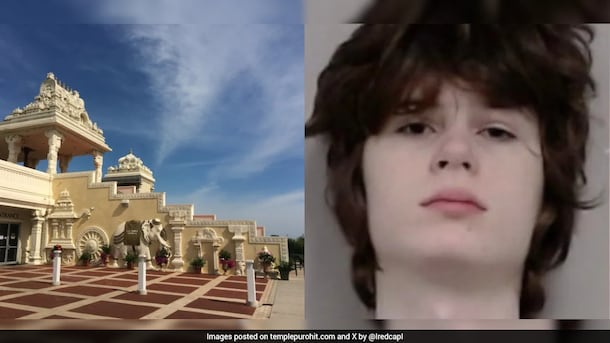
Opinion | Slurs, Threats, Now A Temple Attack Plot: When Did America Become So Hostile To Indians?
The rising tide of anti-India, anti-Hindu, and racist attacks serves as a stark reminder that economic prosperity does not automatically guarantee social immunity from bigotry.
-
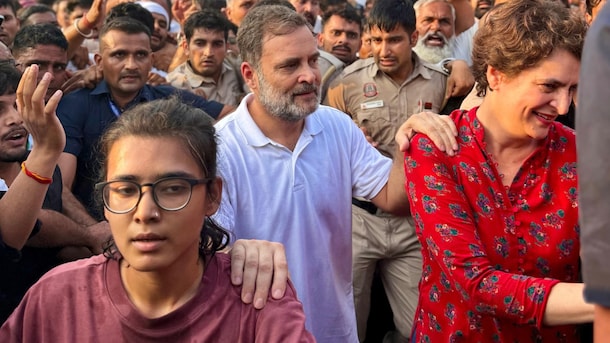
A Step Behind Neha Bora: What Rahul Gandhi's Gesture Says About Congress' Gen-Z Pitch
At INDIA bloc's march to Supreme Court, Rahul Gandhi placed himself a step behind two women, hands resting on their shoulders. One was his sister Priyanka. The one on his right was Neha Bora. Here's what the image means for the protest wave now, and for Rahul's politics in general.
-
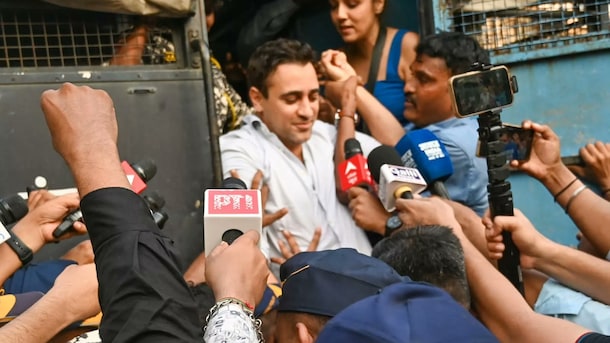
Opinion | Imran Khan, And The Perils Of Having An 'Opinion' In Bollywood
The reality of the industry is quite grimy. More often than not, its inhabitants have been fairweather friends, happy to sing the praises of whoever is in a position of authority.
-
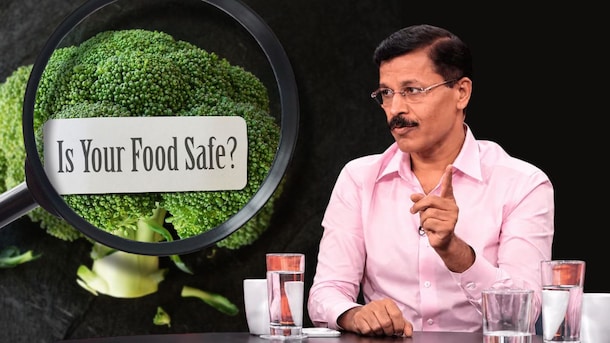
Exclusive: India's Food Safety Problem Goes Beyond Just Dirty Kitchens - By Tukaram Mundhe
On World Food Day, Maharashtra's Commissioner of Food Safety explains why instead of taking stopgap measures, the entire supply chain in India needs to be held accountable and made transparent.
-
Opinion | India Has Enough Coal. So Why Are Power Plants Running Short? A 76 Million 'Crunch'
As of October 5, as many as 82 of the 191 thermal plants monitored by the Central Electricity Authority were in the 'critical' category