Why Gen Z Is Binge-Watching Every Reality Show In Sight
From Lock Upp 2 and Alliance to The Traitors 2, here's why reality television has quietly become the comfort watch Gen Z didn't see coming.
There was a time when admitting you watched reality television invited raised eyebrows. "You actually watch Bigg Boss?" or "Who has the patience for all that screaming?" were common reactions.
Somewhere along the way, reality TV became the entertainment equivalent of pineapple on pizza: people loved it in private but rarely admitted it in public.
Not anymore.
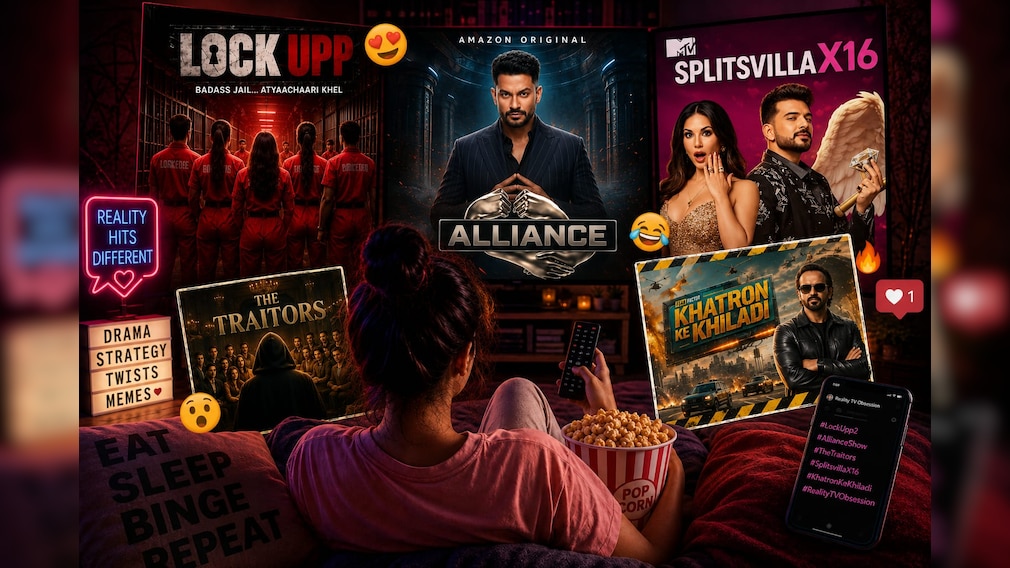
Today, my Instagram feed is a never-ending stream of Lock Upp 2 edits, Alliance strategy breakdowns, contestant memes, reaction videos and fan theories.
My X timeline debates eliminations with the seriousness of election results, while office conversations begin with, "Did you watch yesterday's episode?" before moving on to actual work.
And honestly? I'm not complaining.
The second half of 2026 has quietly become the season of reality television. It wasn't long ago that Splitsvilla X16 wrapped up after dominating social media for weeks.
Almost immediately after, Lock Upp 2 and Alliance arrived on the exact same day, beginning what felt like the ultimate reality TV showdown.
Now, as Lock Upp 2 heads towards its August 5 finale and Alliance prepares to crown its winner on August 7, another obsession is waiting in the wings.
The Traitors Season 2 is set to premiere later this month, ensuring the binge never really ends.
For someone like me, it has almost become a daily ritual. I finish work, make myself comfortable and switch between Alliance and Lock Upp 2. It has become the easiest way to unwind after spending the day chasing breaking news and deadlines.
And once these two conclude, I already know what comes next. The Traitors 2 has my watchlist reserved.
Somewhere between all of this, I realised something.
Reality television isn't making a comeback. It never really left.
The Great Lock Upp 2 Vs Alliance Debate
When Lock Upp 2 and Alliance premiered together, social media almost immediately turned it into a competition.
Which show is better? Which has smarter contestants? Which deserves the higher ratings?
But personally, I never understood why we had to choose.
I genuinely enjoyed both because, despite belonging to the same genre, they were trying to achieve completely different things.
Lock Upp 2 thrives on personalities.
It throws celebrities with controversial public images into a prison-like setup and watches relationships, rivalries and emotions unravel. The arguments are loud. The accusations and secrets are louder. Every episode promises a confrontation that somehow becomes the Internet's favourite clip by midnight.
Alliance, meanwhile, feels like strategy disguised as entertainment.
The game never really stops. Alliances shift constantly. Trust disappears within minutes. Contestants are forced to think three moves ahead instead of simply winning the loudest argument.
The drama exists in both shows.
But while Lock Upp 2 often lets drama become the destination, Alliance makes it a consequence of the game.
And surprisingly, both approaches work.
The Era Of Passive Watching Is Over
The biggest difference between today's reality television and the shows we grew up watching is that viewers are no longer passive consumers.
We're participants. We don't just watch. We predict eliminations. We analyse strategies. We defend contestants. We create memes. We make fan edits. We dissect every expression in a promo.
Half the entertainment doesn't even happen inside the house anymore, it happens online afterwards.
There isn't a single day when my social media isn't flooded with clips from these shows. Funny edits, emotional moments, elimination theories, dramatic confrontations and inside jokes dominate Instagram Reels.
Even people who don't religiously watch the episodes somehow know exactly what's happening because the Internet makes sure they do.
Reality television has become impossible to escape.
The Office Water Cooler Has Become A Reality Show Discussion Forum
One of my favourite parts of watching these shows isn't actually watching them.
It's discussing them the next morning.
Almost every day at work, conversations somehow circle back to Lock Upp 2 and Alliance. Someone believes one contestant made a terrible move. Someone else thinks another deserves to win.
We disagree over strategies, debate eliminations and sometimes even defend contestants as though they're close friends.
It's funny because these conversations rarely end with a conclusion. But perhaps that's exactly what makes reality television work.
Everyone watches the same episode. Everyone leaves with a different opinion.
When Real Life Became The Biggest Plot Twist
This season also proved that sometimes reality itself is more fascinating than scripted drama.
One of the biggest talking points was Akanksha Chamola publicly announcing her divorce from husband Gaurav Khanna on national television, becoming one of the first celebrities to do so in this format.
Then there was Alliance, which gave audiences something nobody expected to witness so comfortably.
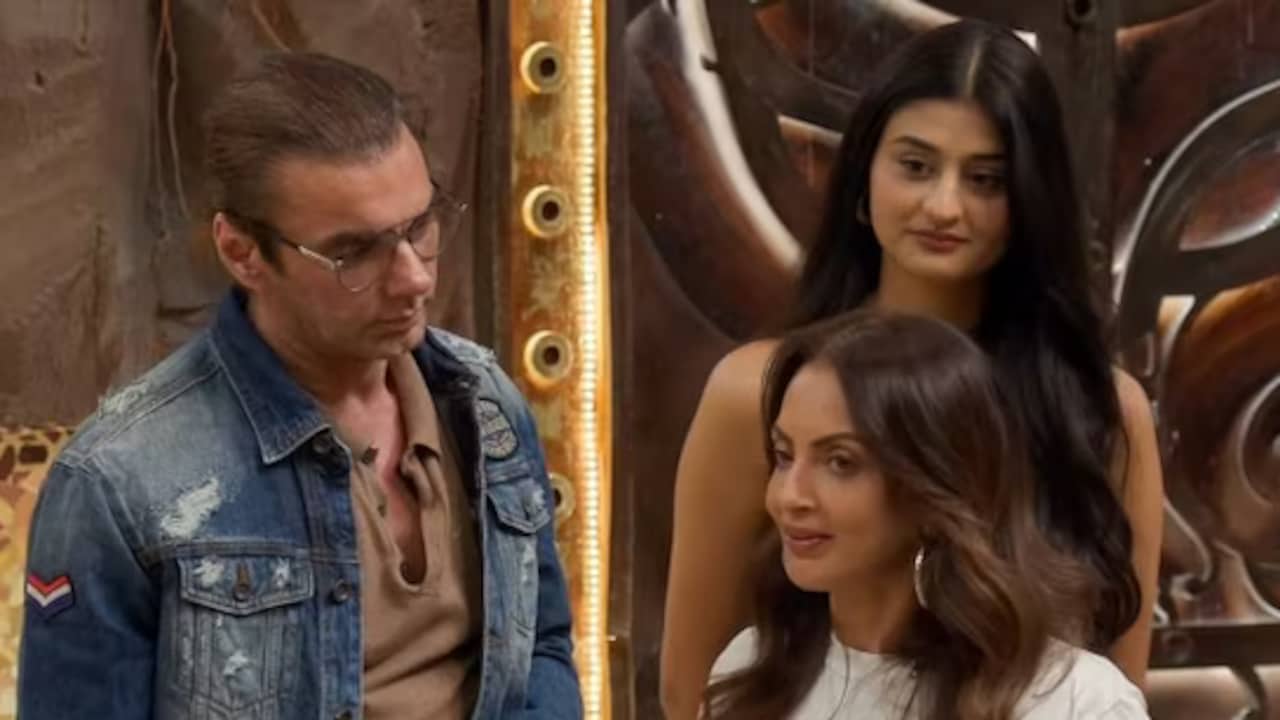
Sohail Khan and Seema Sajdeh, former spouses, appeared together on the same show.
Instead of awkwardness, viewers got warmth, friendship and mutual respect. Watching them share screen space naturally felt oddly refreshing in an entertainment landscape that often sensationalises broken relationships.
Another unexpected reunion came when Gauahar Khan's ex-boyfriend Kushal Tandon and her husband Zaid Darbar found themselves on the same show.
Social media expected fireworks. Instead, viewers got maturity.
Ironically, the absence of unnecessary conflict became the biggest surprise. It reminded audiences that reality television doesn't always need shouting matches to remain entertaining. Sometimes, genuine human behaviour is enough.
Why Gen-Z Is Falling Back In Love With Reality TV
Perhaps that's the biggest reason these shows are resonating today.
Gen-Z doesn't necessarily want perfectly behaved contestants. Nor do they want endless screaming.
They want authenticity. They enjoy watching strategy as much as emotion. They appreciate gameplay alongside personalities. They want contestants who can surprise them rather than simply argue for screen time.
That's why Alliance found an audience despite being strategy-heavy.
That's why Lock Upp 2 continues generating conversations every single day. And that's why The Traitors became such a phenomenon in its very first season.
The formula is evolving. The audience is evolving with it.
No Longer A Guilty Pleasure
For years, reality television carried the label of "guilty pleasure."
People claimed they never watched these shows, even while knowing every contestant and every controversy.
That pretence is disappearing.
Today, watching reality television feels no different from following a hit web series or discussing the latest blockbuster.
Maybe that's because the genre itself has evolved.
Or maybe we've finally stopped pretending we don't enjoy watching ordinary people and celebrities navigate extraordinary situations.
Either way, my evenings for the past six weeks have been occupied by Lock Upp 2 and Alliance. And judging by my social media feed, my colleagues' discussions and the excitement surrounding The Traitors Season 2, I'm clearly not the only one.
The houses may shut their doors this week, but the reality TV season is far from over. If anything, it's only getting started.
-
600 Km Per Hour Drones Launched In Waves: How Russia Is Rewriting War Rules

Russia has coupled the drones' technological superiority over Ukraine's defence with its capacity to launch them in massive numbers. The impact has been devastating.
-
Tata Sons' Trust Issue: Two-Pronged Row Goes Beyond The Chair
NDTV Explains: Overtly, the latest conflict is whether N Chandrasekaran continues as executive chairman of Tata Sons. The controversy involves at least one more issue.
-
Opinion | US Has Institutionally Weaponised India's Russia Oil Dependence. Can New Delhi Cope?
A new legislation can connect India's Russian energy purchases to its access to the American market over a five-year period
-
Opinion | Saudi Allies Are Now Discovering The Cost Of 'Commitment' - And Not Liking It
The spectacular no-show by Saudi Arabia's two defence allies - Pakistan, a nuclear power, and Turkey, which has NATO's second-largest army - is astounding
-
12 Years Of 'Modinomics': What Changed, What Worked, What Didn't
There is no single Modinomics textbook or formula. Instead, the term has come to describe a collection of choices made during the PM Modi years.
-
Opinion | How A Tiny 0.4% UPI Fee Could Change How India Pays
The introduction of a fee can have a psychological effect beyond its immediate financial cost. Businesses that have come to view digital payments as free may begin to look for alternative - split payments, cash, and so on
-
Opinion | Rs 75-Lakh Bounty, New Jaish Base, And The Case Of Pak's Ever-Missing' Terrorist
Pak's yearly act is back: finding Masood Azhar. But there are other questions FATF must be asking next month as it meets
-
For Years, Saudi Saw Houthis As Yemen's Problem. Then, A Knock On The Door
Actual fighting between the Houthis and Saudi Arabia began late in the overall timeline of the conflict that now involves powerful belligerents
-
Lal Topi, Blue T-Shirt: Akhilesh Yadav's 'PDA' For Blue Has A Coded Message
The message is clear: the Samajwadi Party wants to talk to voters beyond its traditional Yadav-Muslim support base, particularly to Dalits.
-
The Day 600 Men Lay Siege To Islam's Holiest Site And How They Were Gassed Out
Nearly 47 years ago, on November 20, 1979, the Grand Mosque itself was seized by an armed group in one of the most extraordinary episodes in modern Saudi history.