Dev Anand And Suraiya's Love Story: A Diamond Ring, A Family Ultimatum And A Romance Lost
In an industry where a couple of box-office failures usually spell the end for a producer-director, Dev Anand commanded immense goodwill for decades, no matter how his films performed
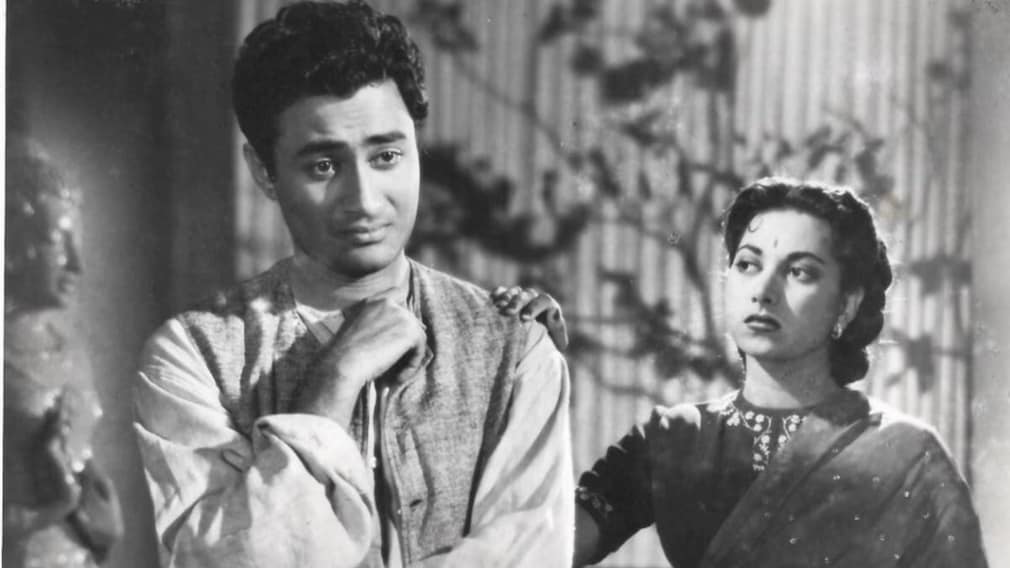
Today marks the birth anniversary of Dev Anand, Indian cinema's 'evergreen', charismatic legend. Thinking of him takes me back to an unforgettable December evening in 2005 when I met him. I remember his words, of course. But more than that, I remember his heart. A small gesture that left a rare imprint
Here is what transpired that evening:
Back then, I was a TV producer working with a News Network in Delhi. I was in Mumbai with my show host and the crew. We had just endured a rough day dealing with the bloated egos and entitled tantrums of two "star sons" we'd interviewed.
Exhausted with those two episodes, we were ready to head back to Delhi that night when we got an unexpected call. Dev Anand's PR team was offering us an interview for his upcoming film, Mr Prime Minister.
Truth be told, Dev Anand was no longer the kind of 'TRP property' news networks were chasing then.
But really, who could say no to Dev Sa'ab?
The Youngest 82-Year-Old
We reached his Pali Hill abode and were guided by his son, Sunil Anand, to the top-floor penthouse of the 4-storey building at 42, Pali Hill. There was a private elevator inside, and our entire crew used it to reach his office. It was a beautiful space filled with old-world charm, soft lights and walls adorned with timeless photographs of Dev Anand's legendary life.
As we were setting up our cameras, we heard someone climbing the stairs. Yes, stairs. It was the 82-year-old Dev Anand himself, who skipped the lift and bounded up the steps to the fourth floor like a young man.
He entered the room smiling warmly, hugged my show host, and complimented her. Then, he walked over to shake hands with every single member of our crew, thanking us personally for coming at such short notice. He politely asked if we would like tea and snacks before or after the shoot. We opted for after. Then, saying he would be back in a few minutes, he went back down the stairs. Fifteen minutes later, he climbed right back up them, now wearing his signature brown jacket with big collars. "I am ready to go!" the evergreen star announced. Our exhaustion vanished, swept away by his boundless energy.
What a striking contrast to the entitled star sons from earlier that day!
"Dev Anand Lives In The Future Tense"
When we told him the show was a biographical look at his past and life's philosophy, he beamed.
"I don't live in the past! Nostalgia is not for me. Dev Anand lives in the future tense," he declared, though he kindly added he'd answer whatever we asked. He then flashed that classic smile, playfully flirting with my show host by telling her she belonged in his next film. She giggled hopelessly.
After walking down memory lane, recounting classics like Guide, Jewel Thief and Hum Dono, his romantic image, and the fond rumour that he wasn't allowed to wear a black suit in public, the conversation took a tender turn. The show host asked him about Suraiya, the legendary singer-actress and the love of his life, who had passed away just the year before, in January 2004.
"I loved Suraiya deeply, and I was heartbroken when we couldn't marry!"
It felt like an unexpected question. He paused. But unlike so many Bollywood stars who brush it off or dismiss it with a practised "we were just co-actors," there was a sudden softness in his eyes.
"I loved Suraiya! And she loved me," he said. That single, heartfelt sentence would eventually become the promo for our show.
His rule that "Dev Anand lives in the future tense" had gently dissolved as he flipped the page back to where it all began. During the shoot of Vidya (1948), when he was still a newcomer and Suraiya was already a massive star, a romantic boat scene went awry. The boat tipped, Suraiya slipped into the water, and the young Dev instantly dove in to pull her to safety. That cinematic rescue sparked a four-year romance, ultimately torn apart by religious opposition from her conservative grandmother.
Dev Anand recalled giving her a diamond ring as a token of his heart. He remembered buying it from the Zaveri Bazar in Mumbai. But when her grandmother cruelly threatened to end her own life if she went ahead, Suraiya heartbreakingly budged, and as the story goes, cast that precious ring into the sea.
"I loved her deeply, and I was heartbroken when we couldn't marry," he reflected quietly in our interview. "If we had married, who knows where my life would have taken me? Would I be the same Dev? Would I have made the same kind of films? Who knows?" With that, he tenderly closed the chapter.
He would later marry his co-star Kalpana Kartik in 1954 in the middle of a film shoot, raising two children: son Suneil (who passed away recently in London) and daughter Devina.
It also reminded me of something Suraiya had later shared in an interview (1972 Stardust)- How during their courtship they used to talk about their dream of having a daughter together. Suraiya had said they would name her Devina. Dev Anand did eventually name his daughter with Kalpana Kartik Devina. There was something wonderfully old-world and romantic about the way their stories remained secretly stitched together.
Suraiya chose not to marry after her separation from Dev Anand. She remained single, living a quiet life with her memories until her death in 2004
"You just have to keep working. Success and failure are not in your hands."
Just as passionately as he spoke about Suraiya, he shifted to his upcoming film, Mr Prime Minister. When we asked if he wasn't discouraged by a string of box-office flops over the last two decades, he paused thoughtfully.
"Failure hurts," he admitted. "But you can't dwell on it. You move on."
When suggested he has so many iconic films that he could remake, he instantly replied, "I don't want to repeat myself. Why go back to the old ideas? You're not the same person you were in 1950. Move on! My mind is always full of new ideas and new stories. I write and work on multiple scripts at once. I don't have time to sit still. You just have to keep working-success and failure are not in your hands. I want to keep making movies. Kaam nahin karoonga to marr jaoonga-if I stop working, I'll die." It was just another simple, yet profound lesson on life wrapped in his timeless optimism.
In an industry where a couple of box-office failures usually spell the end for a producer-director, Dev Anand commanded immense goodwill for decades, no matter how his films performed. Stars like Jackie Shroff, Rekha, Hema Malini and Naseeruddin Shah kept showing up for him. A film reporter friend once asked Naseeruddin Shah, known for being so selective with his scripts, why he did Dev Anand's movies. His simple reply was: "Nobody says no to Dev Sa'ab. He asks you to do a role, you reach the sets, you have fun, and the bonus is you get to work with a legend."
When Dev Anand Called My Father
That evening at Pali Hill, when we called pack-up, the eternal charmer made sure our host was happy with the interview. As the crew moved to the tea and snacks, he caught me watching him with a quiet smile. "I saw you grinning behind the camera," he said gently. I confessed, "Sir, I was just thinking of my father. He's your biggest fan. He's going to be super happy when he hears I met you today."
Dev Anand smiled warmly and asked my father's name. He went on to ask what he did, where he studied, and what he loved to do. I smiled, assuming it was just typical old-school charm meant to comfort a young crew member.
What he did next went far beyond ordinary courtesy. It was something he didn't need to do at all.
"Usman Sa'ab ko call lagaiye," Dev Anand said.
I was surprised. Smiling, he added, "Number hai na aapke paas?" (You've his number, right?)
I quickly dialled my father. Though he knew I was in Mumbai for work, Dev Anand's interview hadn't been on our agenda.
"Papa, I'm in Mumbai. Dev Sa'ab wants to talk to you."
"Kaun?"
"Dev Sa'ab, Papa... Dev Anand. We are right at his place."
I handed my phone over. With boundless energy, Dev Sa'ab beamed: "Usman Sa'ab, aadab! Main Dev Anand bol raha hoon. Kaise hain aap?"
I honestly have no idea how my father managed to form a coherent sentence. People don't casually receive spontaneous phone calls from their silver-screen idol while sitting at home in their pyjamas!
Dev Anand continued, "I met your son, and he is sitting right in front of me..." He went on to praise me, telling my father how sincerely hard-working I was.
My father, in turn, excitedly told him about watching his movies in the 1960s, his college days, and buying tickets in black just to see him on the big screen.
"Usman Sa'ab, aap jaise qadardaan hain, toh hum hain!" (Usman Sa'ab, it is because of true admirers like you that we exist!) Dev Sa'ab said warmly.
He closed the conversation with a line I will never forget: "Aap Bambai aayein, toh yaad rakhiye, aapka ghar hai yahan!" (Whenever you visit Mumbai, remember, you have a home here!)
I muttered a quiet thank you, standing completely in awe as I stared at him for the remaining minutes before we left.
Over the next two decades, my career as a journalist and author covering the film industry gave me the chance to meet countless celebrities. I witnessed rare moments of kindness and suffered plenty of arrogance, neither of which is uncommon in showbiz. It is hard to stay grounded when millions worship the ground you walk on.
But that single evening at Pali Hill remained my absolute yardstick for what a true star and a great human being looks like.
My father still remembers that phone call, word by word.
Dev Anand was, and always will be, timeless.
-
Gyanesh Kumar Has An Immunity Pin. Why A Petition Says He Can't Use It

The Opposition wants the Chief Election Commissioner prosecuted for alleged manipulation of voter rolls, but a 2023 law stands in the way. A petition in the Supreme Court now says the law has a gap.
-
Opinion | Is The World Staring At A Big Stock Market Crash - And Recession? 5 Uneasy Signs
On Wednesday, the US bond market recorded its worst day since Trump's "Liberation Day" tariffs rattled markets in April 2025. The 30-year US Treasury yield topped 5.43%, putting it on track for its highest close since 2004.
-
Form 6 For New Voters: When A Small Change Triggered A Big Row
In July 2026, the online version of Form 6 on the ECI's ECINet portal was modified to include a new declaration.
-
Opinion | Saudi Arabia's China Turn Has Begun - After Learning Much The Hard Way
Leaning on China just makes sense for the Saudis right now. The question is, can its other great 'ally' stomach it?
-
Opinion | Bihar Assault, Hisar Marriage Ban: Who'll Stop The Guardians Of Indian 'Culture'?
Why exactly does the sight of a young couple seeking a bit of alone time somewhere tend to particularly provoke a certain kind of Indian men?
-
Opinion | The Trump-Xi Summit, And India's Many Worries Of Its Own
Washington and Beijing may have chosen coexistence over confrontation. For India, that could be both a relief and a warning.
-
Opinion | China Claims It Has Cut Troops At The Indian Border. But The Math Doesn't Add Up
The reduction likely has more to do with the deployment along the LAC than the total strength active in the region
-
Opinion | China Is No Longer Waiting For Trump To Set The Rules. And He Knows It
America's old diplomatic tricks with China won't work any longer. Because China has changed, and so has its ambitions.
-
Opinion | As UN Interviews Its Next Chief, The Interviewers Have Some Explaining To Do
On the panel sit governments whose wars, vetoes, and unpaid dues have helped make the organisation ineffective.