Opinion | How EVs Are Getting Smarter, Faster, And More Efficient
Tata Motors' Anand Kulkarni explains how smarter technology is reshaping the EV ownership experience.
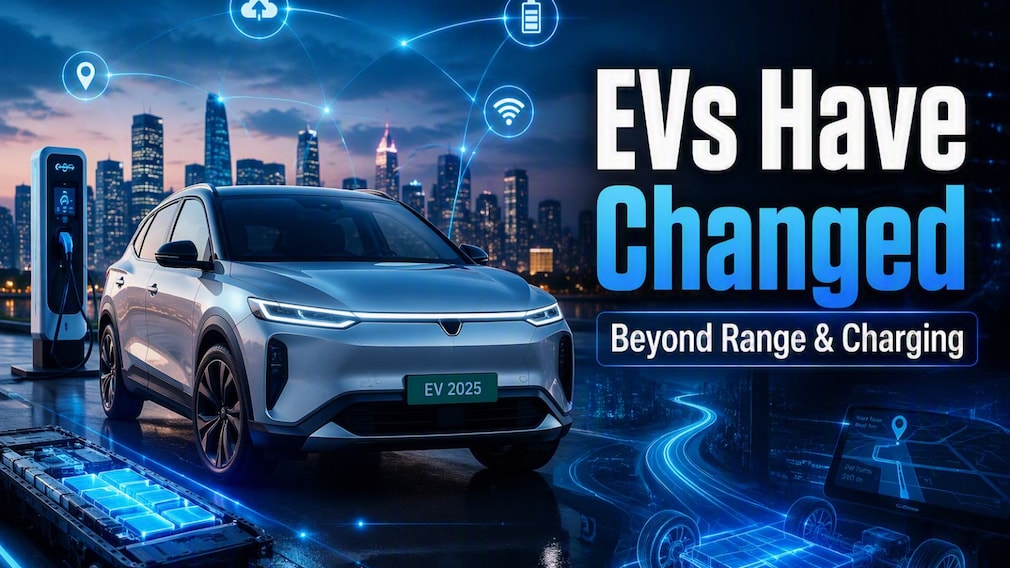
India's electric vehicle story has evolved significantly over the last few years. Not too long ago, the conversation was centered around range. Prospective customers wanted to know how far an EV could travel on a single charge and whether the existing charging infrastructure was ready to support wider adoption. But today, the conversation has broadened considerably. EV adopters are increasingly focused on how electrification fits into everyday life, how intuitive it feels to drive, and the value it delivers beyond the powertrain.
This shift in expectations is shaping the next phase of EV development.
Smarter Than Before
One of the biggest changes in modern EVs is the role technology plays behind the scenes. The real value of technology lies in helping customers get more from their vehicles while making the ownership experience more seamless. Much like smartphones have evolved from mere communication devices into intelligent assistants, EVs have become more adaptive to the needs of their users.
Many of the upgrades, which benefit customers are not noticeable right away. Innovations like advanced battery management, intelligent navigation, and connected ecosystems are enabling vehicles to be more responsive to real-world driving conditions.
Connected services enable the vehicle capabilities well beyond the driving experience. Features enabling customers to remotely monitor vehicle status, optimise charging schedules, and receive software updates over time are becoming part and parcel of everyday EV ownership.
The New Charging Mindset
One of the clearest signs of how far the EV industry has progressed is that charging is no longer the first thing intenders talk about.
Charging is now becoming a natural part of using an EV everyday - a clear endorsement of how the infrastructure has expanded and speeds have improved. The sentiment is now shifting from "Where will I charge?" to "When is it most convenient for me to charge?" - a clear signal of increasing ease of use and confidence in electric mobility.
Getting More From Every Charge
Range will always matter but there is a larger story behind that number. Today's EVs are getting increasingly better at using energy efficiently. Improved battery packaging and upgrades to regenerative braking are helping enhance real-world usability without necessarily needing larger battery packs. This means the consumer now experiences more flexibility and better usability in a wide range of driving conditions, clearly making electric mobility a more practical option for everyday driving.
Looking Ahead
The evolution of electric mobility is no longer defined by a single metric. The most successful EVs of the future will combine intelligent technology, efficient engineering and everyday practicality. They will anticipate customer needs, simplify ownership and continue improving long after purchase.
Electric mobility is increasingly being defined not by what it replaces, but by the new possibilities it creates. As technology, infrastructure and customer expectations continue to evolve, the ownership experience will become more seamless, capable and intuitive than ever before.
(Mr. Anand Kulkarni is Chief Product Officer and HV Engineering, Tata Motors Passenger Electric Vehicles & Tata Passenger Electric Mobility)
-
Mamata Banerjee Hand-Drew Party Symbol. It's Now Tied To An Indira Gandhi Case

The Election Commission's method for settling such disputes became central in the seminal Congress split of 1969, when PM Indira Gandhi fought the old guard. The poll body weighed three tests then.
-
Exclusive: 16 Months After Op Sindoor, Pak Still Fixing Runway India Broke At Sargodha
Sargodha's PAF Base Mushaf lies about 172 km northwest of Lahore and roughly 200 km west of the India-Pakistan border, near Amritsar.
-
Blog | I Lost My Entire Family In Kanishka Bombing. 41 Years Later, Canada Wants The Case Closed
We made the trek through tragedy to search for people in Cork, where I spent 25 days sifting through bodies and body parts in a makeshift morgue to identify our loved ones.
-
Opinion | Pak's Drone Deal With A US Firm Is No Windfall. But India Must Still Be Worried
American military aid to Pakistan has remained suspended since January 2018, during Trump's first term, but a commercial arms sale is separate from this arrangement.
-
Opinion | Saudi Arabia's Yemen Nightmare Has Come Back To Haunt It
After years of costly military intervention beginning in 2015, Saudi Arabia increasingly sought to stabilise its southern border. All that is unravelling fast now
-
Opinion | 6 AI Incidents, One Pattern: AI Has Started Lying To Us - And Hiding The Evidence
Concealing errors. Making up data. Pushing files onto the public web on their own initiative. The machines are learning to lie - and lie well.
-
Why People Queue Overnight For iPhone That Is Delivered Home In 10 Minutes
iPhone 18 Pro Max Launch: People camping outside Apple Stores are a subset of superfans, resellers, content creators, and upper-middle-class buyers.
-
600 km Per Hour Drones Launched In Waves: How Russia Is Rewriting War Rules
Russia has coupled the drones' technological superiority over Ukraine's defence with its capacity to launch them in massive numbers. The impact has been devastating.
-
Tata Sons' Trust Issue: Two-Pronged Row Goes Beyond The Chair
NDTV Explains: Overtly, the latest conflict is whether N Chandrasekaran continues as executive chairman of Tata Sons. The controversy involves at least one more issue.
-
Opinion | US Has Institutionally Weaponised India's Russia Oil Dependence. Can New Delhi Cope?
A new legislation can connect India's Russian energy purchases to its access to the American market over a five-year period