Earth Imaging Satellite NISAR Exposes NASA's Weaknesses, ISRO's Strengths
Wendy Edelstein, NISAR's Deputy Project Manager at NASA's Jet Propulsion Laboratory (JPL), asserted, "NISAR is a 50-50 partnership between NASA and ISRO".
The upcoming rocket launch from Sriharikota can be aptly summed as 'NASA's envy, India's pride!'
The rocket the Americans tried to kill will now launch a billion-dollar bird.
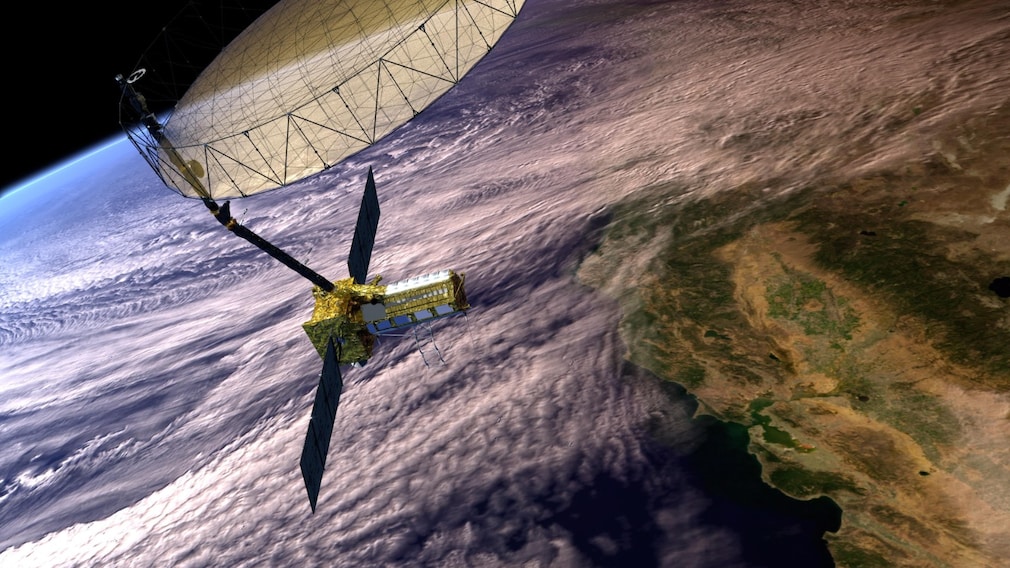
The very unique Earth imaging satellite jointly made by India and US named the 'NASA ISRO Synthetic Aperture Radar' (NISAR) satellite, is a technological marvel and would be a game-changer in saving lives from impending natural disasters. That the world's oldest democracy, US, and the world's largest democracy, India, are working together on this most expensive satellite that has cost upwards of $1.3 billion. It is a testament to the growing Indo-US bonhomie and strategic ties.
But this mission also exposes the double standards the US exercised on India in yesteryears and is also ironical that America's most expensive civilian Earth imaging satellite ever made will be launched using an Indian launcher - the same rocket Americans wanted to desperately scuttle and kill its development in the early nineties.
ISRO persevered relentlessly for nearly two decades and succeeded so much so that now top officials from NASA will actually be present at India's space port to witness the historic liftoff on July 30.
According to ISRO, the NISAR satellite weighs 2,392 kg, and it will scan the entire globe and provide all-weather, day-and-night data at a 12-day interval and enable a wide range of applications. NISAR can detect changes in the Earth's surface, such as ground deformation, ice sheet movement, and vegetation dynamics. It will be launched using the Geosynchronous Satellite Launch Vehicle Mark 2 (GSLV Mark 2), which will be powered by an indigenously developed cryogenic engine - the same technology that the US administration, especially its Bureau of Export Control, wanted to deny to India by working overtime with the then USSR.
It was the 1990s and India was steadily developing its rockets and wanted to acquire the sophisticated cryogenic engine technology from the then USSR. It was under American pressure that Russia did not do technology transfer to India, but instead gave about half a dozen ready-made cryogenic engines to India.
Subsequently, India struggled for nearly twenty years before mastering the complexities of cryogenic engine technology. The Americans used all the power of technology denials, sanctions at their disposal to try and make sure India did not acquire this technology. But then these tech-denials turned a blessing in disguise, and the scientists at ISRO toiled hard, and today it is the home-made cryogenic engine which will launch the NISAR satellite.
Some would say this is an irony of ironies, and some would say it is egg on the face of US.
Dr V Narayanan, chairman of ISRO, had helped India master the cryogenic engine, which makes it a proud moment for him to see the NISAR sticker on the payload fairing of the rocket that houses the cryogenic engine inside.
At the end of the day, the US scientists have swallowed their pride and are sheepishly going to watch the launch of a satellite where they have invested nearly $ 1.15 billion. It is this exorbitant cost by NASA that should also be a reason for Americans to squirm and be uncomfortable.
Wendy Edelstein, NISAR's Deputy Project Manager at NASA's Jet Propulsion Laboratory (JPL), asserted, "NISAR is a 50-50 partnership between NASA and ISRO. It represents the largest collaboration in space between the United States and India."
Interestingly, India has spent about Rs 800 crores on the NISAR project, which works out a little less than $100 million. NASA confirmed that it included 'ISRO investment for development, launch operations, and mission operations'.
NASA has contributed the L-band radar, which penetrates vegetation and soil to reveal subsurface changes, while ISRO has provided the S-band radar, optimised for detecting surface-level features like foliage and terrain. These radars are mounted on a 12-meter mesh reflector antenna, roughly the size of a school bus, allowing the satellite to scan nearly all of Earth's land and ice surfaces twice every 12 days.
India has not only contributed the equivalent S-band radar, but is also providing the rocket and the launch port and launch services, so why NASA's cost is $1.1589 billion and ISRO's cost is just $100 million? Here lies the heartwarming tale of Indian frugal engineering and cost optimization: It shows the profligate approach to engineering adopted by NASA.
When quizzed by the US media on the issue of costs, Nikki Fox, Associate Administrator for NASA's Science Mission Directorate, said at a briefing, "I will defer to them [ISRO] on their final costs".
There are many reasons behind the huge cost incurred by NASA, one of them being that most of the development of the instruments and payloads they fly are made by huge multi-national corporations and they not only need huge profits but also need to share dividends with their share-holders. ISRO, on the other hand, being a national entity does these things in-house and has no reason to pad up the cost to share profits with share-holders.
Additonally, an ISRO official said that when their scientists travel to the Jet Propulsion Laboratory in Pasadena in California, they would stay in shared $100 a day room while the NASA scientists when they travel to the UR Rao Satellite Center in Bengaluru would stay in an over $500 a day room. This automatically inflates the costs.
Also, India usually makes only one instrument the one that will fly into space, while NASA makes an engineering model and flight model, which leads to doubling the cost.
The way human power is distributed is also very different between NASA and ISRO at the Indian space agency.
In the case of NISAR, which has taken over 11 years to build, the teams at ISRO working on multiple satellites and the salaries in India also turn out to be much lower when converted into dollar terms. The top manager at ISRO also pointed out that ISRO engineers are willing to put in long hours and work over weekends, while the US contract engineers are reluctant to put in long hours.
The premium for insurance also adds to the costs at ISRO since the government takes the full liability and no insurance is taken, In other countries, insurance premiums can be a huge cost. Incidentally, when India launched its communication satellite using the SpaceX Falcon-9 rocket, India also took insurance.
This huge difference in NASA's and ISRO's costs remains a huge enigma for the making of the NISAR satellite, which was made with an understanding of equal partnership.
Not just NISAR, there are still many bitter-sweet oddities in the Indo-US space relationship. India's first rocket launched from Thumba on November 21, 1963. It was an American Nike Apache rocket and the world got its first direct-to-home television broadcast - thanks to the Satellite Instruction Television Experiment (SITE) in 1975 pioneered in rural India.
Then came the era of sanctions, which ended only when the Indo-US Civilian Nuclear Deal was inked in 2008. Despite the sanctions, ISRO opened its heart out and flew two American instruments to the moon on Chandrayaan-1 in 2008 free of cost. This is contrast with the 2025 Astronaut mission of Shubhanshu Shukla to the International Space Station using the Axiom-4 flight where India shelled out hard cash of about $70 million for this single seat to the Americans.
Interestingly, when the two democracies have worked together, they have had fruitful outcomes.
It was Chandrayaan-1 which discovered the presence of water on the lunar surface, opening up flood gates for the colonisation of the moon. And now, on the NISAR mission, when NASA had all but given up the making of this costly satellite as its other foreign partners had backed out, it was ISRO that stepped in in 2014 and said ,'let us forge this partnership to make the world's single most expensive civilian Earth imaging satellite'. Hence, today the $1.3 billion NISAR satellite, which is sometimes also referred to as the NISARGA satellite, has been conceived in the true spirit of 'Vasudhaiva Kutumbakam' or the 'world is one family,' concept, and sits atop the rocket ready for lift off from Sriharikota in the true spirit of 'vishwa bandhu'.
The contrast in cost structures, the cultural differences in engineering ethos, and the historical ironies are a compelling story of resilience, frugality, and strategic partnership. Life, in a way, is coming full circle for US and India, as the friendship grows to explore the unknown frontiers of space.
India's frugal technology development, when clubbed with the US high technology can lead to a huge cosmic leap.
-
Hit Songs, Empty Pockets: The Hidden Math Behind India's Viral Music Boom

Over 80,000 brands and five lakh creators in India make branded content. The opportunity is worth around Rs 1,500 crore.
-
Opinion | Great 'Exceptions': How The Oil India Was Attacked For Is The Oil Trump Now Seeks
A law written to punish the buyers of Russian oil was suspended by the US to protect a purchase of Russian oil. India spent fourteen months being lectured for less.
-
Opinion | Louis Vuitton Loot, Torched Cars: France Protests Have An Unlikely Beneficiary
It's an unbelievable moment. Crowds looting the most exclusive stores in Paris, including the famed Luis Vuitton. But what's behind this meltdown?
-
Blog: Kolkata Didn't Learn From 2015. Eleven Years Later, It Proved To Be Fatal
The City of Joy isn't a stranger to crowd control. Be it during Pujo or Christmas at Park Street, Eden Gardens cricket matches, or Derbies between Mohun Bagan and East Bengal. But during Pujo, the entire city is on alert.
-
Opinion | Slurs, Threats, Now A Temple Attack Plot: When Did America Become So Hostile To Indians?
The rising tide of anti-India, anti-Hindu, and racist attacks serves as a stark reminder that economic prosperity does not automatically guarantee social immunity from bigotry.
-
A Step Behind Neha Bora: What Rahul Gandhi's Gesture Says About Congress' Gen-Z Pitch
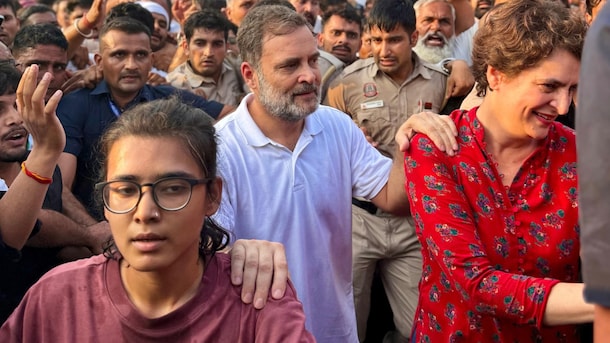
At INDIA bloc's march to Supreme Court, Rahul Gandhi placed himself a step behind two women, hands resting on their shoulders. One was his sister Priyanka. The one on his right was Neha Bora. Here's what the image means for the protest wave now, and for Rahul's politics in general.
-
Opinion | Imran Khan, And The Perils Of Having An 'Opinion' In Bollywood
The reality of the industry is quite grimy. More often than not, its inhabitants have been fairweather friends, happy to sing the praises of whoever is in a position of authority.
-
Exclusive: India's Food Safety Problem Goes Beyond Just Dirty Kitchens - By Tukaram Mundhe
On World Food Day, Maharashtra's Commissioner of Food Safety explains why instead of taking stopgap measures, the entire supply chain in India needs to be held accountable and made transparent.
-
Opinion | India Has Enough Coal. So Why Are Power Plants Running Short? A 76 Million 'Crunch'
As of October 5, as many as 82 of the 191 thermal plants monitored by the Central Electricity Authority were in the 'critical' category
-
Opinion | Starlink, India, And Why Elon Musk Must Know His Billionaire Tantrums Won't Work
India should neither be intimidated by Musk's global influence nor distracted by his theatrics.