Cannot Get Over When Life Gives You Tangerines? Here's Why It Hit So Hard
In a sea of romantic leads who are either emotionally unavailable or unrealistically perfect, Gwan-sik stands out-not as a fantasy, but as the kind of man whose goodness feels attainable, because it's rooted in small, consistent acts of care.

It's been over two weeks since When Life Gives You Tangerines concluded its 16-episode run on Netflix, yet the drama refuses to leave the hearts and timelines of viewers.
Threads, reels and long-captioned posts are still flooding in - from young women dreaming of a love like Ae-sun's to older viewers seeing their own lives mirrored in Jeju's rocky shores.

What is it about this seemingly simple story that has everyone clinging to it like a cherished memory? The answer lies in its gentle storytelling, its unabashed sentimentality and most of all in Yang Gwan-sik.
Set across six decades on Jeju Island, When Life Gives You Tangerines is a slow-burning, emotionally layered story of Oh Ae-sun (played by IU and later Moon So-ri) and Yang Gwan-sik (Park Bo-gum and Park Hae-joon), childhood sweethearts whose bond endures poverty, societal pressures, personal loss and the mundane challenges of everyday life.

But to reduce this series to a love story would be to oversimplify it. This drama is a love poem written to life itself, to the quiet grit of women like Ae-sun and to the gentle strength of men like Gwan-sik.
Yang Gwan-sik, The Greenest Flag
In a sea of romantic leads who are either emotionally unavailable or unrealistically perfect, Gwan-sik stands out-not as a fantasy, but as the kind of man whose goodness feels attainable, because it's rooted in small, consistent acts of care.
Recommended


His love is not performative, it's not punctuated by grand gestures or fiery confessions. It's the kind of love that lives in the everyday: in a shared meal, in a quiet act of protection, in a gaze that never turns away.

Even as a child, Gwan-sik watched over Ae-sun. After her mother's death, she lived with her neglectful uncle, often going to bed hungry.
Gwan-sik, who helped his family sell fish, made it a habit to give her one fish every day for free. He didn't have much, but what he had, he gave her.

When Ae-sun's education was cut short and she began selling cabbages to survive, Gwan-sik set her stall up next to his and would often abandon his own sales to sell her vegetables for her.
That pattern continues through adulthood. When his family mistreated Ae-sun-refusing to let her and their daughter eat peas because they were "too expensive" for women, Gwan-sik didn't stay silent.
He moved from the men's table to sit with the women, handed over all his peas and began buying them regularly, just so his wife and daughter could enjoy a simple pleasure that was once denied to them.

In one pivotal moment, when his mother asked him to join in scolding Ae-sun, he stood his ground and said: "I'll choose my wife's side. Ask Dad to choose yours. He's the one supposed to be on your side."
These moments aren't cinematic for the sake of being dramatic, they are subtle reinforcements of Gwan-sik's unwavering character. He doesn't speak much, but he sees everything. He doesn't try to control Ae-sun - he supports her, protects her peace and holds space for her.

"If you don't like it," he tells her once, "flip the table. I'll clean the mess." That is who he is - her safe place, her freedom and her soft landing all at once.
And his love is not limited to Ae-sun. To their daughter Yang Geum-myeong, he offers the same unconditional support. "If you ever feel like quitting, I'll be right there. You can come running back to me," he says.
On her wedding day, he tells her the same - "love, but never at the cost of your dignity". It's a powerful message in a world where daughters are often taught to endure, not to walk away.

One could argue that Gwan-sik is an idealised man, but he is not perfect. He is simply consistent. Kind. Present. The bare minimum, we like to say - but in a world where even that feels rare, he becomes a green flag so bright it glows.
Love In The Little Things
Throughout the show, When Life Gives You Tangerines pays tribute to the mundane. Ae-sun, despite dreaming of being a poet and escaping her fishing town, finds poetry in the ordinary, thanks to Gwan-sik. The hairclip he gifted her as a teen became part of her identity.

After their marriage, he filled her drawers with new ones so she would never run out. Even in death, he loved her gently, dying before her, but only after repairing the entire house so she'd never have to lift a finger. He left Ae-sun a home full of functioning faucets, fixed windows and hairclips, so she would always feel his love long after he was gone.
There's a scene where Ae-sun's daughter asks if she regrets marrying Gwan-sik. Ae-sun, worn down by years of hardship, poverty and loss, says, "Yes, I would marry him again." She doesn't hesitate.

Contrast this with her daughter's own failed relationship. She falls in love with Park Yeong-bum (Lee Jun-young), a man who says he loves her, but never defends her. His silence, when his parents mistreat her or ask her to give up her dreams, is louder than words. It is a quiet betrayal.
Ae-sun's daughter Yang Geum-myeong walks away, saying, "I love you, but I also love myself." And when she falls in love again, it's with someone who reminds her of her father - kind, respectful, supportive. The message is clear: love should feel like safety, not sacrifice.
The Gendered Realities Of Everyday Life
Beyond its love story, the show is a deeply feminist text in how it portrays the quiet battles women face daily. Ae-sun doesn't just fight poverty - she fights patriarchy.
From being denied education to being patronised by in-laws, to being underestimated when she runs for village chief, her life is a series of hurdles. But the sisterhood in the village - women who cheer her on, stand beside her and form her core support system - is a heartening reminder that strength is collective.

And the men? They are not all like Gwan-sik. The drama is deliberate in showing contrasts - men who shout, control, silence or simply disappear when needed most. By doing so, it makes Gwan-sik's character even more precious.
He doesn't just love Ae-sun - he respects her, stands with her, and lets her take space in a world that constantly tries to shrink women.
A Slow Burn With Lasting Heat
At its core, When Life Gives You Tangerines is not just a K-drama, it's an experience. It reminds us of our mothers, our fathers, our childhoods and the quiet beauty of an unremarkable day. It reminds us that love isn't found in cinematic monologues but in shared meals, repaired roofs and peas on the dinner table.

Kim Won-seok's direction and Lim Sang-choon's writing don't just create a show - they craft a life. And in that life, Gwan-sik becomes a man every girl dreams of, not because he's extraordinary, but because he makes ordinary things sacred.
And maybe that's what we've all been aching for - a little tenderness in a world that rushes too much. A little peace. A little tangerine in the middle of a storm.
-
TVS Succession Row Explained: Why Venu Srinivasan's Family Is Divided Over Wealth

TVS Family Dispute: TVS Holdings is a key entity because it owns a controlling stake in TVS Motor Company. It owns 50.26% of TVS Motor.
-
Opinion | The US Is Showing India Just How Cheap Its 'Friendship' Is
Can local talent fully replace Indian contribution? Why is the US leading in setting up Global Capability Centres in India - over 60% - and pocketing the IP?
-
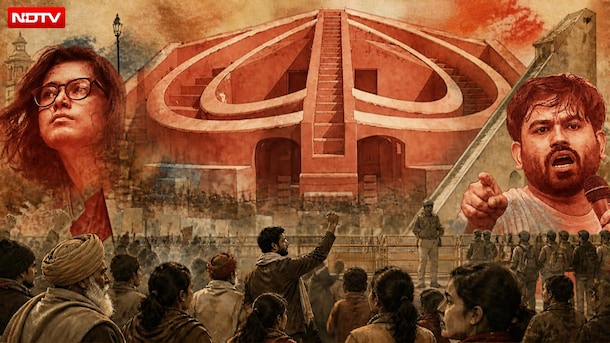
Jantar Mantar Tells Time. The Clock Just Stopped On Its Time As An Iconic Protest Site
On Monday, October 12, 2026, Delhi Police denotified Jantar Mantar Road as a designated site for demonstrations. The Supreme Court had given it a nudge. Here's how history met politics on that street for decades.
-
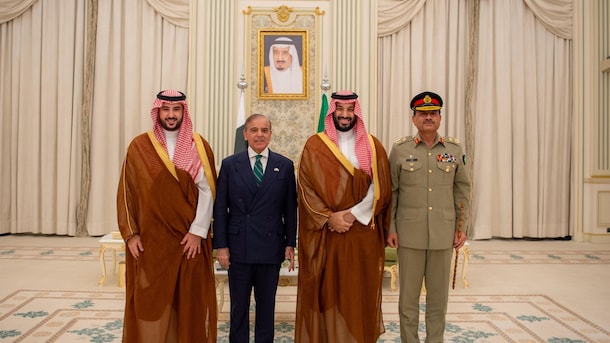
Opinion | Saudi Airport Attack, And Why Pakistan Keeps Biting Off More Than It Can Chew
For all those who were envious of Pakistan's 'new status' as "mediator extraordinaire", here is a reality check
-
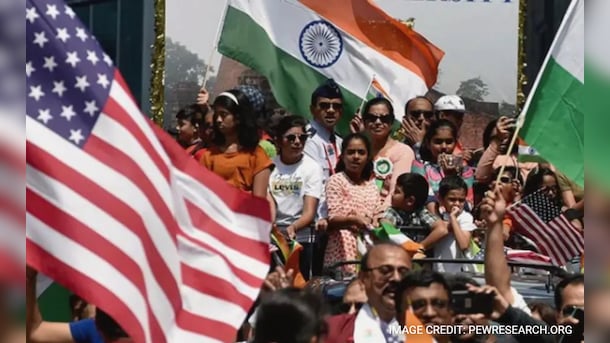
Opinion | Visa Shocks To Racist Attacks, When Did America Come To Hate Indians So?
Sometimes it is about H-1B visas. Sometimes it is jobs. Sometimes it is "foreigners." Sometimes it is about temples. The language of the attack varies, but the message is consistent
-
How El Nino And Warming Oceans Could Shape Earth's Climate In 2027
From changing ocean currents to extreme weather, scientists are watching a combination of climate signals that could influence temperatures, rainfall and ecosystems in the months ahead.
-
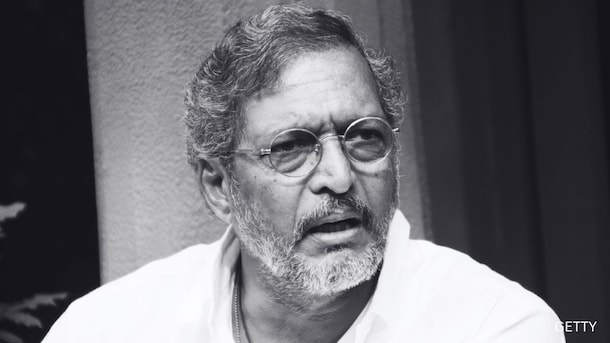
Blog | Nana Patekar, And The Sharp, Lasting Sting Of His 'Plain-Speak'
"Subah ghar se niklo, bheed ka hissa bano..." Nana Patekar's characters often spoke with the bluntness of men who had little patience for pretence. Just like Nana himself.
-
Opinion | Pakistan's Saudi Pact Is Now Entering Dangerous Territory - As Expected
On October 5, the ministers of the pact's member states met in Riyadh for an emergency session and agreed to move to a 'practical implementation' of the defence commitments.
-
Hindu ka khoon-Musalman ka khoon? Nana Patekar's Krantiveer Questions Still Hang
Krantiveer was released in 1994, after the communal violence that had scarred Bombay and other parts of India. Nana's voice carried the pain of every riot, every broken home