The Politics Of Blue: Why Akhilesh Yadav-vs-Mayawati Over A Colour Is Just One Shade Of History
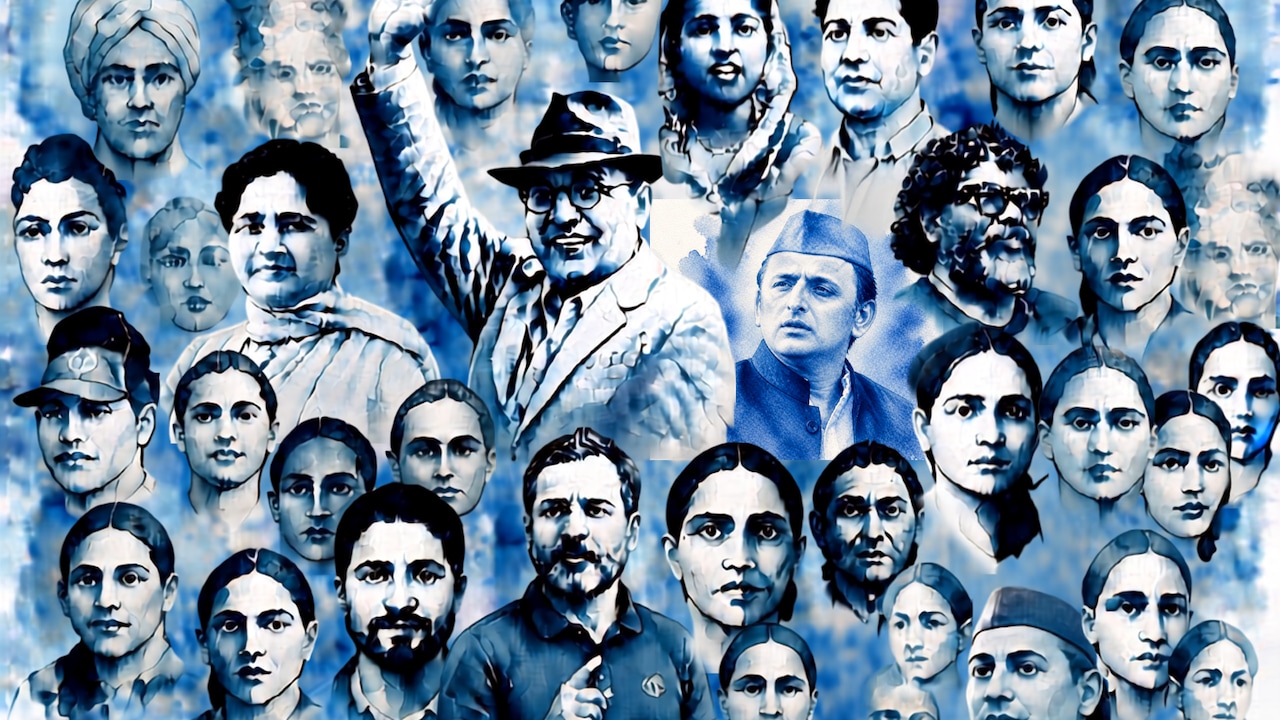 Illustration produced by author with AI aid
The scene lasts a shade over three minutes. A politician in spotless whites arrives in a slum to claim the land he has finally won. The slum's hero, who stood in his way, is gone. The villain grabs a handful of earth. It's a conqueror's gesture.
Then, the slum buries him in colour.
A fistful of black first, thrown by a girl right at him. Then red. A lot of blue. In great clouds. Until the white is not recoverable. A boy covered in blue is thrown up in joy. A crescendo builds. Credits roll.
This is the climax of Pa Ranjith's 2018 Tamil movie 'Kaala', starring Rajinikanth as the titular hero and Nana Patekar as the villain in white. Ranjith, among the most prominent Dalit voices in Indian cinema, has spelt out the cinematic statement he made: "Ambedkarism (blue) and the ideologies of both [Tamil social reformer] Periyaar (black) and the Left (red) need to converge to defeat oppressive regimes."
This month in Lucknow, blue is at the centre of a more direct political argument, as the Samajwadi Party picked blue t-shirts and jeans as the new uniform of its student wing, alongside its red cap. SP chief Akhilesh Yadav reasoned that denim or jeans fabric is a symbol of resistance, first worn by workers, and the colour blue belongs to democracy, the Constitution, and BR Ambedkar.
Colour isn't just colour here. "A uniform is not just a uniform. It is ideology too," Yadav said.
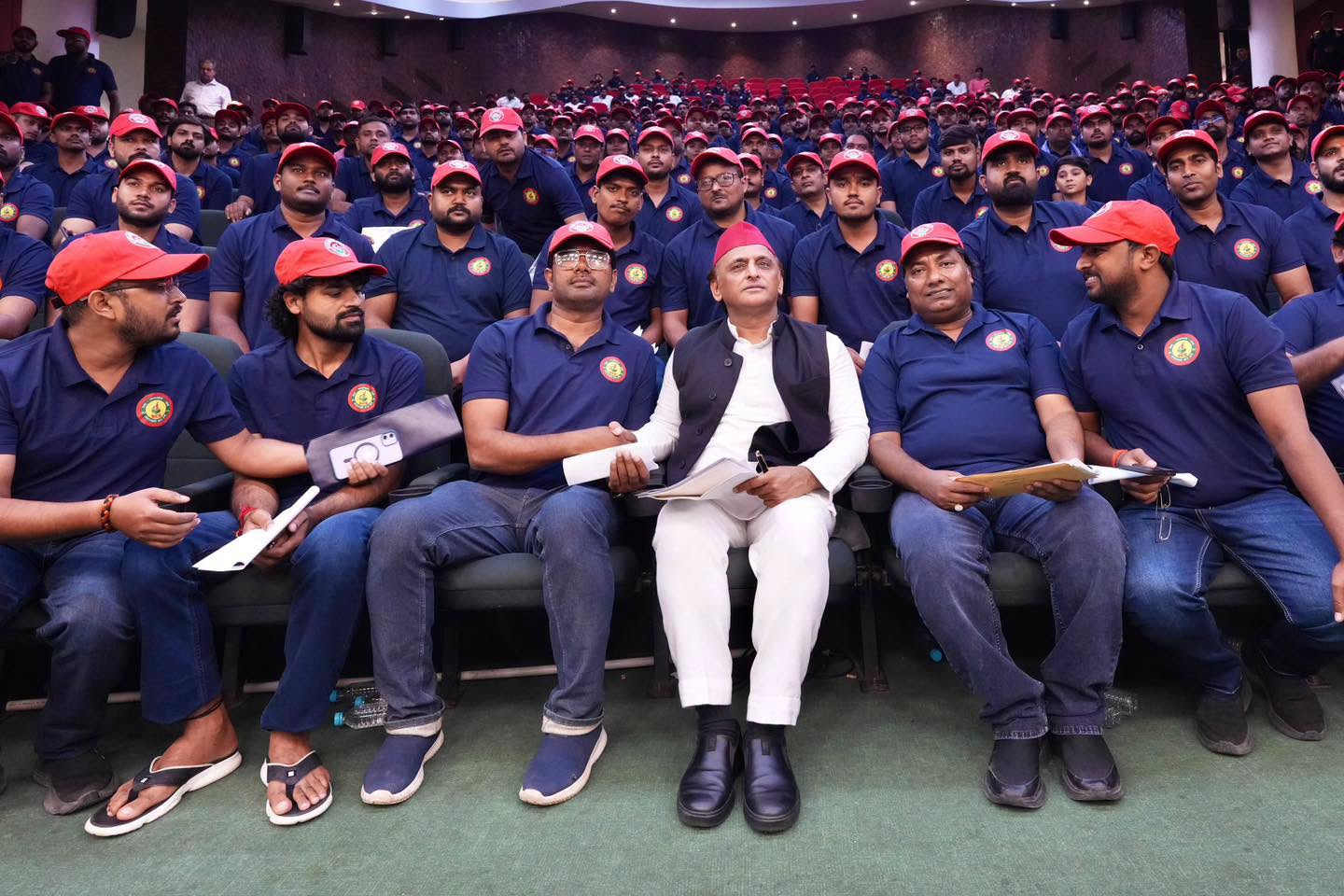
Akhilesh Yadav with members of his party's student wing in Lucknow. (Photo: Facebook/@yadavakhilesh)
Bahujan Samaj Party (BSP) boss Mayawati clapped back in an eight-part post on X, claiming blue as her party's colour "since the very beginning". Wearing it, she wrote, would not make her rivals "Ambedkarite at heart". She jibed at the SP, Congress, and other parties that are lately more amenable to blue: "They keep changing colours like a chameleon."
Blue has been associated with the oppressed castes' political mobilisation for decades, just as red signifies communists and socialists, and saffron signals Hindutva.
Immediate Motifs And Motives
The Yadav-Mayawati exchange comes barely six months before elections in India's most populous state, Uttar Pradesh, where the 'saffron party' BJP is in power, as it is at the Centre. The SP is the main Opposition, Congress in tow, and the BSP at its lowest ebb as Mayawati releases new episodes of her succession saga every other day.
At a party meeting on August 31, Akhilesh Yadav and other leaders wore blue scarves with the SP's bicycle symbol in red. They reportedly said blue symbolises the sky under which everyone is equal. That's a philosophical definition offered over the years by Dalit activists.
In realpolitik, the uniform is part of the SP's 'PDA' pitch for the Pichhda (backward classes), Dalit (Scheduled Castes) and Alpsankhyak (minorities) sections. Akhilesh Yadav, a leader from the Other Backward Classes (OBC) -- often estimated at over half of UP's population -- has in recent elections given non-Yadav OBCs and Dalits a larger share of tickets.
Dalits make up just over a fifth of Uttar Pradesh's electorate, and that vote is no longer a BSP monolith. Mayawati, a Jatav herself, retains a loyal older core among them.
But all blue is not hers alone.

Chandrashekhar Azad's Aazad Samaj Party suffixes the name of her mentor and BSP founder Kanshi Ram to its own, and launched its flag -- a white band between two blue stripes -- on his birth anniversary in 2020. The Congress and SP are claimants as well, at a time when Mayawati is accused of being soft on the BJP to guard against action in corruption cases. She has denied the charge. The BJP has managed to gather chunks of SC and OBC votes, too, into the wider saffron fold.
The Samajwadi Party faced taunts over colour earlier, such as five years ago when PM Narendra Modi said, "The (lal topi) red caps are red alerts for Uttar Pradesh." Akhilesh Yadav defended red as "the colour of the revolution". SP student wing leader Avnish Yadav now says blue adds "new energy". The Congress, mostly having used the saffron-white-green of the national flag, also adopted blue at key times, such as Rahul Gandhi's t-shirt in Parliament in 2024 when he protested Union Home Minister Amit Shah's remarks on Ambedkar.
Those are just the more recent bits. The story of blue must be told via history and archives too.
Ambedkar's Colour: Was It Always Blue?
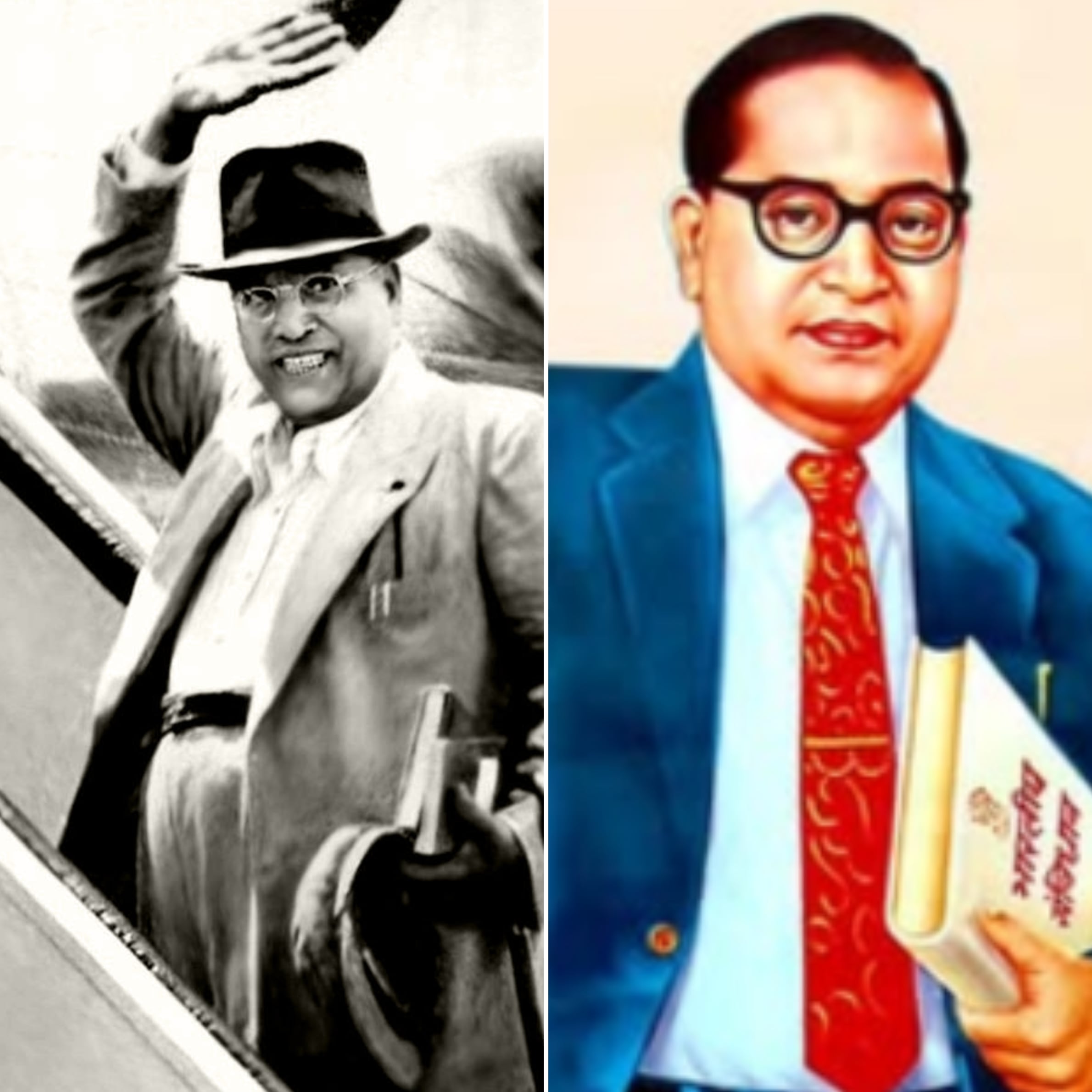
BR Ambedkar while leaving for the US to receive an honorary degree in 1952; and (right) in the popular blue-suit depiction holding the Constitution of India that he led the drafting of. (Images: Government archives, PIB)
Blue was not the only colour of BR Ambedkar's own politics. It grew to become preeminent.
His Independent Labour Party flew a red flag too, as per a March 1940 party circular. Blue then appears in the draft constitution of the Samata Sainik Dal, Ambedkar's volunteer corps, in 1944. It specifies a flag whose "whole ground" would be "deep blue", meaning "liberty, equality & fraternity and to fight to achieve our goal", as per official archives. The flag of his Scheduled Castes Federation, formed in 1942, was also blue.
Clothes Of Workers Globally, Colour Of Dalit Resistance In India
Why blue? Ambedkar never really said expressly. But theories and timelines converge. One reading begins with the cloth itself. Indigo, or blue ('neel'), was the cheapest natural dye in the world, and the colour hid sweat and dirt. So the world's workers -- factory hands, miners, railwaymen -- wore blue. A newspaper in Alden in the US coined the term for it in the early 1920s: "If we may call professions and office positions white collar jobs, we may call the trades blue collar jobs."
These developments in the West, between the 1920s and 1940s, coincided with the Ambedkar-led movement in India adopting blue. In India, caste had long decided who handled manual labour. Ambedkar's first party, formed in 1936, was called the Independent Labour Party with a red flag to match the universal colour of workers' movements. When he formed the Scheduled Castes Federation, a more Dalit-centric platform, blue came to the fore. Dalit activist SR Darapuri has offered a reading beyond labour, as blue "is also the colour of the sky, which shows vastness, and that was the vision of Baba Saheb". Whatever the exact reason, the colour endured.
The Scheduled Castes Federation gave Dalit politics its best-known symbol too. "Our people are like the elephant: it takes time to stand up, but once on its feet, you cannot easily force it to its knees," Ambedkar said while campaigning in Punjab's Jalandhar in October 1951. The blue flag and the symbol passed to the Republican Party of India, launched in 1957, months after his death. The RPI has since broken into many factions that continue to use blue. When Kanshi Ram founded the BSP in 1984, the party used blue, and later secured the elephant, coining the slogan saying both: "Neela Jhanda-Haathi Nishaan".
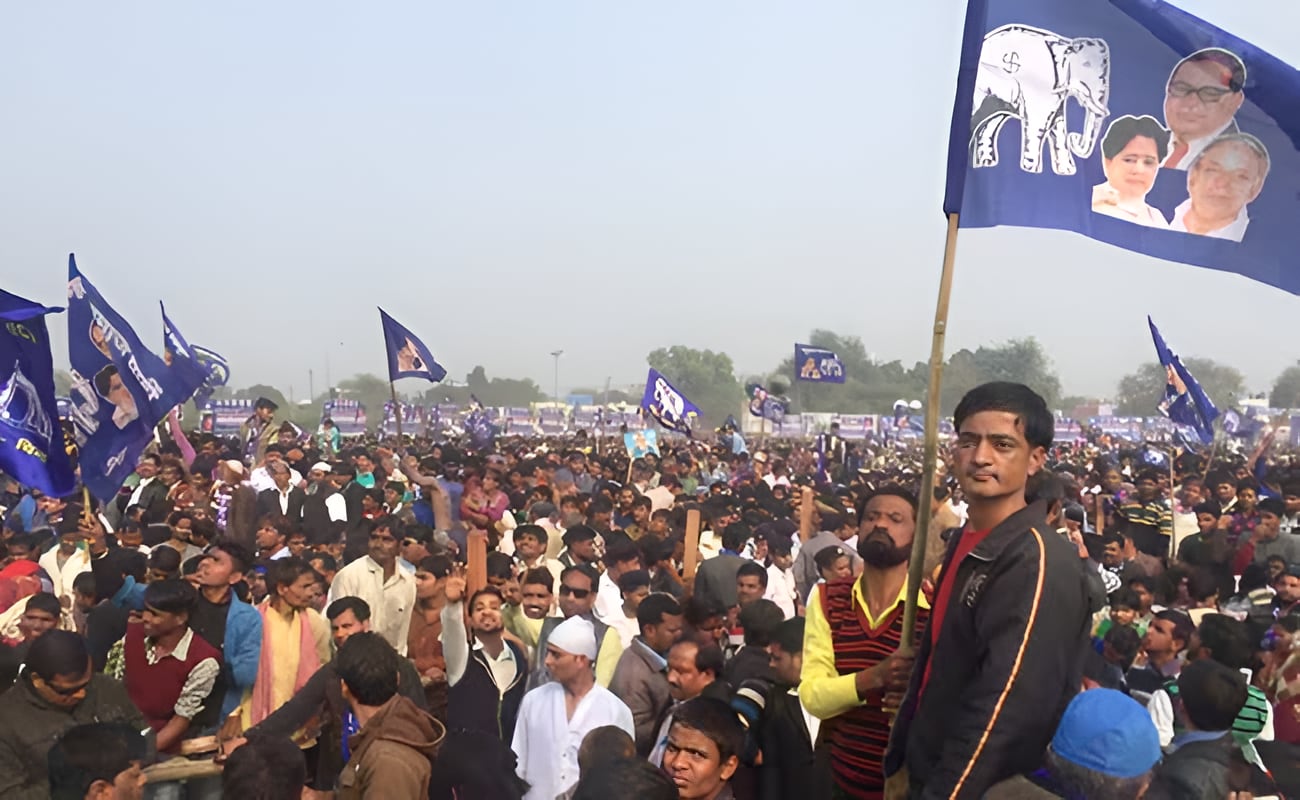
The BSP's blue flag carries its symbol, the elephant, along with images of Mayawati, Kanshi Ram, and BR Ambedkar.
Rival ideologies have contested the colour, sometimes literally with a brush. In 2018, a controversy arose when an Ambedkar statue in UP's Badaun district was installed wearing a saffron jacket. It was repainted blue after local BSP leaders objected.
Beyond the political pitch, India's sports teams have long worn shades of blue, apparently inspired from the blue Ashok Chakra on the Tricolour to mean equality. Which is why the moves to turn the jersey orange (or saffron) keep fuelling arguments about politics.
And the colour carries into music, too, as Dalit singers in Punjab, the state with the highest proportion of SCs in its population, turn caste slurs on their heads. Ginni Mahi, a prominent young woman among those artistes, performs in blue and against blue flags in music videos.
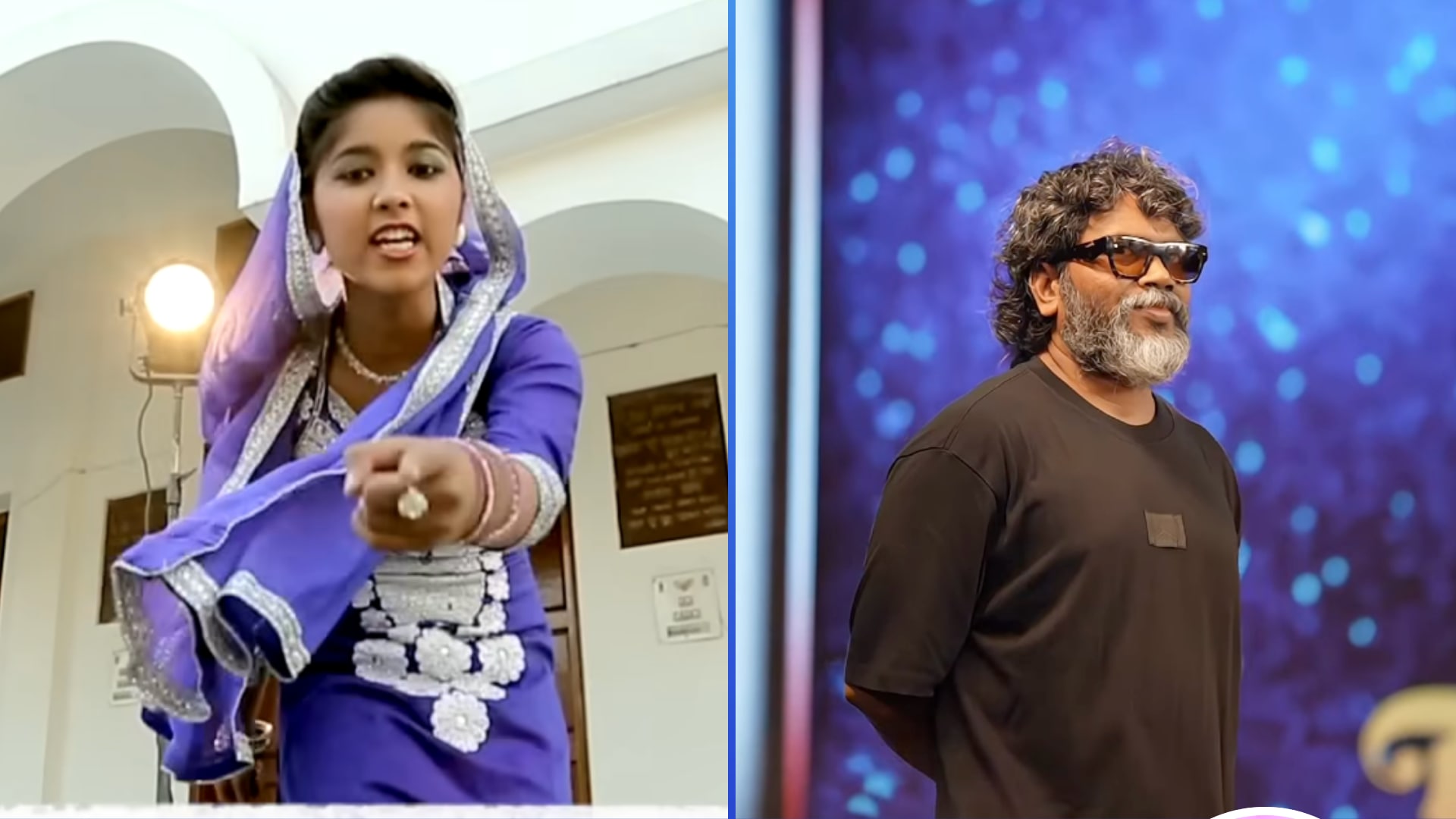
Singer Ginni Mahi and filmmaker Pa Ranjith challenge caste hegemonies through their work in Punjabi and Tamil.
Yet, filmmaker Pa Ranjith, whose production house is called Neelam (blue), suggests going beyond colour alone. "Sometimes, too much gets read into the colours, which is both interesting and saddening," he said in 2020. That's a fair warning. But in politics, a colour is read several ways. Blue too.