Motherhood On Trial: What You Don't See About New Mothers' Mental Health
 Unsplash
On September 4, a US courtroom failed to deliver a verdict in a case that has gripped the world and sparked debate over postpartum mental health. After nearly six weeks of testimony and seven days of deadlocked deliberation, a judge declared a mistrial in the case of Lindsay Clancy, the former labour and delivery nurse accused of strangling her three young children--5-year-old Cora, 3-year-old Dawson, and 8-month-old Callan--at the family's Duxbury home in January 2023. Clancy attempted suicide that same night, an act that left her paralysed. Eleven jurors reportedly leaned one way, but a single holdout kept them from a unanimous decision.
Clancy's defence never disputed that she killed her children. What it disputed was whether she was capable, in that moment, of understanding what she was doing, because her attorneys argued that she was gripped by postpartum psychosis.
The trial became something larger than a murder case. It forced open a conversation about the mental health of new mothers in the postpartum period. One reason the Clancy case struck such a nerve was the condition at its centre and how it differs from the postpartum experience most people recognise. Motherhood is sold as a season of bonding and joy, but for many women, it becomes a psychiatric emergency.
Closer To Home
That conversation is not confined to the US. In Bengaluru, police in September registered a case against Umadevi, 40, after she allegedly killed her four-month-old twin daughters and then attempted to take her own life at the family's home in Vajarahalli. She survived. The FIR followed a complaint from her husband, Ramalingappa SH, a 50-year-old real estate dealer, and the investigation is ongoing.
According to police, Umadevi had been undergoing psychiatric treatment after doctors told the family her condition was linked to postpartum depression and hormonal changes following childbirth. Her husband said the couple, married since 2002, had led a "cordial married life," and that he had never heard the term postpartum psychosis. But during a later interview, he admitted he could see, in the months before the deaths, that his wife was "struggling."
The case echoes similar blind spots doctors describe in the Clancy trial, including a family that recognised something was wrong, sought psychiatric help, and still could not see the danger coming in time. It is a reminder that the condition--and the silence around it--is a global problem. It surfaces wherever new mothers are expected to cope quietly, and wherever the people around them lack the language to name what they're seeing.
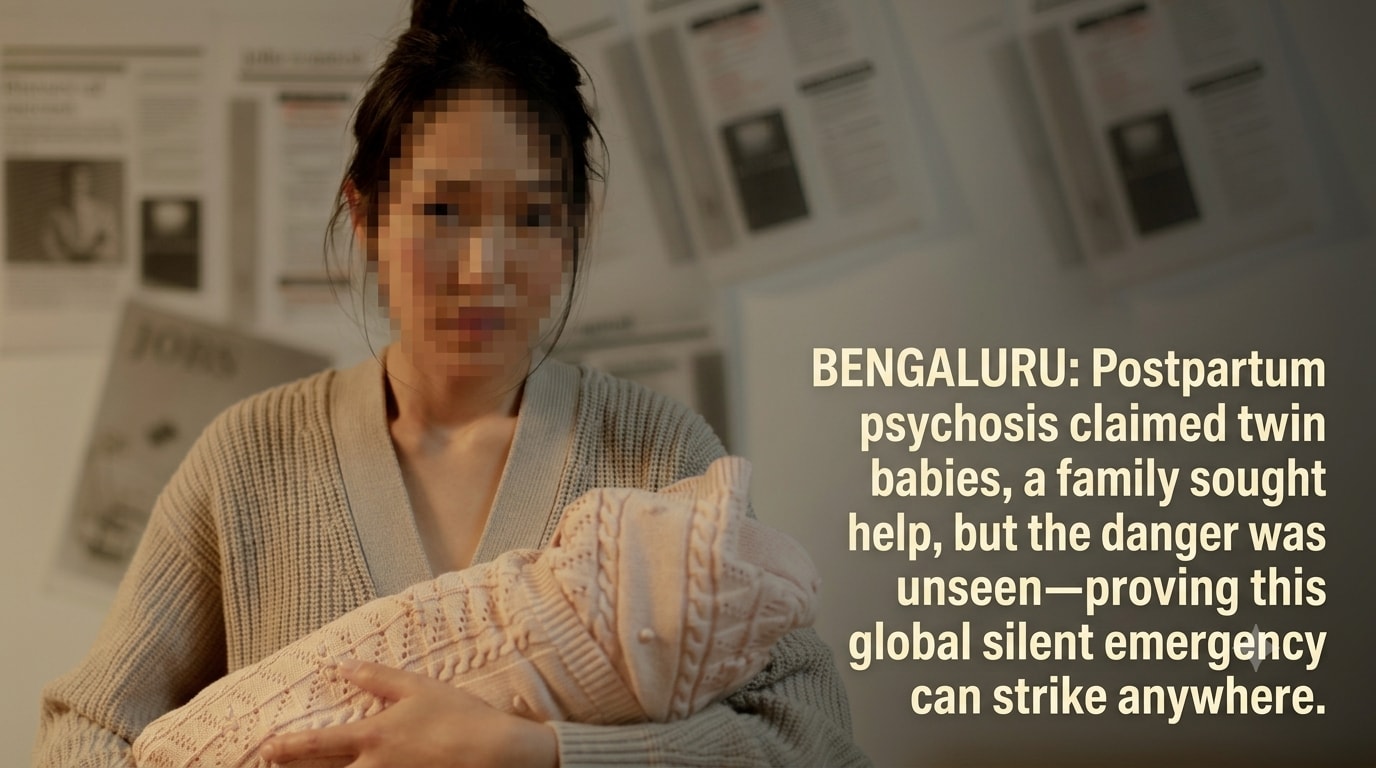
Photo Credit: Pexels
More Than Baby Blues
In the past few years, postpartum depression has become a fairly well-known condition, with celebrities like Gwyneth Paltrow, Serena Williams, and Kylie Jenner sharing their traumatic experiences post-childbirth. In India, actors including Sameera Reddy and Esha Deol have talked at length about their postpartum mental struggles.
According to the US National Institutes of Health (NIH), postpartum depression (PPD) affects around 10 per cent of women--or 1 in 7 mothers--after giving birth. The agency notes the condition goes undiagnosed in 50 per cent of mothers.
Postpartum depression is different from the baby blues. UNICEF noted that it usually occurs two to eight weeks after giving birth but can happen up to a year after the baby is born. "One of the important things about postpartum depression is it's not just feeling sad," explained Dr Alison Stuebe, maternal-fetal medicine sub-specialist and professor of Obstetrics and Gynaecology at the University of North Carolina School of Medicine.
Feelings of persistent sadness, intense anxiety, exhaustion, and difficulty bonding with a newborn are common features of postpartum depression. "We all worry about our kids, but [those experiencing postpartum depression] are so worried that it impedes their ability to enjoy their baby and to enjoy their life," Stuebe explained for UNICEF.
But postpartum psychosis is different and far more severe. It occurs in only about one or two of every 1,000 deliveries, but with a severity that dwarfs ordinary postpartum distress, according to the NIH. Its defining feature, according to the World Health Organisation (WHO), is a genuine loss of contact with reality, setting it apart from both the "baby blues" and postpartum depression.
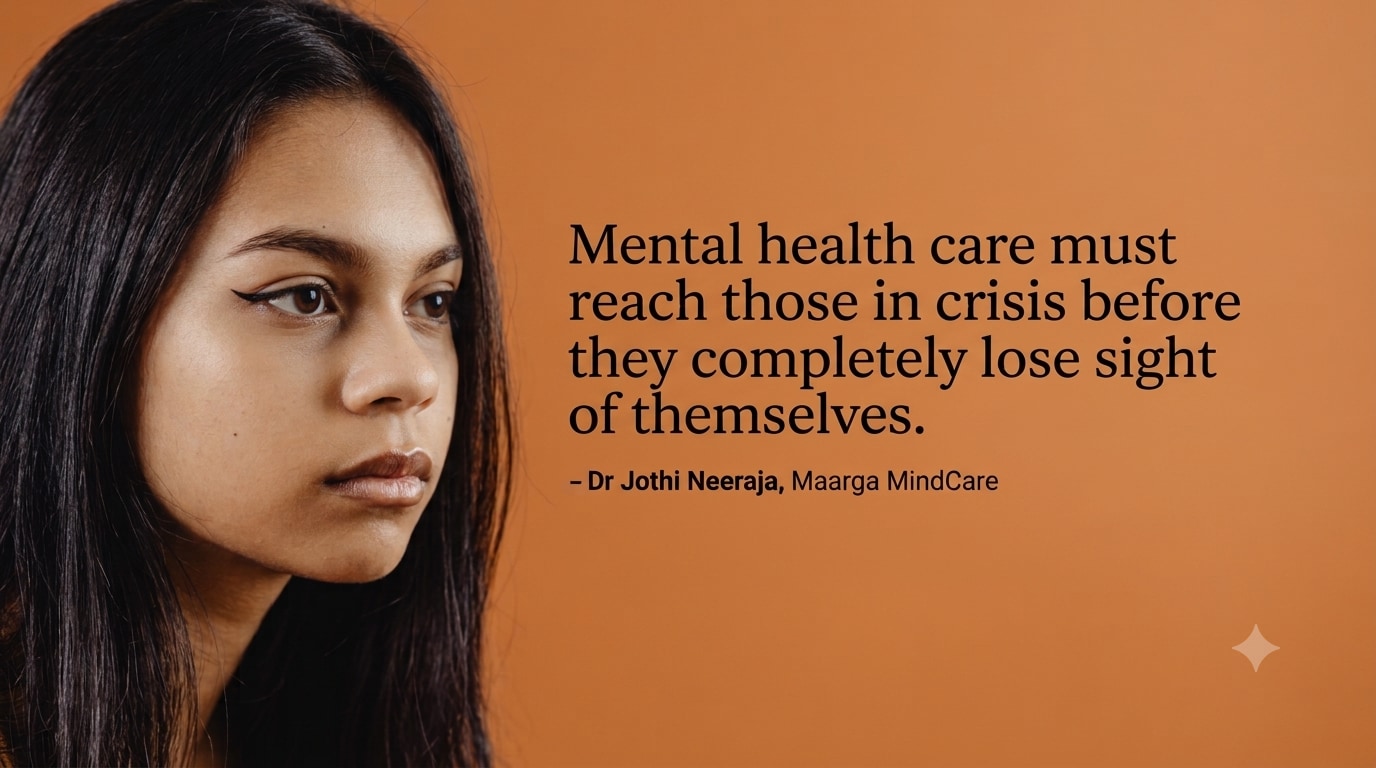
"Postpartum psychosis is a severe disturbance in perception, thinking, mood, and judgement," said Dr Jothi Neeraja, Founder, Chairwoman, and MD at Maarga MindCare. "A woman may hear or see things that are not present, develop beliefs that are not consistent with reality, become intensely suspicious or confused, or behave in ways that are completely unlike her usual self."
Dr Pretty Duggar Gupta, Consultant Psychiatrist at Aster Whitefield Hospital, Bengaluru, noted that the condition can involve "hallucinations, delusions, severe confusion, disorganisation, and marked mood symptoms such as mania, depression, or mixed states."
Importantly, she said, it may not initially look like an obvious psychiatric crisis: "Early signs can be insomnia, anxiety, emotional instability, suspicion, confusion, being 'not herself', faster speech, or excess energy."
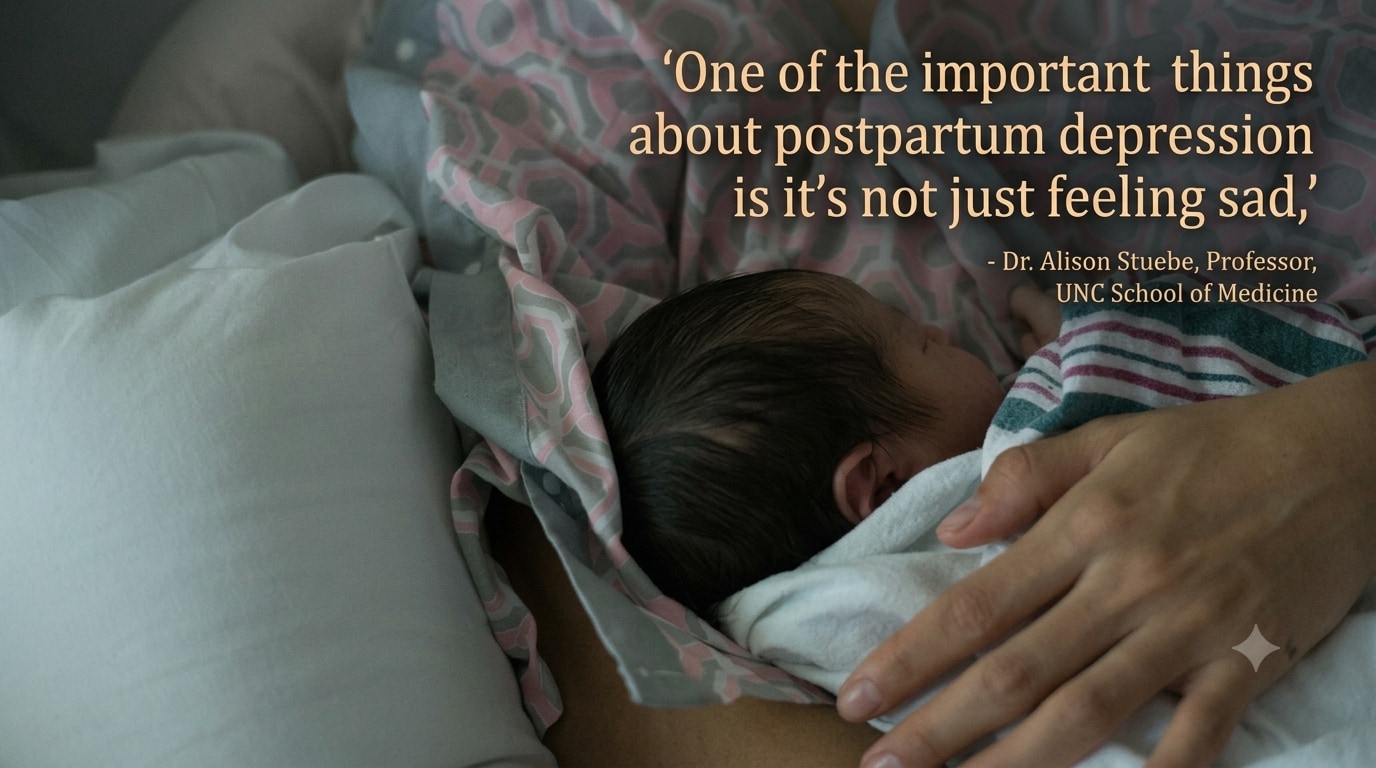
Photo Credit: Unsplash
The Red Herrings
That is one reason postpartum psychosis can be missed. Severe sleep deprivation--already a hallmark of new motherhood and one of the most consistently cited triggers for the mania and psychosis that can follow depression--may be dismissed as simply part of having a newborn, while unusual behaviour gets attributed to hormones or the stress of motherhood.
But Dr Neeraja stressed that postpartum psychosis "is not explained by hormones alone." Biological vulnerability can interact with psychiatric history, sleep disruption, and stress. A previous episode of postpartum psychosis, bipolar disorder, psychotic illness, or a family history of severe mental illness can increase risk, though it can also occur in women with no previous psychiatric diagnosis at all. A traumatic birth, a first pregnancy, and obstetric complications raise the risk further.
Physicians who treated Clancy testified that she had undiagnosed bipolar disorder, and that in the months leading up to the killings she had cycled between providers, undergone a five-day inpatient psychiatric stay, and disclosed suicidal thoughts without a specific plan to carry them out--a pattern experts said illustrates just how easily warning signs can present themselves without triggering the intervention that might have prevented catastrophe.
Once reality testing is impaired, the situation can deteriorate quickly. "Do not wait until she becomes violent," Dr Gupta warned. "Psychosis may be present before a dangerous act." Sudden severe insomnia, hallucinations, delusions, extreme suspiciousness, confusion, disorganised behaviour, or thoughts of suicide or harming the baby all warrant urgent psychiatric assessment. Treatment is available and may require hospitalisation, medication, and, in severe cases, electroconvulsive therapy.
The "Bad Mother" Trope
The Clancy case dragged a subject long treated as unspeakable into open, sustained public debate. Motherhood, culturally, is not supposed to include violence, rage, or psychosis. A mother who harms her child sits outside the boundaries of a story society is comfortable telling, and the instinct, since time immemorial, has been to file such cases under monstrousness rather than illness--echoing the way Andrea Yates's trial in Texas was received two decades earlier. Yates drowned her five children in a bathtub while suffering from postnatal depression.
The idea of the "good mother" leaves little room for a woman who is frightened, confused, detached, or struggling with thoughts she cannot understand herself. In the context of postpartum psychosis, that ideal can turn a medical emergency into a judgement about character.
READ | Pre-Existing Health Conditions Can Increase Risk Of Miscarriage By 20%, Lancet Study Warns
"Calling a woman a 'bad mother' converts an illness into a character judgement," said Dr Neeraja. "Loving and wanting a pregnancy, and having deep maternal love, can coexist with postpartum psychosis. Psychiatric illness does not erase attachment."
The distinction matters because psychosis can fundamentally alter the way a woman interprets her surroundings. "Behaviour produced by an acutely ill brain cannot be interpreted using the same psychological framework as behaviour produced by a healthy brain," noted Dr Gupta.
That does not mean disturbing behaviour should be minimised, she stressed: "It means it needs to be understood clinically before conclusions are drawn about what it says about a mother's intentions, personality, or love for her child."
The same applies to thoughts of harm. "A thought is not the same as an intention, and an intention is not the same as an act," she added.
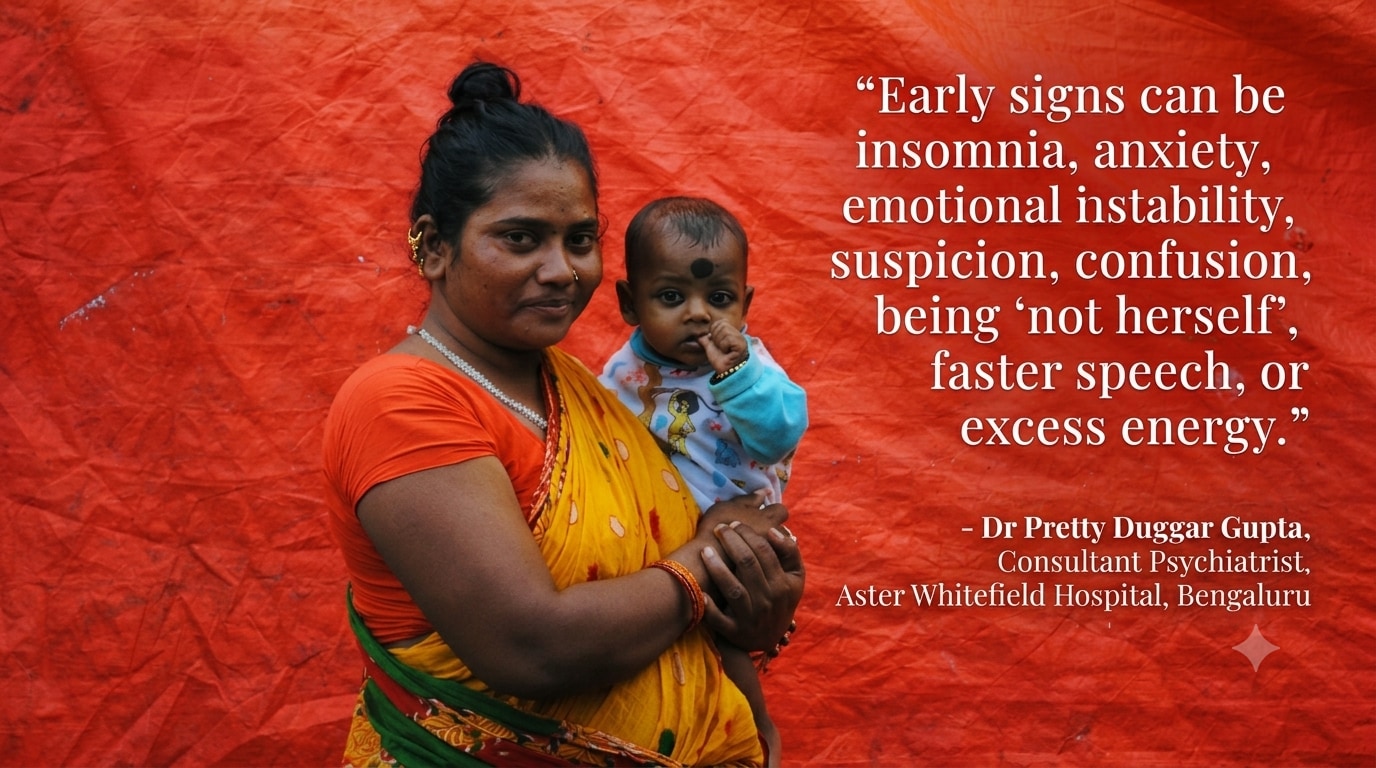
Photo Credit: Unsplash
A mother with postpartum depression, for instance, may experience horrifying, unwanted thoughts of harming her baby and be deeply distressed by them, whereas in psychosis, such thoughts may be driven by a delusion or hallucination the woman genuinely believes is real. "Tell us the thought; we need to understand it before we judge it," Dr Gupta said.
For families, Dr Neeraja noted the question should shift from whether a woman is failing at motherhood to whether "something has changed dramatically in her thinking, perception, or behaviour that needs medical attention."
That distinction is particularly important in cases involving violence. Postpartum psychosis must never be assumed to explain or excuse a violent act, but neither should violence automatically be treated as proof that a woman was simply a "bad mother," she added.
Maternal mental health advocates argue that this reflex--the taboo around calling a mother "sick" rather than simply "bad"--has real costs. Women who experience frightening intrusive thoughts or early signs of psychosis often stay silent, afraid that disclosure will brand them as unfit or dangerous rather than in need of urgent care.
What A New Mother Wants
Beyond the clinical picture, the women who have lived through the postpartum period describe a simpler, more human need: to be seen, not just managed.
For some, that means being given privacy. For others, it means someone noticing that the woman behind the new baby is struggling. And for some, it means being able to seek professional help without that decision becoming another source of shame.
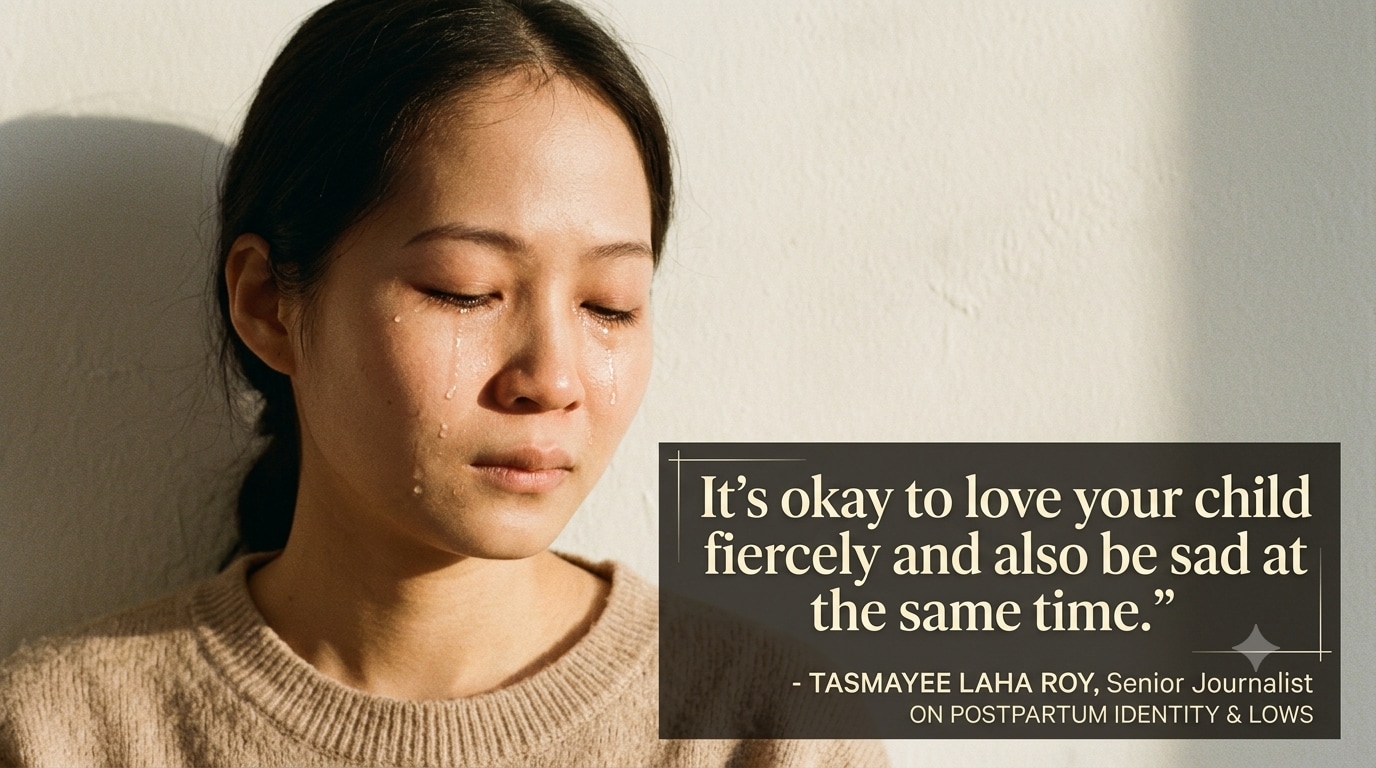
For senior journalist Tasmayee Laha Roy, the pressure came less from within and more from the people around her. "The constant visits from guests and questions that felt deeply personal, like whether I am breastfeeding or had a vaginal birth versus a C-section, felt completely unnecessary," she said. "Women relatives never seem to realise that we need privacy from other women, too... It's horrible and deeply embarrassing."
What made the difference wasn't advice but presence--specifically, her partner's. "He would sit beside me even when he had nothing to do, he would just sit," she said, adding that "even if he didn't know how to handle a certain situation, he'd say 'I can understand.' That helped. A lot."
Roy was candid about why she didn't turn to her own mother. "She operates under the impression that bringing up two daughters never had any lows and was just a purely happy experience."
READ | Temporary Or Permanent? Why Postpartum Thyroid Issues Are Often Misdiagnosed As Hashimoto's
She also noted that postpartum, new mothers face an identity loss that often goes unspoken. "At one point you feel you've completely lost yourself and have no individual identity other than being your child's mom... from being the most important person in the room, you become just a caregiver. Only a handful ask you how you are. Only questions about the baby."
The turning point, she said, was someone finally naming it. "Someone smart and empathetic and aware--in my case my friend Neha and my husband--tells you: you are going through postpartum depression, or if not always depression, postpartum lows."
In a note to fellow new mothers, she added, "It's okay to love your child fiercely and also be sad at the same time. Both feelings can coexist. It's only natural."
That feeling of becoming invisible runs through the experience of other mothers, too. But while Roy eventually had people around her who could name what she was going through, another new mother found herself trying to make sense of her symptoms on her own.
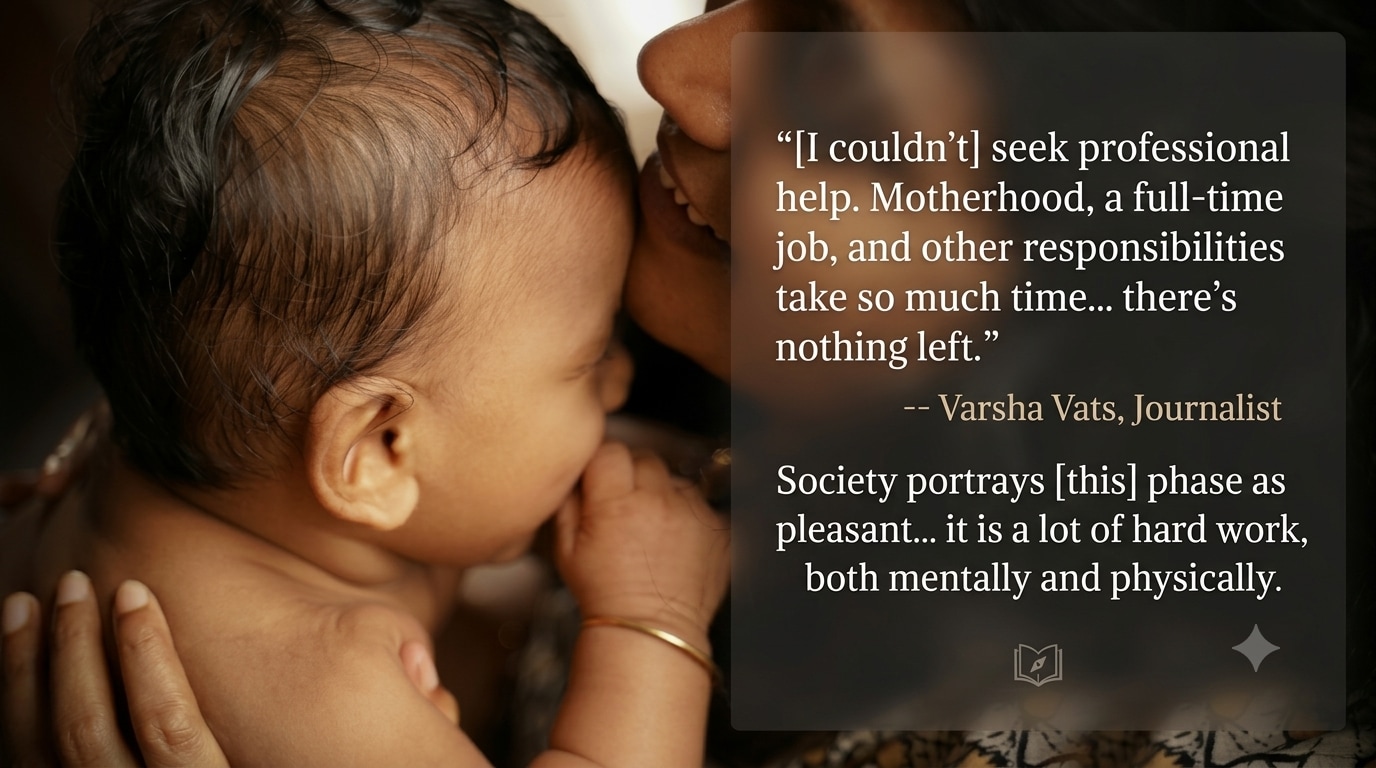
Photo Credit: Unsplash
Varsha Vats, a journalist at NDTV, described a similar invisibility. "First, I found myself crying for no reason. Hiding in the bathroom and crying. I always thought it was just overstimulation," she said.
The signs stacked up quietly, she noted: "From eating too much on some days and then not eating anything for the next few days," a "sudden lack of interest in things I used to enjoy earlier," and moments even now, well past the newborn stage, when "I just hug my baby and cry for no reason."
Structured professional help never entered the picture for Vats. "I couldn't seek professional help. Nobody stopped me, nor did I hesitate, but motherhood, a full-time job, and other responsibilities take so much time and effort that there's nothing left," she said.
What helped instead, Vats said, were small self-directed acts of repair like a colouring book "as it keeps me calm," spending unhurried time with her baby, and slowly reopening contact with friends.
Vats criticized the culture around motherhood itself. "Society has portrayed motherhood and childbirth as a very pleasant, enjoyable phase. Which is not true... It's a lot of hard work, both mentally and physically. I think a strong support system for both mother and baby should be non-negotiable."
But not every mother recognises what is happening while it is happening. Sometimes, the first clue comes from somewhere unexpected.
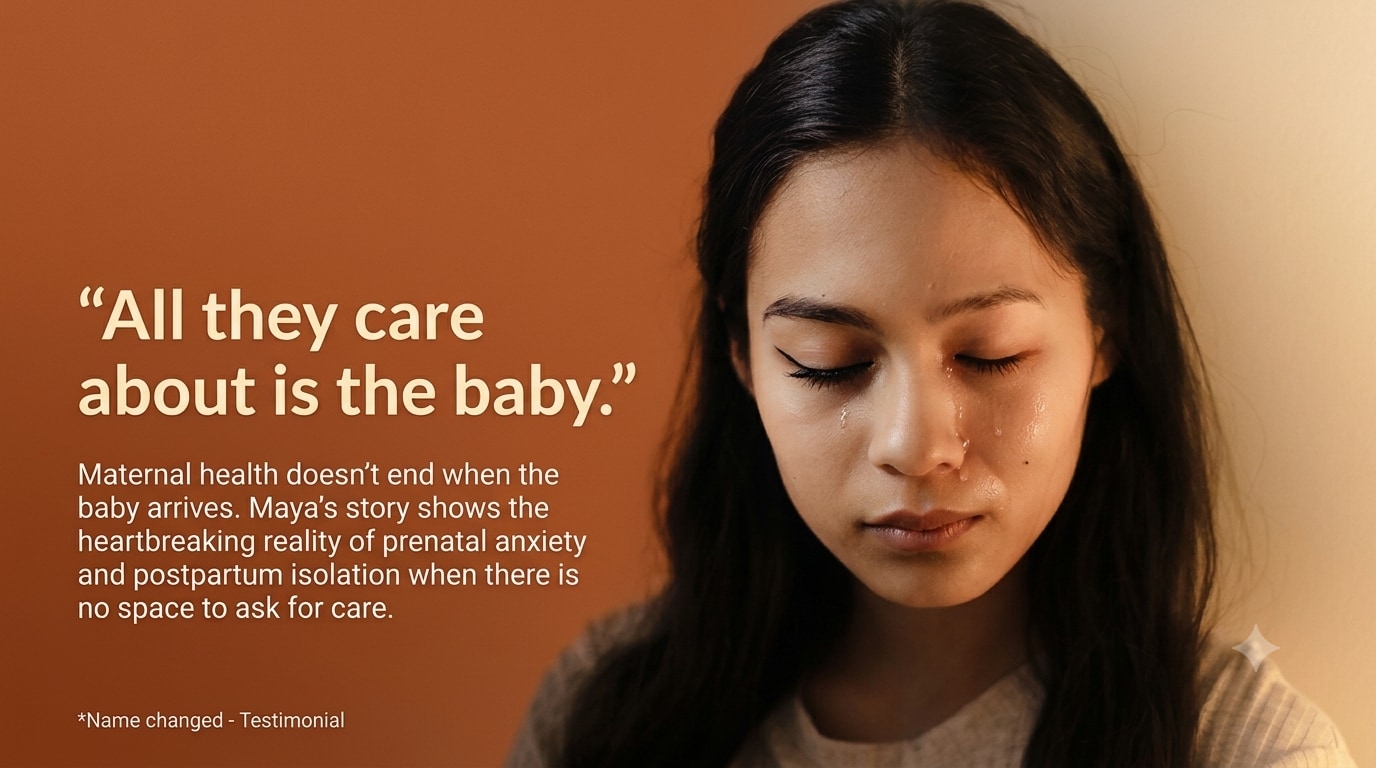
For one new mother, Maya (*name changed), understanding came almost by accident through an Instagram influencer she'd started following while pregnant. "There was one, I remember, she was talking about it, how she was going through it, what is actually prenatal depression," she recalled. Only then did she recognise her own first anxiety attack, five months into her pregnancy, for what it was. "I was crying and crying. And then after a point, I was breathing very heavily and unable to stop... I did not know what was happening with me."
READ | Excessive Bleeding To Infection: 6 Health Conditions New Mothers Should Not Ignore And Why
The isolation didn't end when the baby arrived. "Even if somebody said anything, I would just start crying," she said, describing a feeling that the world had narrowed to nothing. "You feel like, oh, now the baby is out, nobody's going to take care of me, they don't care about me anymore, all they care about is the baby."
She recalled how isolated she felt post-delivery while living with her in-laws, and how she couldn't share her struggles, even with her partner. "It was the feeling, it was how I was made to feel. I think at that time, I needed more love and care, which I didn't get, and which made things worse."
Maya's story shows what happens when a mother needs care but does not feel there is space to ask for it. But there is another, more complicated question: what happens when a woman does ask for help and the help itself becomes a source of stigma?
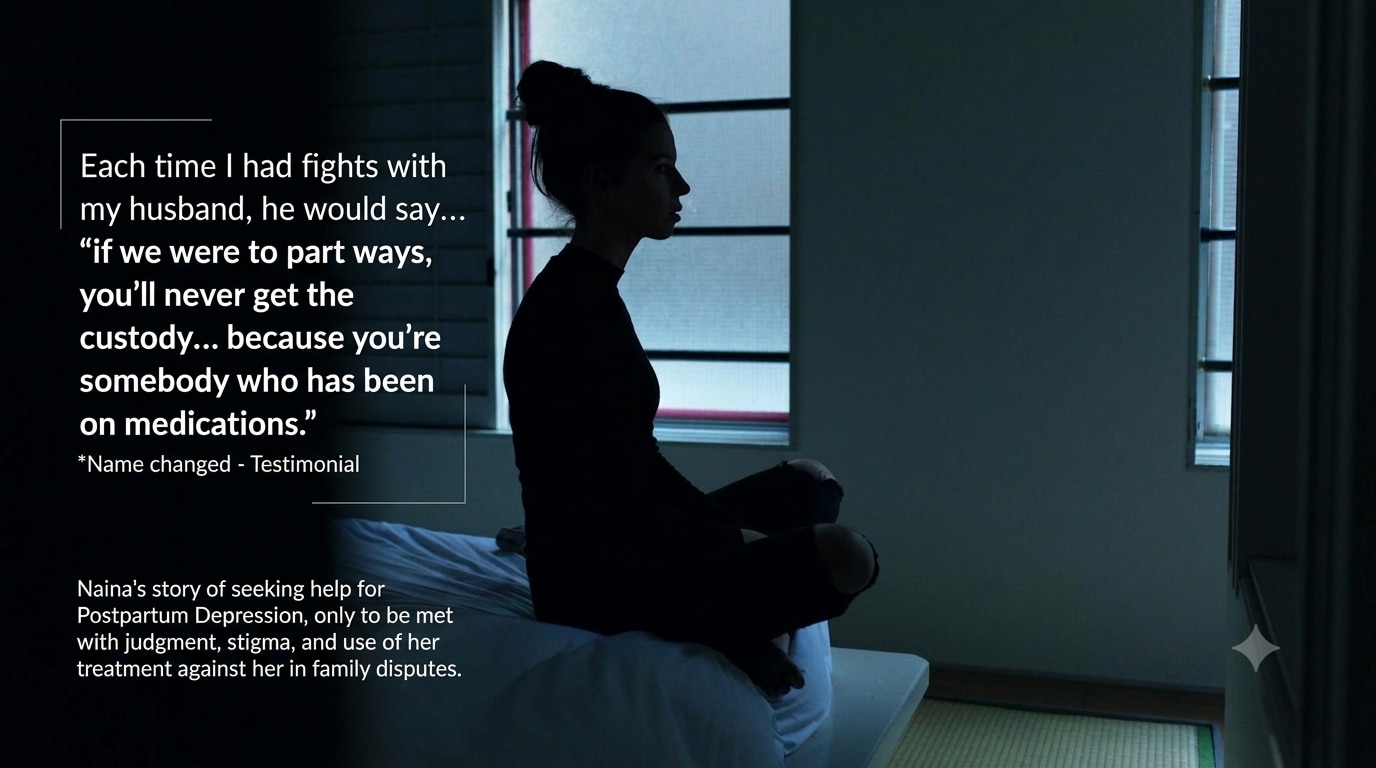
For another mother, Naina (*name changed), recognising that something was wrong came earlier. She had some awareness of postpartum depression, although she was not particularly well versed in the subject.
Her symptoms, however, told her something was not right. "So I was having a very difficult time. Though it was maternity leave, still I couldn't sleep in the afternoons and I had a lot of anxiety. I used to feel that if somebody holds the baby, they will drop the baby. Half of the time I would be afraid of throttling the baby by mistake, or suffocating the baby by mistake because the baby was sleeping with me."
"I knew that this is not normal. And that's the reason why I spoke to the doctor about it," she explained. Naina sought treatment from one of India's foremost mental health specialists and was on medication until the pandemic, after which she began weaning off. But seeking professional help did not protect her from judgement.
"I was really judged, yeah, for having postpartum depression. I was called a maniac. I was told that you're mad, you're maniacal," Naina continued. She was also told that her awareness of postpartum depression had itself contributed to the problem. "But despite this, honestly, I was very open about the fact that there is a problem. I was not trying to brush it under the carpet," she said
She was told, "You're not the only woman who's given birth to a baby. So stop acting like that." Her husband's working schedule also meant she was the only caregiver at night when the baby kept her awake. The support she received, she said, came with conditions. "So, basically I got help, but when I was on medication, it was used against me." She said her mother-in-law told her, "Never ever discuss with anybody that you sought the help of a psychiatrist to treat this postpartum depression. On our side of the family, this is not going to be accepted."
READ | Maternal Health Beyond Childbirth: Doctor Explains Long-Term Care And Awareness Gaps
She also described how her mental health treatment became part of arguments with her husband. "Each time I had fights with my husband, he would say stuff like, if we were to part ways, you'll never get the custody of a child because you're somebody who has been on medications for mental health."
"I felt very, very misunderstood by my family," Naina added. According to Naina, the stigma continued years later. "The attitude was very hostile. I don't even think I've recovered even as of now," she said. She draws a distinction between functioning normally and actually healing from what happened. "I may have recovered in the sense that you may see me going about my normal life, but I've not healed from how I was treated," she explained.
What she believes would have made the journey easier was not simply medical intervention, but awareness and genuine support.
Taken together, the four accounts show how different the same silence can look. Tasmayee needed someone to give her space and simply sit beside her. Varsha needed the time and support to recognise that what she was experiencing deserved attention. Maya needed someone to notice that she was struggling and make her feel cared for. Naina did seek professional help, but found that treatment itself became a source of judgement.
What all four women describe, in their own words, is not a request for diagnosis or advice. It is a request to be noticed, to be asked how they are doing, and, when they seek help, to be supported rather than shamed.
And that may be the most important link between the quieter forms of postpartum distress described by these women and the more severe psychiatric emergencies discussed earlier in this story: the first signs are often visible to the people closest to a new mother, but whether those signs are recognised as illness can determine what happens next.
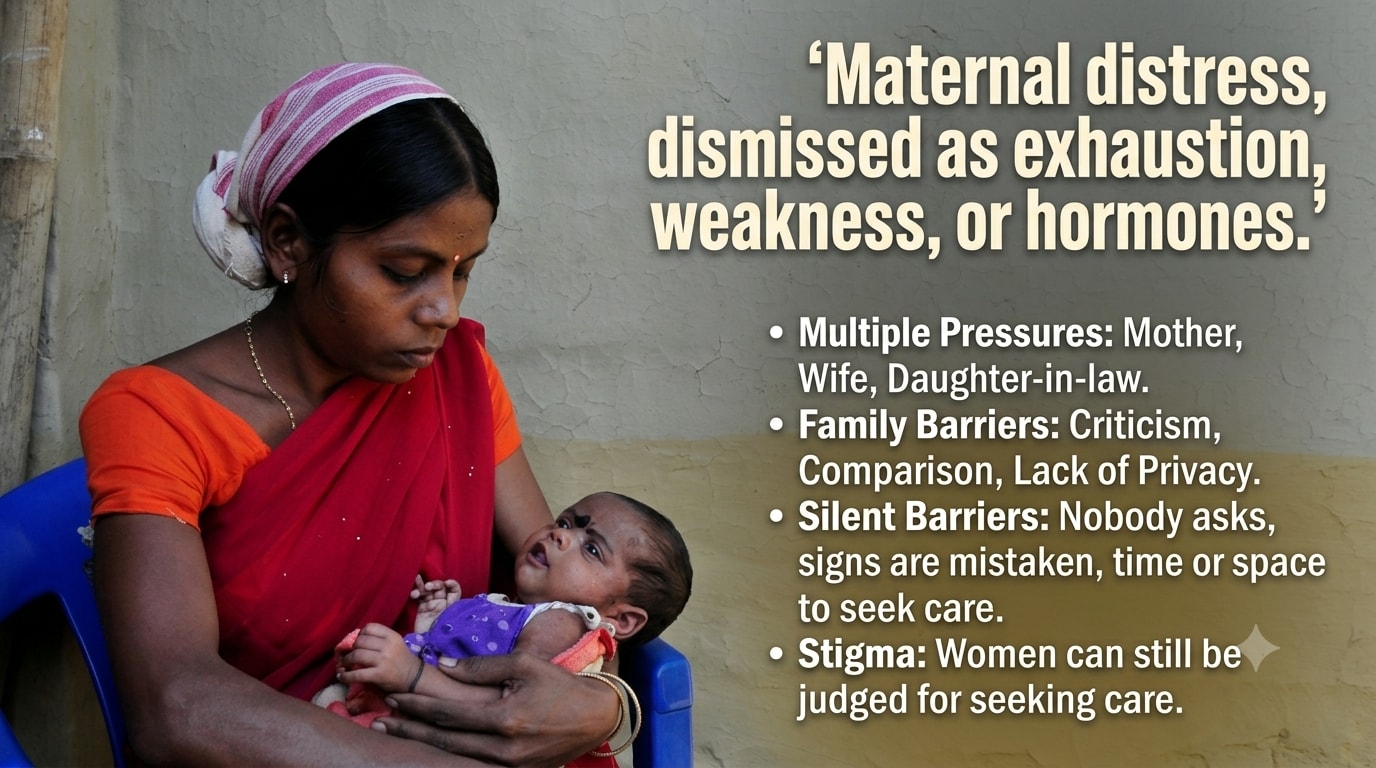
Photo Credit: Unsplash
Stigma And The Barriers
Doctors noted that warning signs usually show up at home first, long before anyone sees a psychiatrist, and families often don't read them as illness.
"In India, distress may be dismissed as exhaustion, weakness, hormones, or adjustment," said Dr Neeraja. Add to that the specific pressure of being a mother, a wife, and a daughter-in-law all at once. Joint families can offer real practical support, she noted, but they can also bring criticism, comparison, and a lack of privacy that makes it harder for a woman to say what she's actually feeling.
The four women's experiences illustrate those barriers in different ways. Sometimes the problem is that nobody asks. Sometimes the signs are mistaken for ordinary exhaustion. Sometimes a woman does not have the time or space to seek care. And sometimes, as Naina's experience shows, a woman can seek care and still find herself judged for doing so.
There's a common mistake families make, according to Dr Gupta: assuming any behavioural change after birth is just part of the territory. A tired, overwhelmed new mother probably just needs rest. A woman who "hasn't slept for days, is increasingly suspicious, is unlike herself, or is speaking nonsensically" is dealing with something else entirely.
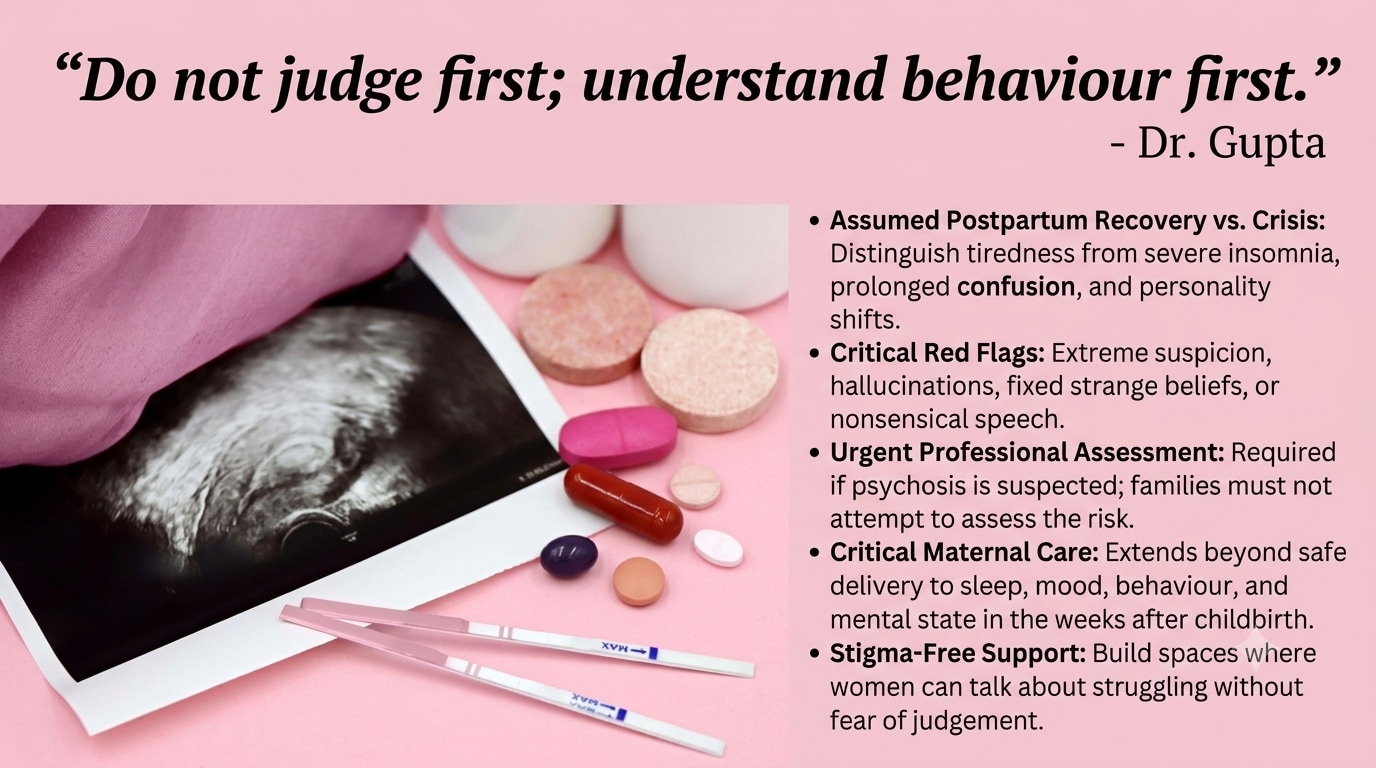
Both doctors point to the same red flags: severe or prolonged insomnia, sudden personality shifts, extreme suspicion, hallucinations, fixed strange beliefs, disorganised speech or behaviour, agitation, and any thoughts of suicide or of harming the baby. "Do not judge first; understand behaviour first," Dr Gupta said.
Neither doctor thinks families should try to assess the risk themselves. "If psychosis is suspected, urgent professional assessment is needed, and the family should not attempt to assess that risk itself," Dr Neeraja said, noting that impaired judgement makes these situations genuinely unpredictable. Her advice to caregivers is to stay calm, refrain from arguing with hallucinations or delusions, and ensure the mother and baby aren't left unsupervised if there's any immediate safety concern.
READ | Doomscrolling Could Be Making You More Anxious And Lonely, Says Nutritionist
Both doctors agreed that maternal healthcare can't stop at a safe delivery. "The weeks after childbirth also need attention to sleep, mood, behaviour, and mental state," Dr Neeraja said, echoing the WHO's own push to fold perinatal mental healthcare into standard maternal care, and to build spaces where women can talk about struggling without fear of judgement.
Whether Clancy will be retried is still an open question, but the case's real legacy may have little to do with its verdict. From the US to Bengaluru, to homes across the world, the gap in maternal mental health care continues to mark the thin line between survival and tragedy. Postpartum depression is well known now; postpartum psychosis is rare. Both are treatable medical issues, not moral failures or flaws of motherhood. The real challenge lies in the simple fact that treating these medical issues demands active support and unconditional empathy. No mother should ever have to fight her darkest battles in the dark.
\r\n
\r\n
Disclaimer: This content including advice provides generic information only. It is in no way a substitute for a qualified medical opinion. Always consult a specialist or your own doctor for more information. NDTV does not claim responsibility for this information.
| Helplines | |
|---|---|
| Vandrevala Foundation for Mental Health | 9999666555 or help@vandrevalafoundation.com |
| TISS iCall | 022-25521111 (Monday-Saturday: 8 am to 10 pm) |
| (If you need support or know someone who does, please reach out to your nearest mental health specialist.) | |