Opinion | A New 'Subsea Cable' Is Coming To India. But It's A Wake-Up Call For Something
Backed by some of the biggest names in tech - Microsoft, Singapore's Singtel, Tata Communications, and Japan's NEC - the 'I-2SEA' will carry high-speed data traffic that AI systems need to function
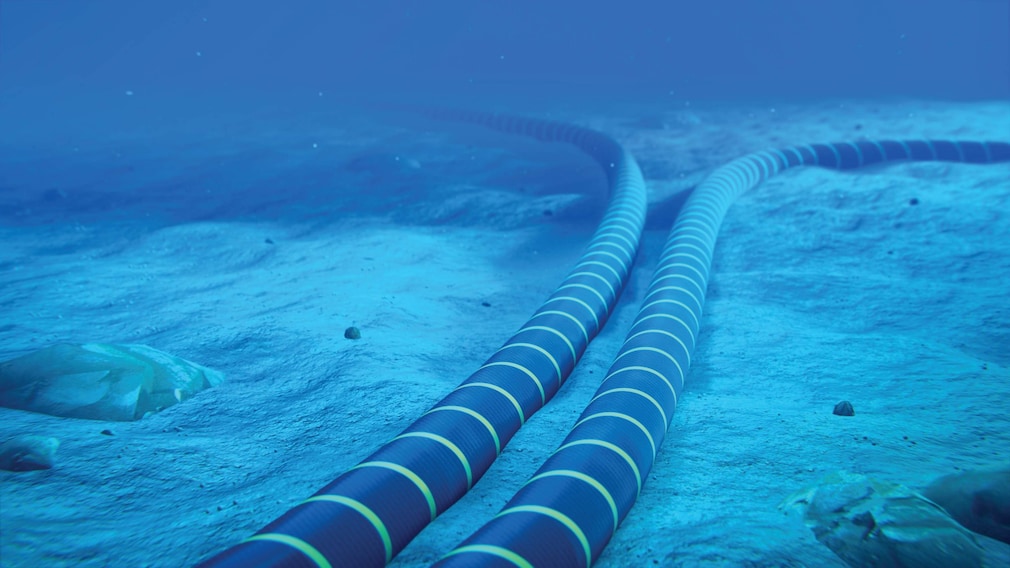
A new subsea cable is coming to India's shores. I-2SEA will connect Singapore and Malaysia directly to Hyderabad, carrying high-speed data traffic that AI systems need to function. It is backed by some of the biggest names in tech - Microsoft, Singapore's Singtel, Tata Communications, and Japan's NEC - and it lands at two different points on India's east coast, ensuring a single physical break cannot sever the connection entirely.
This is a welcome development for India. It is not, however, a fix for a problem that has been building for years: India's subsea cable network - the wires that carry almost all of the country's intercontinental internet traffic - is ageing, poorly protected, and impossible to repair without help from abroad.
Nearly everything that crosses India's border digitally, whether it is this article, a bank transfer, a video call, or a stock trade, travels through them. There is no real alternative. Satellites can't carry anywhere near the same amount of data. If these cables go down, so does much of the country's connection to the outside world. And this is why it is crucial to reform India's subsea cable ecosystem and fix its core vulnerabilities.
At its core, the ecosystem suffers from four compounding vulnerabilities spanning heavy concentration of cable landing stations, supply chain dependency, zero domestic repair capability, and a lack of critical national infrastructure status.
While it is tempting to think that new cables like I-2SEA, funded by Big Tech companies, solve some of these issues, they don't. And the reason comes down to whose problem they were built to solve.
Hyperscalers build cables like I-2SEA to serve their own business purposes. If a cable carrying their cloud traffic fails, it affects their business continuity and revenue, so they build in redundancy - hence the two separate landing points. That's good engineering, but it only protects their traffic. It says nothing about the other 18-odd cables that carry everyone else's data: ordinary Indians' internet connections, banks, hospitals, and government systems. These remain vulnerable.
A Dangerous Situation
India carries about a fifth of the world's international internet traffic but has only about 3% of the world's subsea cables - a significant mismatch for a country this size. Worse, at least 13 out of 18 cables landing in India come ashore in almost the same spot: a stretch of beach in Mumbai barely six kilometres long. A single incident there - a ship's anchor, construction work, or even deliberate sabotage - could impact much of India's connection to the world.
And if that happens, India can't fix it on its own. There isn't a single cable-repair ship that is Indian-owned or based in Indian waters. When a cable breaks, India has to wait for a foreign repair ship, usually from Singapore or Dubai, to become available and sail over. This can take up to four to five months. Moreover, during a geopolitical crisis, when tensions are high, these foreign ships might not even be allowed to enter Indian waters at all.
These vulnerabilities are bigger than any one cable or any one company: it's the entire network the country depends on. This makes it a question of national security, similar to how a country protects its power grid. A network this important, carrying the data of banks, hospitals, and government systems, is the kind of infrastructure the state has to invest in to protect.
Why No Solution Has Been Found
The absence of an Indian repair fleet isn't automatically a case for government money. In theory, the market could solve it on its own. One company owning a single repair ship might leave it idle much of the time, but a shared pool of repair capacity, used by multiple cable owners as needed, would be far more efficient. But that kind of shared capacity hasn't emerged in Indian waters, partly because of licensing requirements, which only the government can change.
The job left undone, then, isn't just about funding. It's about the reforms and partnerships that let both markets and the state do their part: treating cable landing sites as critical national infrastructure for stronger security protocols, public-private partnerships to build shared repair capacity, diversifying cable landing stations, and encouraging Indian companies to start building cable-laying and repair equipment.
I-2SEA is a welcome addition to India's connectivity and proof that global companies are willing to invest here. But it is also a reminder of how much homework India still hasn't done.
(Anwesha Sen manages the tech and policy programme at the Takshashila Institution)
Disclaimer: These are the personal opinions of the author
-
Edge Of Space, Mach 2.4: Flying India's Most Secret Jet Over Pakistan

The MiG-25 wasn't just any jet. Alongside the American SR-71 Blackbird, it was one of only two jet aircraft to fly operationally at close to Mach 3, three times the speed of sound.
-
Opinion | India's $18.3 Billion Forex Reserve Shock Is A Warning, Not Just A Number
The reported USD 18.34 billion decline in India's foreign exchange reserves in a single week has attracted attention for more than its size
-
Congress Falls Back On A Fullback: Where Pargat Singh Fits In The Punjab Poll Play
Vijay Inder Singla, a Hindu face, was reportedly the frontrunner before the Congress replaced one Jat Sikh with another as its Punjab unit chief. How far does such arithmetic work in the state's politics? Pargat's appointment holds some of the answers.
-
Why Doesn't Congress Boycott If Polls Are "Fixed"? Answer Lies Beyond Rahul Gandhi's "Distraction" Quip
The starkest demand for a boycott has come from outside the political Opposition, from the Cockroach Janta Party. But does a boycott help? Here's what research, examples, and expert analysis tell us.
-
'Sully' To Gimli, Sioux To Patna: When Pilots Got It Unbelievably Right
Captain Smit Machchhar fought off his co-pilot after being stabbed and opened the cockpit door, saving 174 people.
-
Opinion | Are Saudi Arabia And UAE Reuniting Again After 10 Years?
On Tuesday, the UAE's Vice President, Deputy Prime Minister and Chairman of the Presidential Court, Mansour bin Zayed, met Saudi Crown Prince Mohammed bin Salman.
-
Opinion | 'Lies, Damned Lies, Statistics': On The Controversy Around India's GDP Growth Figures
The debate is less about a single figure than about a decade-long erosion of trust in official statistics.
-
Opinion | Why India Cannot Keep 'Overestimating' Its Value To Washington
Some of India's value to Washington came from the tension between the US and China. That is changing now.