Nepal's Floodwater Is Flowing Into Bihar: The Health Risks Are Just Beginning
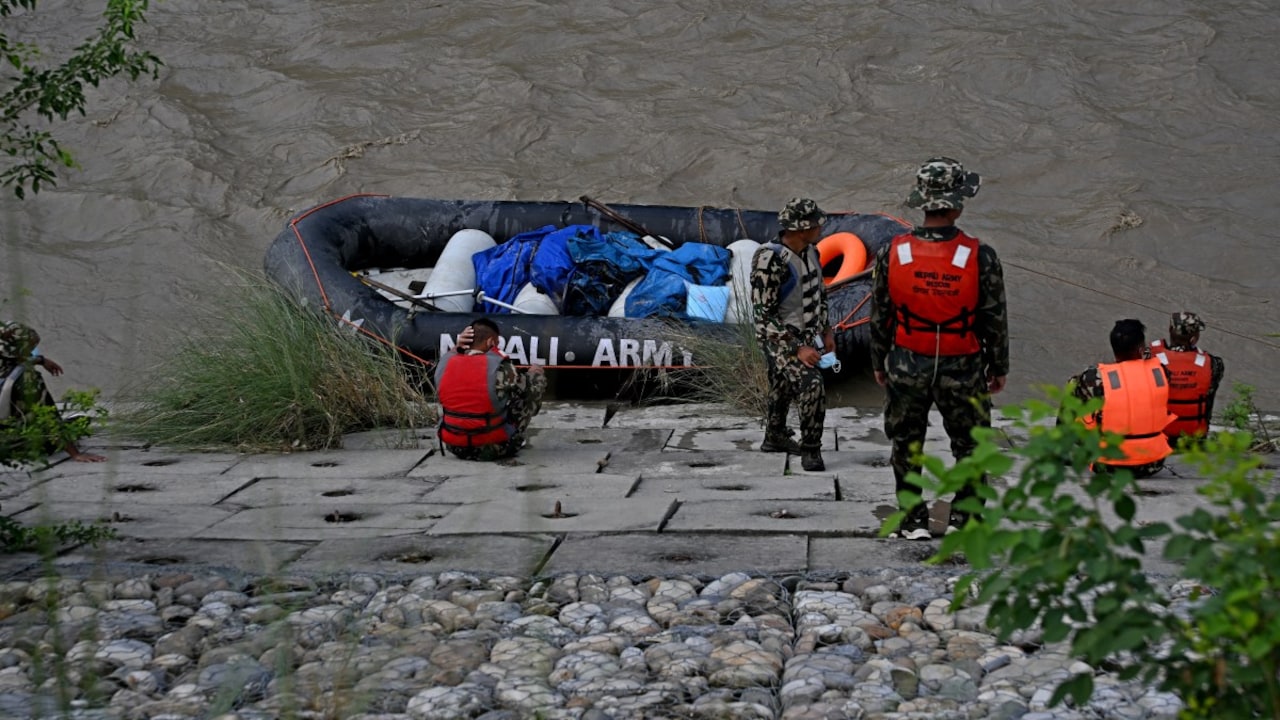 Prakash Mathema/AFP
The images pouring in since last week are difficult to look away from: floodwaters racing downstream from Nepal, carrying mud, debris, destroyed homes, dead animals and, in some cases, human remains into rivers flowing through Bihar. The devastating flash floods that struck Nepal on August 26 after a high-altitude glacial collapse have become a cross-border health concern. More than 1,000 people have died and nearly 4,500 remain missing as rescue and recovery operations continue.
The disaster did not stop at Nepal's borders.
Floodwaters from the Trishuli River have been flowing into Bihar through the Gandak and Kosi, carrying enormous quantities of mud, debris, dead fish, animals and, in some cases, human remains downstream. NDTV's ground reports have also documented the scale of destruction in Nepal, with entire settlements buried under mud and bodies still being recovered.
Bihar has now advised people not to catch, buy, sell or consume fish from floodwaters until conditions stabilise. The warning comes amid concerns that sewage, dead animals and other contaminants have entered the river system.
But does the presence of human remains mean Bihar is facing an outbreak of disease?
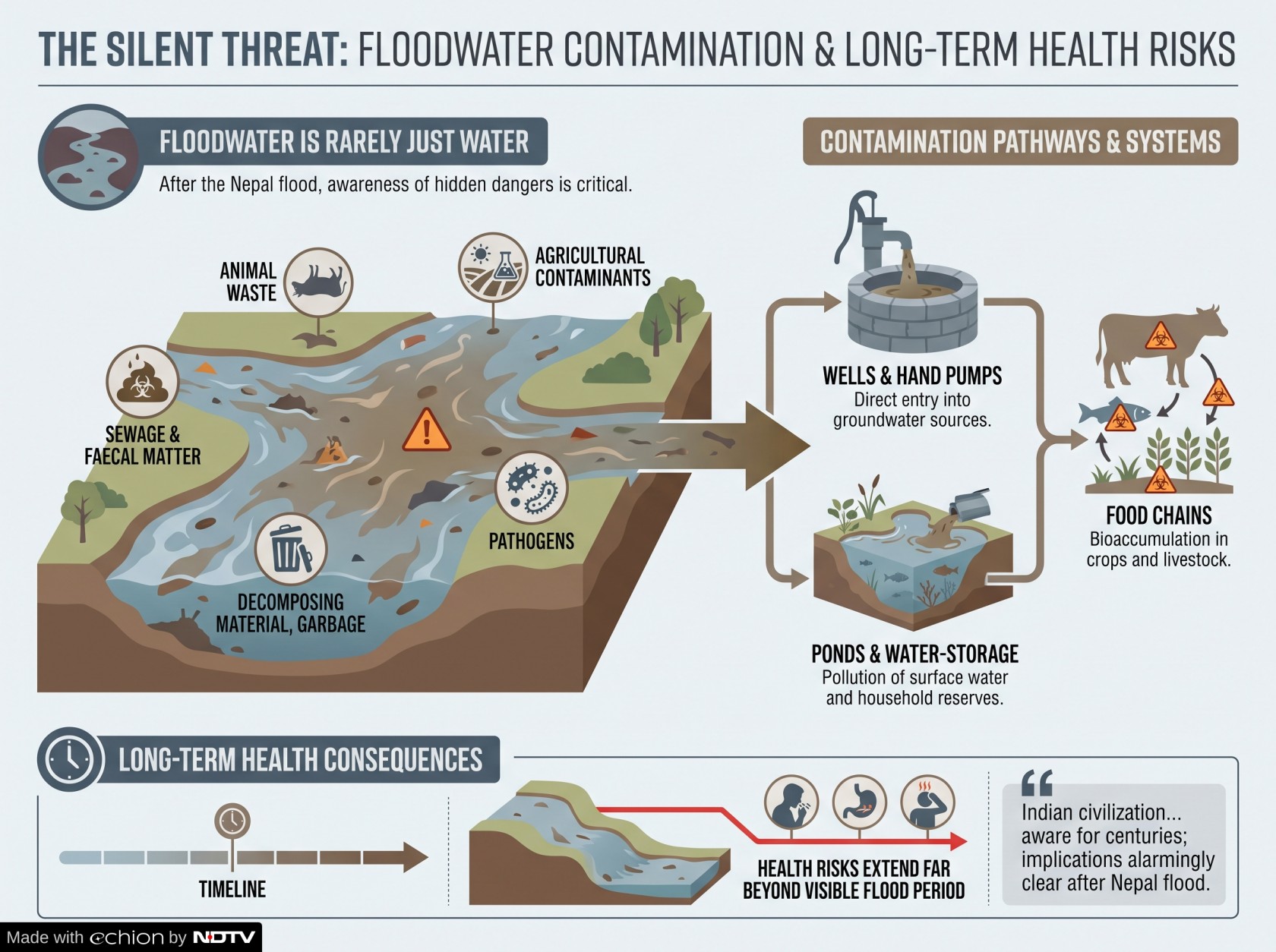
The critical factor to grasp here is that floodwater is rarely just water. It can carry sewage, faecal matter, animal waste, decomposing material, garbage, agricultural contaminants and other pathogens. When such water enters wells, hand pumps, ponds, food chains or household water-storage systems, the health consequences can extend far beyond the period when the river is visibly swollen. Indian civilization, which has thrived around a large river system, has been aware of this for centuries; but after the Nepal flood disaster, the implications have become alarming.
As Nepal's flood disaster begins to affect India downstream, experts NDTV Lifeline spoke to say Bihar should remain vigilant, but there is no reason for panic.
Do Bodies In Floodwater Cause Epidemics?
"Human bodies don't usually cause large outbreaks of disease on their own. The bigger threat in a flood is the contamination of the water as a whole," said Dr Sabine Kapasi, CEO at Enira Consulting Pvt Ltd, Founder of ROPAN Healthcare Pvt Ltd and a UN Advisor. Dr Neha Rastogi, Senior Consultant, Infectious Diseases, Fortis Memorial Research Institute, New Delhi, says the movement of floodwater from Nepal into Bihar raises legitimate public-health concerns, but should not trigger panic.
The World Health Organization (WHO) similarly says that dead bodies from natural disasters generally do not cause epidemics. Exceptions can occur when people have died from highly infectious diseases or in settings where such infections are endemic. Bodies can, however, contaminate water with faecal material, creating a route for diarrhoeal disease if that water is subsequently consumed.
That distinction matters. Fear around bodies can overshadow the much more immediate risk: contaminated water entering people's homes, wells, hand pumps, food chains and possibly drinking-water sources.
The Immediate Health Threat: Contaminated Water
The first major health concern after flooding is waterborne disease.
"In the first week, waterborne illness becomes the dominant concern. Floodwater mixes freely with sewage, and drinking or bathing in it spreads food- and waterborne diseases like diarrheal diseases, cholera, typhoid, and hepatitis A," said Dr Samir Dwivedi, Medical Director - Assistance (India), International SOS. WHO identifies contamination of drinking-water systems as one of the most important health risks following floods. Its guidance recommends chlorinating or boiling water used for drinking and food preparation and maintaining safe water supplies as a priority after flooding.
The Indian National Centre for Disease Control (NCDC) likewise advises the use of safe drinking water after floods and specifically warns about diarrhoea, hepatitis, dengue, malaria and leptospirosis during flood and post-flood periods.
The Health Risks May Rise After The Flood Recedes
One of the biggest misconceptions after a flood is that falling water levels mean falling health risks. They may actually mark the beginning of another phase.
As stagnant water accumulates, mosquito breeding can increase, potentially raising the risk of dengue, malaria and chikungunya. Dr Rastogi says contaminated wells, hand pumps and water-storage systems can also remain unsafe after surface water disappears. Dr Dwivedi places this vector-borne phase roughly in the second week after flooding, when stagnant pools become established.
Bihar's current situation is particularly important because the floodwaters have moved through a connected river system rather than remaining confined to one location. The Gandak and Kosi carry water originating in Nepal deep into northern India.
Bihar's Water Problem Is Bigger Than The Flood Itself
The contamination concern comes on top of existing water-quality challenges in several districts bordering Nepal. NDTV's ground report notes that groundwater in districts including West Champaran, East Champaran, Sitamarhi, Kishanganj, Purnia and Araria already contains arsenic levels above the safe limit of 10 ppb. High iron levels have also been reported across the seven districts bordering Nepal, with particularly high concentrations in Kishanganj. Flooding could further complicate the safety of local water sources.
This makes water surveillance, chlorination and access to safe drinking water particularly important in affected communities.
The Second Crisis: Healthcare And Mental Health Support Become Inaccessible
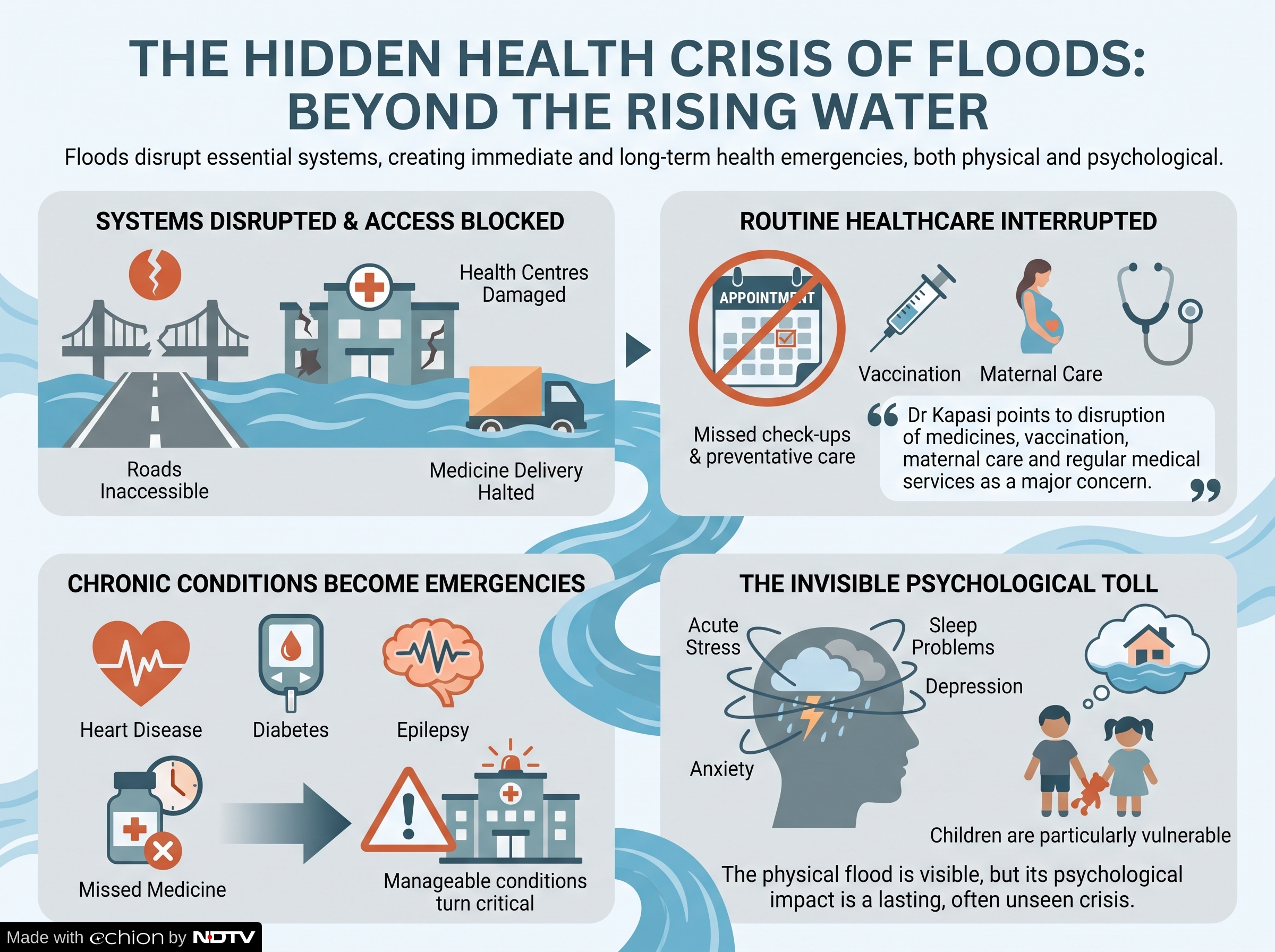
Floods can also create a health crisis by disrupting the systems people depend on. Roads may become inaccessible, health centres may be damaged or overwhelmed, medicines may not reach communities and routine healthcare can be interrupted.
Dr Kapasi points to disruption of medicines, vaccination, maternal care and regular medical services as a major concern. This can be especially dangerous for people who need continuous treatment, including those with diabetes, heart disease, epilepsy or other chronic conditions. A missed medicine or delayed hospital visit can turn a manageable condition into an emergency.
It is also critical to remember that the physical flood is visible. Its psychological impact is less so. People who lose homes, livelihoods or family members can experience acute stress, anxiety, sleep problems and depression. Children may be particularly vulnerable, especially after displacement or the loss of caregivers.
Dr Kapasi highlights psychological distress, anxiety, acute stress and sleep problems among the likely consequences, particularly for children. Dr Dwivedi puts the timeline starkly: "Floods make headlines, but the real medical story begins after the cameras leave." For affected communities, he says, the weeks following a disaster can bring anxiety, insomnia and depression.
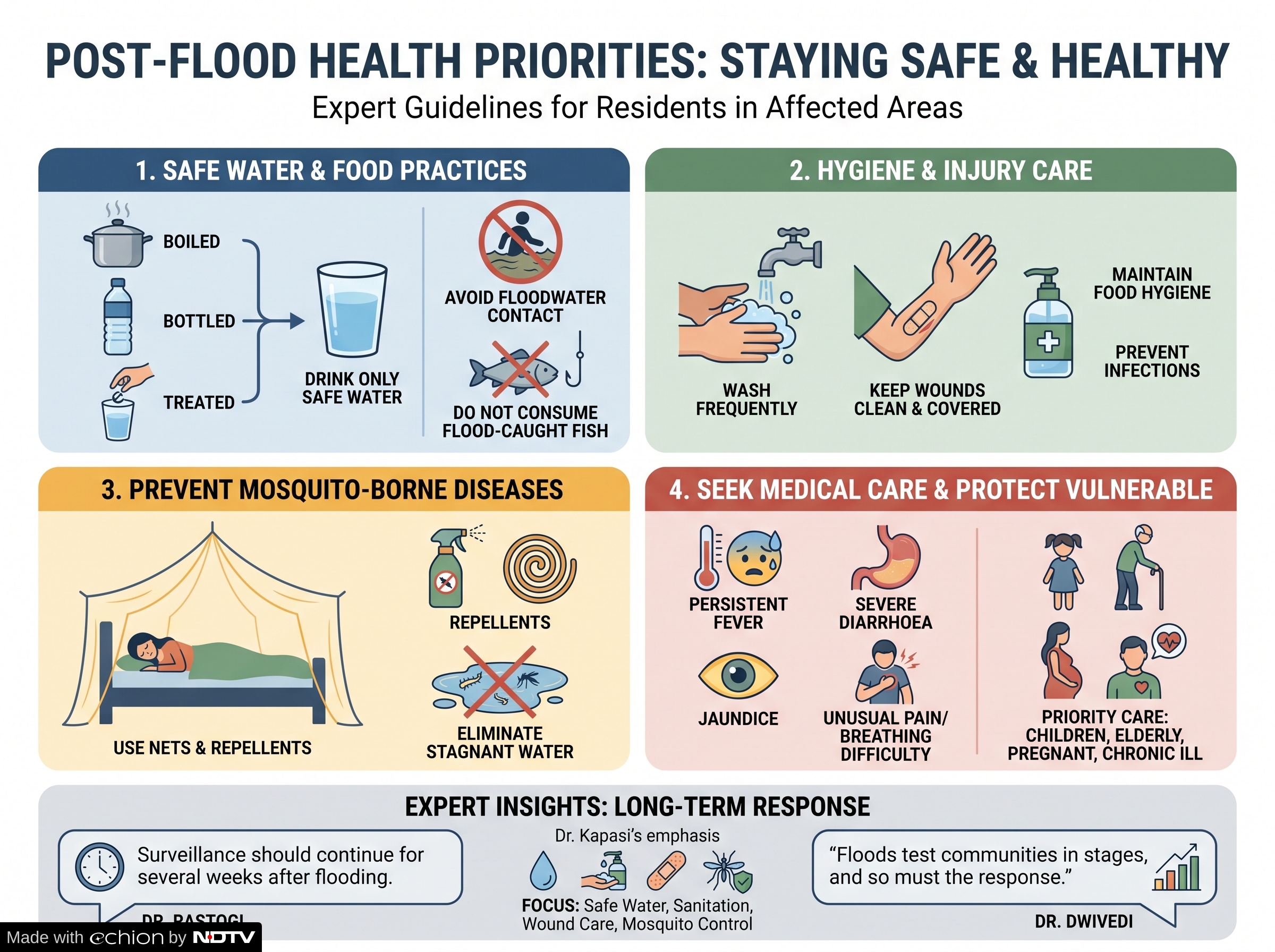
What Bihar needs to do now
The experts say that for residents in flood-affected areas, the priorities are straightforward:
- Drink only boiled, bottled or properly treated water
- Avoid floodwater wherever possible
- Do not consume fish caught from floodwaters until authorities declare them safe
- Wash hands frequently and maintain food hygiene
- Keep cuts and wounds clean and covered
- Seek medical care for persistent fever, severe diarrhoea, jaundice, unusual muscle pain or breathing difficulty
- Use mosquito nets or repellents as stagnant water accumulates
- Ensure children, older adults, pregnant women and people with chronic illnesses receive timely medical care
Dr Rastogi stresses that surveillance should continue for several weeks after flooding, while Dr Kapasi emphasises safe water, sanitation, wound care, disease monitoring, mosquito control and restoration of healthcare services. Dr Dwivedi sums up the challenge: "Floods test communities in stages, and so must the response."
Vigilance Without Panic: Healthcare Goals In The Aftermath
The bodies being carried downstream from Nepal are the most visible and distressing symbol of the disaster. But medically, they are not the whole story; and they are not, by themselves, a reason to expect an epidemic.
The greater threat is the contaminated environment left behind: unsafe water, disrupted sanitation, infected wounds, stagnant pools, mosquitoes, unsafe food and interrupted healthcare.
For Bihar, the Nepal disaster is therefore not simply a story about what the river is carrying today. It is about what may remain in the water, soil, food chain and communities for weeks after the flood itself has passed.
\r\n
\r\n
Disclaimer: This content including advice provides generic information only. It is in no way a substitute for a qualified medical opinion. Always consult a specialist or your own doctor for more information. NDTV does not claim responsibility for this information.