





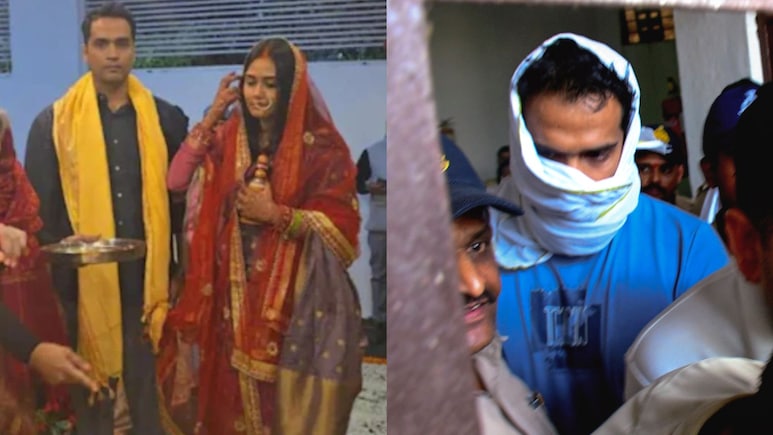
- Samarth Singh is in seven-day police custody for questioning in Twisha Sharma's death case
- Investigation focuses on May 12 timeline, Twisha's movements, mental state, and domestic disputes
- Police will verify Samarth's claims with CCTV, call records, forensic evidence, and witness statements
In the increasingly sensitive and explosive Twisha Sharma death case, the next seven days may become the most crucial phase of the investigation. Accused husband Samarth Singh is now in the custody of Bhopal Police for seven days, and top police sources involved in the investigation indicate that the questioning will not be limited to a simple narration of events. Investigators are expected to examine his version layer by layer - the relationship, the alleged disputes, Twisha's pregnancy, her movements before death, the crime scene, call records, CCTV footage, and Samarth's conduct after the incident.
According to police sources, the first line of questioning before Samarth Singh is likely to be the most basic yet most decisive: What exactly happened on May 12 - the day Twisha died. Investigators want a minute-by-minute account of the day, what Twisha did from morning till evening, where she went, whom she spoke to, what her emotional condition appeared to be, and whether there was any confrontation inside the house before her death.
Police sources indicate that Samarth may also be taken to the crime scene for spot verification.
Investigators are expected to ask him to explain where he was, what he saw, how he came to know about the incident, who was present in the house, and how the body was found. The exact location, the alleged hanging point, the belt, the room, and the movement of family members inside the house may all be matched with his statement.
The probe is also expected to focus on the allegations made by Twisha's family. Her family has repeatedly alleged harassment and raised serious questions about the conduct of Samarth and his mother, retired judge Giribala Singh. Sources say police will confront Samarth with these allegations and seek his response to each of them, whether there were domestic disputes, whether there was dowry-related pressure, whether Twisha had complained to her family earlier, and what the nature of the marital relationship was in the days before her death.
During the initial two hours of questioning, Samarth reportedly told police that after marriage, his relationship with Twisha was normal. He claimed that on April 17, Twisha's pregnancy was confirmed, and after that her behaviour allegedly began to change. According to his version, after returning from the hospital, Twisha said she wanted to go back to her home in Delhi and could not live a domestic life. He told police that she flew to Delhi the same evening and reached her Noida home.
Samarth has reportedly claimed that after repeated persuasion, Twisha returned to Bhopal on April 23 along with her mother and brother. But according to him, tensions continued. He told police that he had already booked tickets to Bengaluru for April 24 and that Twisha was initially ready to accompany him. Later, he claims, she refused and said she wanted to go to her brother in Nasirabad, Ajmer. Samarth reportedly told investigators that this led to an argument between the two.
This part of Samarth's statement is now likely to become a major area of police scrutiny. Investigators may ask whether the Bengaluru trip was mutually planned, why Twisha allegedly changed her mind, whether there was pressure on her to travel, and why she instead wanted to go to her brother. Police are also expected to verify whether the families of both sides were informed about this dispute, as Samarth has claimed.
Samarth has reportedly told police that on April 24, Twisha left by train for Ajmer to stay with her brother. However, he later came to know that she stayed there for only a day and then went to Delhi. According to his version, after he returned from Bengaluru, Twisha came back to Bhopal on April 30. Police may now verify this movement through railway records, flight details, phone location, family statements and digital evidence.
Another significant part of Samarth's version relates to Twisha's alleged state of mind. He reportedly told police that during pregnancy, her behaviour was changing suddenly and that she often said she belonged to the glamour world and domestic life was not meant for her. This claim is likely to be tested sharply by investigators. Police sources suggest that they may examine whether this is a genuine background detail or an attempt by the accused to shift the focus towards Twisha's mental condition.
The most crucial part of the investigation, however, remains the evening of May 12. Samarth has reportedly told police that Twisha returned home from the parlour at around 6 pm. CCTV footage of her returning from the parlour has also surfaced. According to Samarth, after she came home, both of them went for a walk in the park in front of the house from around 6:30 pm to 7:30 pm.
He has further claimed that after returning from the walk, they had dinner together, sat outside the house for some time, and then went to their room around 8:30 pm to watch television. According to his statement, about half an hour later, Twisha went downstairs, where she was speaking to her parents on the phone, while he fell asleep due to tiredness.
This sequence will now be one of the most important areas of questioning. Police are likely to ask if both had gone for a walk, eaten together and watched television, what happened within the next short window that led to Twisha's death? Was there a dispute after dinner? Did Twisha speak to her parents in distress? Was Samarth awake or asleep? Who last saw Twisha alive? And why did no one in the house notice her movement towards the terrace earlier?
Samarth has reportedly told police that his mother, retired judge Giribala Singh, later called him and said she could not find Twisha and that she was not receiving calls. Around the same time, he claims, Twisha's mother also called and said Twisha seemed disturbed and was crying, and asked him to check on her. Samarth allegedly told his mother that Twisha may have gone to the terrace to talk, and asked her to check there.
According to Samarth's statement, Giribala Singh went to the terrace and found Twisha hanging from an elastic exercise belt. He claims that after hearing the commotion, he rushed there, supported Twisha from below and lifted her, while his mother climbed on a nearby bed and tried to loosen the noose. After much effort, he says, the belt was removed, and Twisha was laid on the bed.
This version is likely to be physically and forensically tested. Police may take Samarth to the spot and ask him to demonstrate how Twisha was found, how he lifted her, where Giribala stood, where the bed was placed, how the belt was tied, how the body was brought down, and whether the version matches the height, weight, ligature point and scene conditions. Samarth has reportedly said Twisha was around 5 feet 8 inches tall and weighed nearly 80 kg - a detail that may become important in reconstructing the alleged rescue attempt.
Samarth has also reportedly said that after Twisha was brought down, he called the sons of his maternal aunt living nearby, gave CPR to Twisha, and then, with the help of three people, took her downstairs and rushed her to AIIMS in a car, where doctors declared her dead. Police may now verify who was called first, when neighbours or relatives arrived, whether CPR was actually given, what time Twisha reached AIIMS, and whether the hospital timeline matches the family's version.
Top police sources say Samarth's answers will be matched with CCTV footage, phone records, call detail records, forensic findings, statements of family members and medical evidence. Investigators are also expected to examine the calls made by Giribala Singh after the incident, including calls allegedly made to police, administrative and judicial contacts, as well as people linked to CCTV maintenance. Police will have to determine whether these were distress calls after the incident or whether they raise questions about possible influence, access or scene management.
Another key issue before investigators is Samarth's conduct after the FIR. He was taken into custody after allegedly remaining unavailable for several days. Police are expected to ask him where he was during this period, who he contacted, who helped him, why he did not immediately cooperate, and whether he was preparing his legal defence while avoiding arrest. His legal background may also make the interrogation more complex, as investigators are likely to question him in stages rather than reveal their entire line of inquiry at once.
Sources indicate that police believe Samarth may be giving misleading information to protect himself. This makes the next seven days extremely important. Investigators are expected to test whether his narrative is internally consistent or whether there are gaps between his statement and the available evidence. If he says Twisha was disturbed, the police will ask what caused that distress. If he says their relationship was normal, the police will compare it with the allegations of harassment. If he says they walked and ate together hours before her death, police will ask what suddenly changed.
The family of Twisha Sharma has alleged murder and has accused the husband and in-laws of wrongdoing. The in-laws have described the death as suicide. The police, meanwhile, appear to be working within the framework of evidence, post-mortem report, forensic examination, digital records, witness statements and the sequence of events.
Samarth was produced before the court on May 23 and sent to seven days of police remand. Even in custody, sources say, there was no special treatment. He reportedly asked for packed drinking water, but police did not provide it and instead gave him regular police station water. He spent the night at Katara Hills police station, where there was reportedly no cooler, and the night passed in discomfort due to the heat.
Top sources suggest that investigators are likely to proceed carefully and not reveal all questions at once. Since Samarth is a lawyer and belongs to a legally aware family, the police are expected to interrogate him in stages so that he does not get time to prepare answers for every possible line of inquiry. The strategy, sources say, is to ask the same sequence of events from different angles, verify his answers with technical evidence, and then confront him with contradictions.
The technical side of the probe may also become crucial. Police are examining mobile phones, call records, CCTV footage and other digital material. Twisha reportedly had two phones, one Apple and one Samsung and police sources maintain that both phones are in the possession of investigators. The phones are expected to play an important role in establishing her last conversations, messages, emotional state, and whether there was any pressure or threat before her death.
However, top sources indicate that the investigation is still being driven by evidence and not by media allegations. The post-mortem report, forensic findings, technical evidence and witness statements will remain central. Sources suggest that so far, the medical and technical evidence has not conclusively pointed towards homicide, but police are still examining whether harassment, domestic pressure or abetment could emerge from the investigation.
A key question before the police is whether additional sections related to abetment of suicide could be added later. At present, Samarth and his mother have been booked under sections related to dowry death and cruelty. But investigators are likely to examine whether the circumstances leading up to Twisha's death support further legal action. Sources say this decision will depend on the final analysis of evidence, statements, digital material and forensic reports.
The SIT is also expected to verify whether the claims made publicly by both sides match the evidence. Police sources indicate that several claims being made in the media are not necessarily part of the official case diary unless submitted formally to the investigating agency. This includes audio recordings, personal allegations, and family-level claims. Investigators are likely to ask why certain material was circulated publicly instead of being first handed over to the police
But beyond these custody details, the real pressure will come from the questions that now stand before him. Why did Twisha return from the parlour and die within hours? What happened between 6 pm and the time she was found hanging? Was there a fight? Why was she crying, as allegedly conveyed by her mother? Did the pregnancy trigger emotional distress, or is that being used as a defence? Were there dowry demands or cruelty? Why did Samarth remain away from the police for days? And does his version of the terrace scene match forensic reality?
Track Latest News Live on NDTV.com and get news updates from India and around the world

