





In a major breakthrough for Ladakh's governance, the Leh Apex Body (LAB) and Kargil Democratic Alliance (KDA) have struck an in-principle deal with the government to restore democracy and provide strong constitutional safeguards, modelled on Article 371. The pact shifts power from fragmented district councils to a unified Union Territory-level legislative body led by elected representatives.
This was the first meeting between the two bodies and the Union Home Ministry since February 4. Long demanding full statehood and Sixth Schedule status, the groups secured the framework through a civil society delegation to Delhi on Friday, including climate activist Sonam Wangchuk, following key talks with senior Ministry of Home Affairs officials.
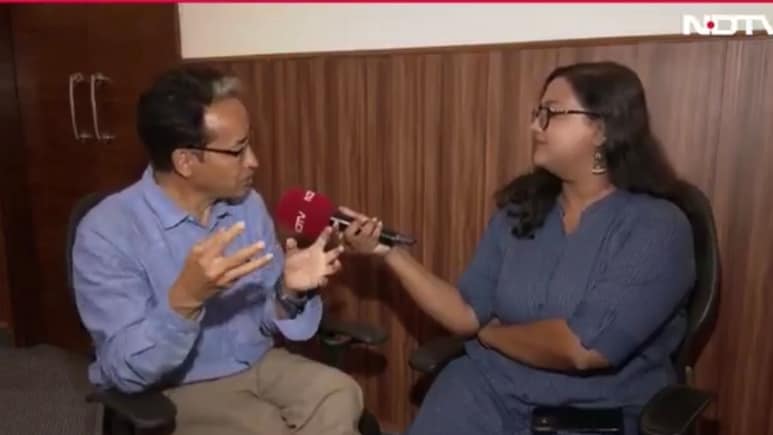
Sonam Wangchuk described the breakthrough in an exclusive conversation with NDTV as a "very different and positive stand" from the government's previous stance.
"Yesterday, we discussed Article 371 for an assembly of elected representatives for the whole of Ladakh, similar to a state assembly," Wangchuk said. "The understanding is that the only reason we cannot get statehood right now is this revenue shortfall. However, if we prove that we have, or will have in the coming years, the resources to meet the minimum operational costs, then they have no objection to granting statehood."
Under the proposed framework, the new UT-level body will wield legislative, executive, and financial powers. All bureaucrats, including the chief secretary will function under the elected executive head, proposed to be designated as chief minister. This is a dramatic departure from the current system where the lieutenant governor and bureaucracy controlled nearly 88 per cent of the budget.
The Ministry of Home Affairs has acknowledged that full statehood cannot be granted immediately due to Ladakh's limited revenue generation capacity, but has left the door open. Both sides will now work on operational details with legal experts in the coming weeks.
Despite facing detention under the National Security Act recently, Wangchuk's tone remained resolute yet hopeful. He emphasised that the agreement puts local people - who will live with the consequences of their decisions for generations - in charge, rather than transient administrators.
"A good LG could do wonders, but a bad one could sell out Ladakh's interests and leave after three years," he said. "Now, even our mistakes will be our own. People who have to live here for generations will think 10 times before making major decisions."
Wangchuk also linked the democratic victory to environmental protection, invoking a traditional Ladakhi.
"Ladakh has a beautiful saying, 'look for your precious grandchildren'. How will this decision affect future generations? Any decision in Ladakh also affects the rest of India. Your water and air come from our mountains. Delhi should support Ladakh in making sane and sustainable decisions."
For the people of Ladakh, this agreement represents a hard-won victory after years of protests, hunger strikes, and relentless advocacy. For Wangchuk, who has become the face of the movement, it is validation of a determined yet constructive approach.
"I have maintained my positive yet determined spirit throughout."
Track Latest News Live on NDTV.com and get news updates from India and around the world

