Just Joking? Naah. Muslim Comedians Are Doing Something Serious
Amid all sorts of 'jihads' invented by the right-wing to demonise Muslims, these Muslim comedians are waging a laugh riot of their own
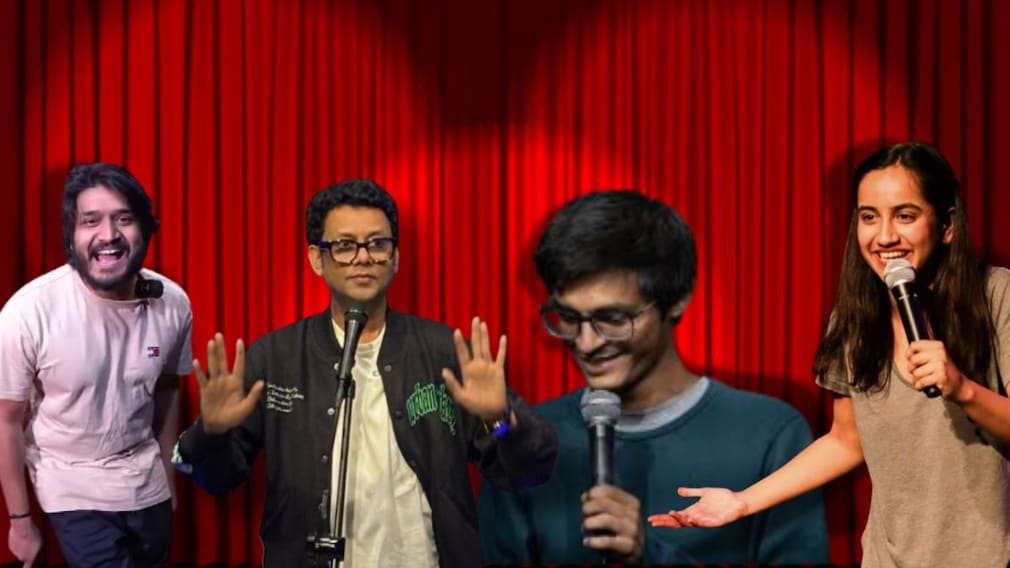
"A joke is a very serious thing".
Winston Churchill famously said. He viewed humour not as trivial, but as an effective tool to break tension, dismantle opponents, and deliver hard truths.
A few months ago, Nasif Akhtar was doing what he does best. Cracking jokes. Suddenly someone in audience interrupted and asked Akhtar to say 'Jai Shree Ram'. Always prompt with his responses, Akhtar without wasting a moment chanted 'Jai Shree Ram', 'Bharat Mata Ki Jai, 'Vande Mataram all in the same breath. The moment that could have turned ugly stayed pleasant and light, thanks to Akhtar's presence of mind. But also aware of his identity and the intention of the disruptor, he then asked the person: "Now you say Allahu Akbar". The person lost his voice; everybody had a good laugh and went home.
The incident is a reflection of how Muslim comics are rewriting the rules of the "bullying" game and turning the bigotry on its head. Akhtar, could have taken the trite route of taking offence and getting into a pointless argument. That would have served the disruptor's purpose, but with his taut repartee, Akhtar disarmed the "bigot" in that moment and also put him in a Muslim's shoes the very next when he asked him "Now, you say Allahu Akbar". After all, no one can offend a person who has decided to not take offence. Business of offence takes two to tango.
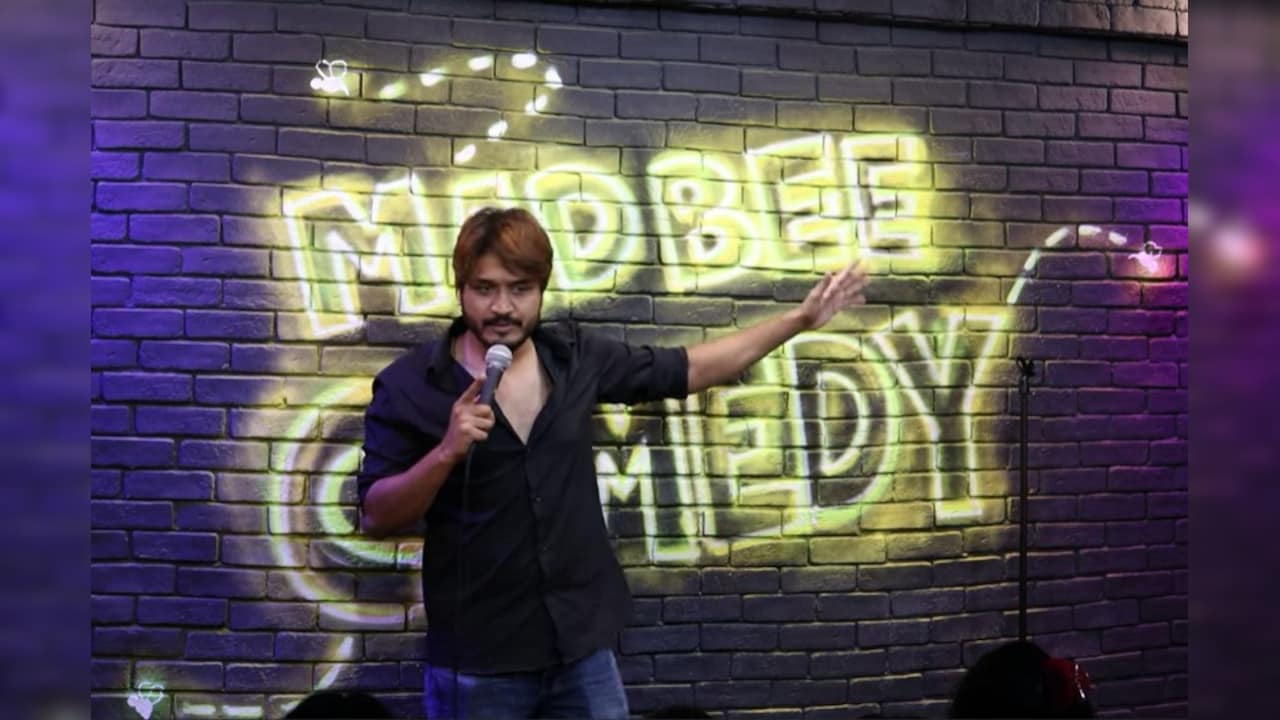
Nasif Akhtar used his wit to disarm the disruptor
Mohd Suhel, a young upcoming comedian, while working up the crowd at one of his shows, asked an audience member why he was carrying a big bag. "It has important papers," the man responded. Suhel asked him jokingly, "Do you carry important papers with you in a bag to public places?" The audience laughed. "But I am the Muslim in this room", Suhel carried on, evoking "Wow!" from his audience. The show carried on. Everyone had a laugh and went home.
Urooj Ashfaq is a stand-up comic from Mumbai. In one of her sets, she narrates her interaction with an Uber driver, who thinks all Muslims are untrustworthy and "chors". She peppers it with jokes and punches. The audience laughs.
Wit As Weapon
Muslim comedians in India are serving a slice of their everyday lived reality via jokes. These jokes don't appear in vacuum. They emerge from the hard realities, discrimination, targeting and othering that has become norm. These comics are holding up a mirror to the society, even if just to a few dozen people in dimly lit comedy clubs, in our urban centres.
They joke about their Muslim identity, the stereotyping, casual bigotry in our midst. They are owning up their identity, turning discrimination into their punch lines landing them right back at the society's face. They are taking bigotry by its non-existent funny bone and forcing it to laugh at itself. They are a creed that is not apologetic about being Muslim, refusing to be boxed in some jaded stereotypes. In their sets peppered with sex jokes, cultural satire, slight political sarcasm, jokes about their appearances, suddenly drops the "M" bomb. They make their identity a big part, if not the centrepiece, of the performance.
Amid all sorts of 'jihads' invented by the right-wing to demonise Muslims, these young Muslims are waging a laugh riot of their own.
But comedy today is no joke. These comedians, especially Muslims, tread on thin ice. One slip here or there can invite trouble. Comedian Munawar Faruqi had dozens of his shows cancelled and had to spend weeks in jail for a joke that some thought he would make.
Most of these comics come from middle class, humble backgrounds. There are families continuously telling them to not do anything that may lead to harm. Most censor themselves just to avoid getting beaten up or jailed. Suhel says he avoids making political jokes. "I try to stay in the middle. On religion, I do more jokes on Muslims. Even they offend some people from my community. But I make it a point that I don't disrespect the majority faith. That's a sure shot ticket to trouble."
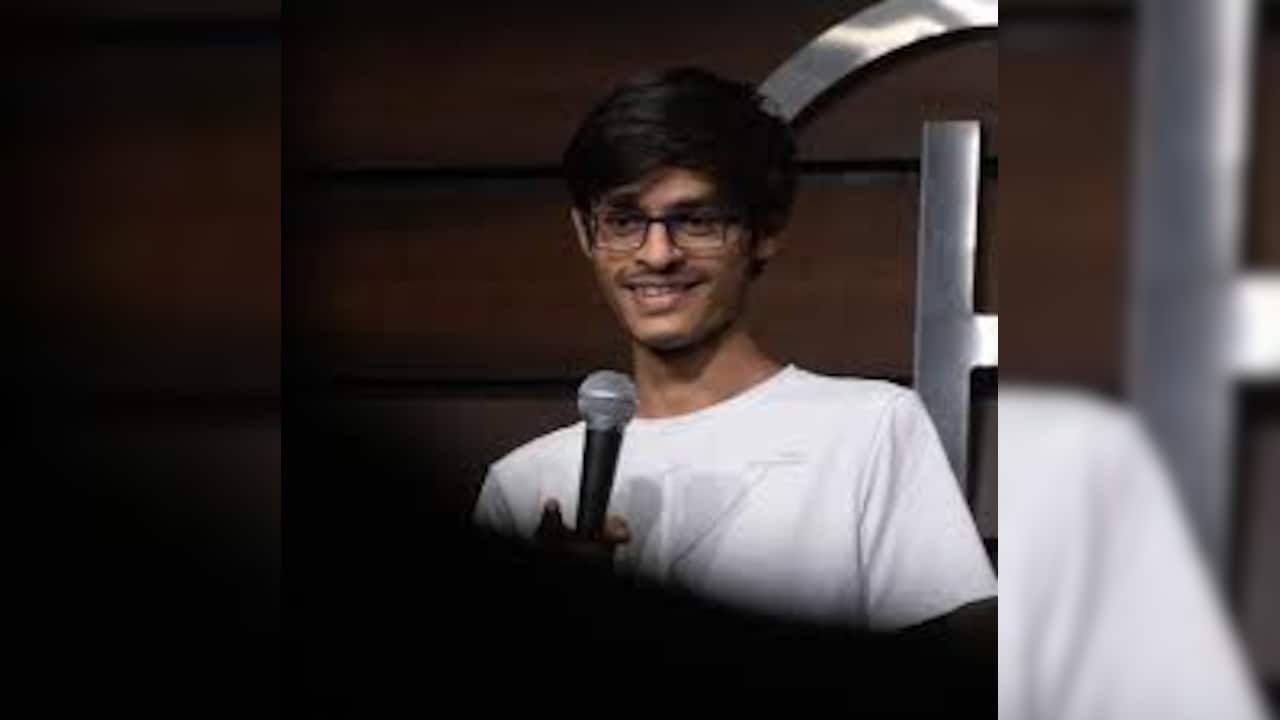
Suhel says he is very careful with what he posts on Social Media
The No-Go Areas
Mumbai-based comedian and creator Rehman Khan says religion has always been a no-go area for him. "We are too thin-skinned as a society when it comes to religion. And with each passing day, it's getting worse. Why invite trouble?" he asks. Same with politics. Rehman Khan tries to restrict his sets to satire over cultural practices, stereotypes around places, Muslim identity, food and culture. Some of his jokes don't land easy even with Muslims, who declare them as "insult" to faith. He tells them to "take a joke only as a joke".
Khan quotes legendary Urdu Satirist Mushtaq Ahmed Yusufi: "The people who can laugh at themselves can never be vanquished."
For Khan, who started with TV comedy shows, censorship was normal, but he acknowledges, "the new generation is more vocal, not apologetic and has the language and vocabulary to take on bigotry. Not with confrontation, but with creativity".
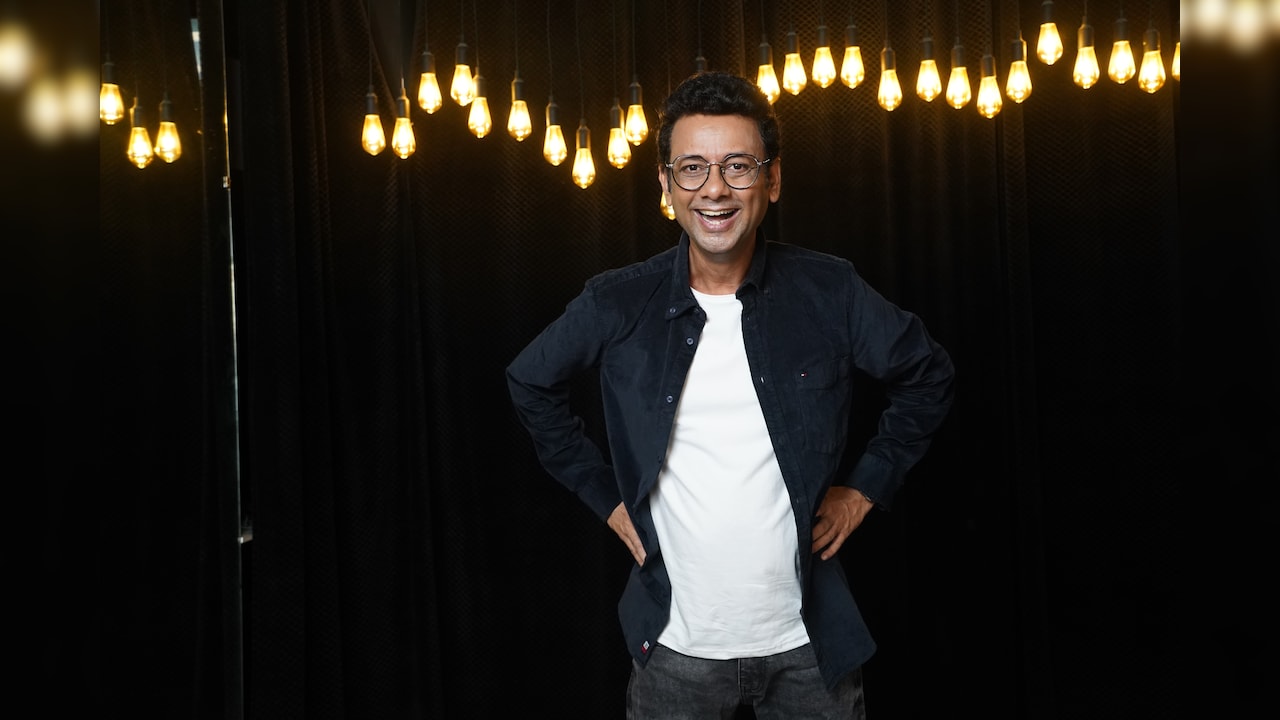
Rehman Khan says if you laugh it off, that's half the battle won
Turning Mirror On Community Too
These comedians are turning the mirror on to their own community too. Rehman Khan has entire sets on stereotypes around Kurla, a Muslim dominated suburb of Mumbai. He talks about the obsession with food, especially with biryani.
In his popular set 'Miyan Bhai Khana & Kurla', he delivers the punchline:
"They say Muslims are the most unemployed. Others claim Muslims are the most backward. Still others insist Muslims are the most uneducated. But judging by the sheer number of mushrooming eateries in Muslim areas, it seems that Muslims are simply the most hungry."
These comics are not giving a free pass to "issues" within their own community, calling them out as clearly as they raise the issues of discrimination etc. But all with a dollop of sarcasm, satire and laughter. Their audience too sees their lines as relatable. "Yes, this happens in our midst, in our homes".
Urooj Ashfaq, in her set 'Uber Driver and Grandmother', apart from exposing casual bigotry of her Uber driver, also calls out her nani, who she calls "objectionable human being" as she doesn't want her "to be friends with Hindus". May be both the Uber driver and nani sets are fictional, but they are driven by her lived reality. The jokes are a light-hearted reflection of the tragic, lived experiences. She is channelising her discomfort with both in a creative fashion, not usual chest beating.

Urooj's jokes emerge from her lived experiences both as a woman and a Muslim
Rehman Khan puts it perceptively when he says that the "mindset of victimhood is a trap" and creative expression and ability to laugh at a situation is the best way to deal with it. "If you laugh it off, that's half the battle one".
Who gets Offended
Comedians I spoke to had the same concern. Live shows are mostly not the issue. After all, who buys ticket to get offended? It's the social media clips that become fodder for those looking to create trouble. Suhel says, "I am very watchful of what I put on social media because a 30-second snippet from a 90-minute set can be taken out of context or in isolation and someone can run away with it calling it offensive".
Rehman Khan adds another perspective to the social media quandary. "You make jokes on both communities, but which one of those goes viral will dictate the trouble that will come your way".
In the vortex of reposts, share and comments, a performance turns into a political statement, and all hell breaks loose.
'Whisper Jokes' To LoL
In the Nazi Germany, 'whisper jokes' were a vital form of political resistance. Citizens used these quiet, secret jokes to mock authorities, voice dissent, and share laughs without risking the dire consequences of public protest. These helped people let off some steam and laugh even in trying times.
This also shows that humour has always remained the best anti-dote to hate, authoritarianism, discrimination and bigotry.
In times when jokes write themselves, these young Muslim men and women are delivering them with a swag and a punch. And they are landing at the right place. That's the best part. Muskuraiye aap democracy mein hain (smile, you live in a democracy).
-
Opinion | The Many Meanings Of A 'Banana Republic'

A Banana Republic was where institutions went to die, where narrative-building often became a government's most effective tool of governance.
-
Opinion | The Chinese Are Using LinkedIn 'Jobs' To Spy On Countries. Is India Prepared?
A recent report throws light on how Chinese operatives frequently disguise themselves as representatives of private consultancies, research institutions, or human resource firms, posting seemingly legitimate job opportunities for foreign policy, defence, and strategic affairs experts.
-
Opinion | Why Trump's Attention Is Quickly Becoming Pak's Biggest Headache
Pakistan's real challenge may not be winning Trump's attention - that it has certainly been successful at. It may be surviving the consequences of that.
-
Opinion | Ignored By Rahul, Haunted By Pilot: Inside Ashok Gehlot's Grand Meltdown
Many in the grand old party are wondering why Gehlot, who stuck with the Congress all through Indira, Sanjay, Rajiv, Narasimha Rao, Sitaram Kesri, Sonia and Rahul years, would go astray at the fag end of his career. "Ashok Gehlot ko gussa kyun aata hai?" they ask.
-
Opinion | How A Photograph in Delhi Says Something Important About Trump's America
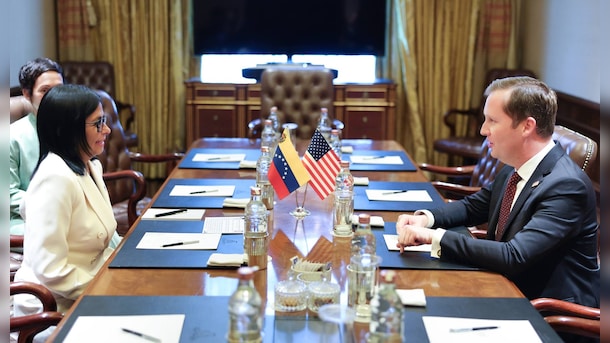
During her visit to New Delhi this week, Venezuela's Delcy Rodrguez, met US Ambassador Sergio Gor. Had the meeting taken place in Washington or Caracas, it would have attracted little attention. In Delhi, however, it carried a different significance.
-
Opinion | The Kashmir Nobody Mentions - And How Pakistan Is Quietly Profiting From That
Recent elections in Gilgit Baltistan - and the protest note India had to issue against them and a slew of fake news reports - lay bare a concerning reality.
-
As World Focuses On AI, China Holds The Key In Critical Minerals Race
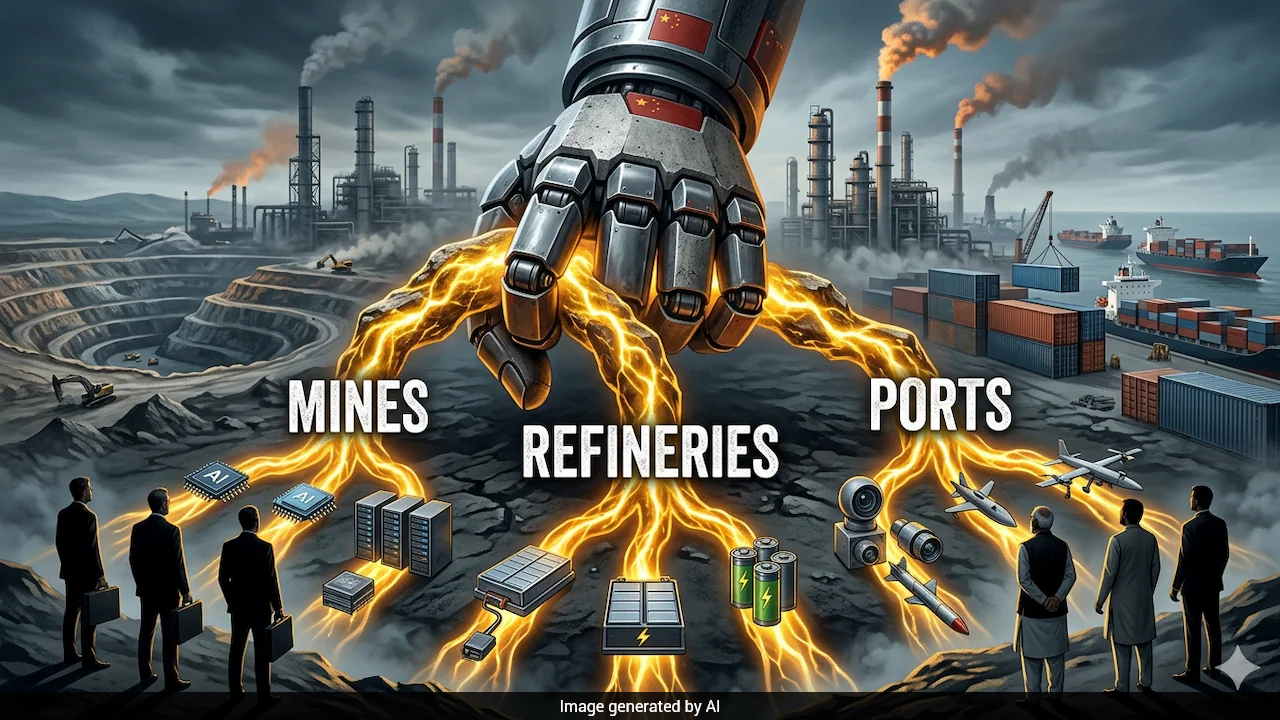
From lithium to rare earths, Beijing controls the mines, refineries and ports that power AI, EVs and defense systems and India's import dependence makes it especially vulnerable.
-
Opinion | Rs 1 Lakh Crore Gone, And Counting: Worse May Be Coming For India's Oil Shock
Cuts in central excise on petrol and diesel cost the Centre roughly $1.18 billion a month in revenue. And the Indian Rupee is now Asia's worst-performing currency.
-
Meta Cut 8,000 Jobs. She Kept Hers, But Lost Her Team And Title
In April, Meta employees were told that 8,000 or 10 per cent of the workforce would be laid off in May as the company readied itself for the era of artificial intelligence. Thousands more would be reassigned to AI initiatives.
-
One In Six Samples Failed Tests In FY26: Are Indians Losing Faith In Food?
Counterfeit and substandard products not only create health risks but also weaken consumer confidence and impose economic costs on the country.