- Racing heart and chest pain can signal panic or heart attack symptoms that look alike
- Heart attack pain moves from chest to arm, jaw, and worsens with physical activity
- Panic attacks cause tingling, dizziness, and usually last less than 30 minutes
When a person suddenly experiences a racing heart, a tight chest, and heavy sweating, telling the difference between a mental health crisis and a medical emergency is critical. Spotting a panic attack and a heart attack quickly can save a life. Because the symptoms look almost identical, learning how to tell the difference between anxiety and a heart attack is highly important. Research published in the Psychology Today journal shows that millions of people visit emergency rooms every year for chest pain, but many of these cases are actually caused by severe anxiety. Knowing when to go to the emergency room for chest discomfort depends on looking at a few simple but vital clues.
Why A Heart Attack And Panic Attack Feel Similar
The body reacts to severe stress and physical danger in very similar ways. When a person faces severe anxiety vs heart conditions, the body enters a "fight-or-flight" mode. A sudden rush of adrenaline causes a fast heartbeat, short breath, and heavy chest pressure.
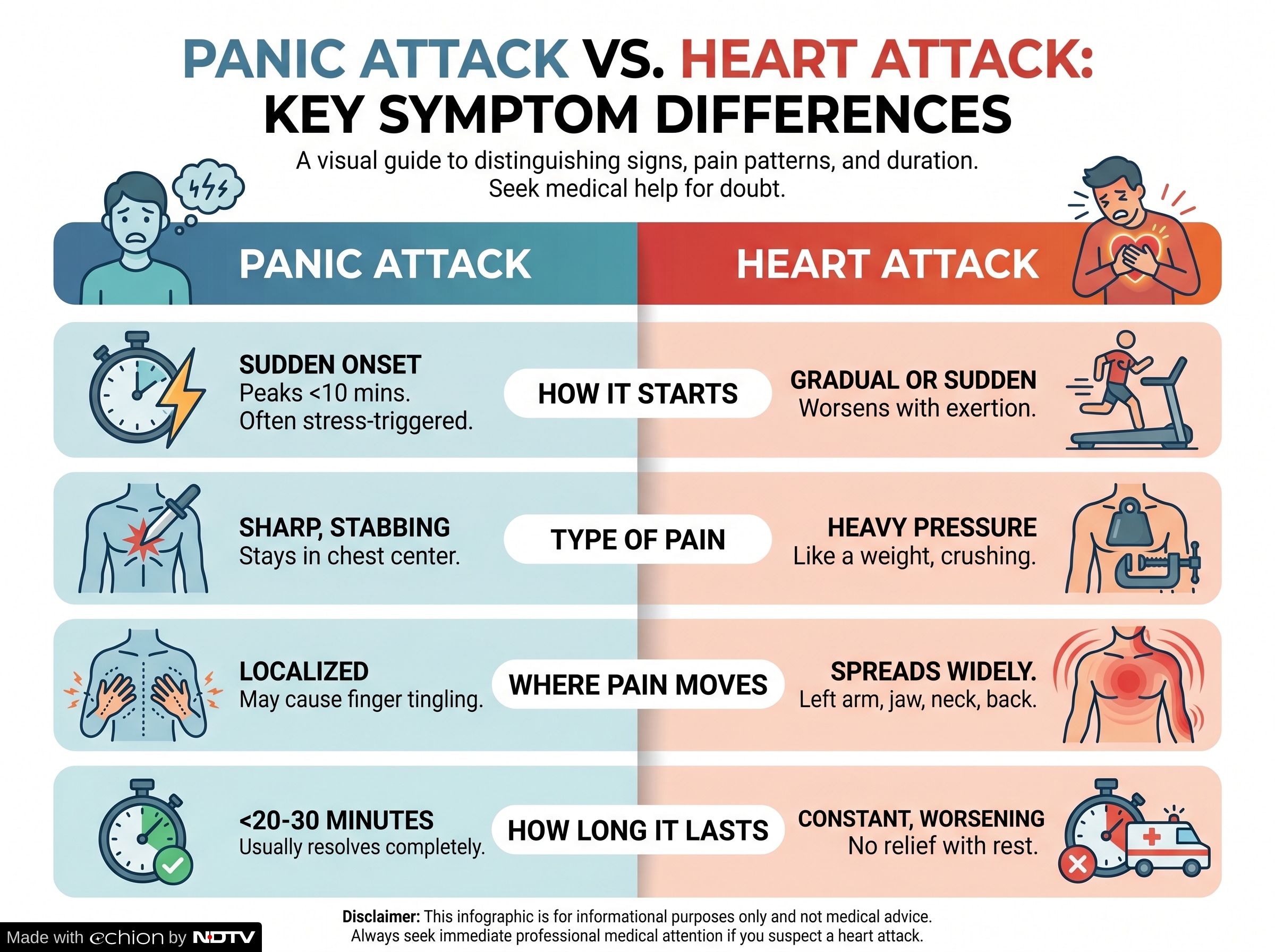
These exact feelings match the main signs of a heart attack. A heart attack happens when a blood vessel to the heart gets blocked, cutting off its oxygen supply. This close mix-up between panic attack symptoms and real heart attack signs is the reason why so many people rush to the hospital in fear. Medical data show clear differences in how the pain starts, where it feels, and how long it lasts:
Also Read: What Happens When Blood Volume Drops? Symptoms You Shouldn't Ignore
The Red Flags: Spotting True Heart Attack Signs
While a bad anxiety episode feels terrifying, it does not damage the heart muscle. A real heart issue, however, can quickly turn into a deadly cardiac arrest emergency if it is ignored.
To figure out if a symptom is left arm pain, panic attack, or heart attack, look for these specific physical signs:
- Moving Pain: Heart attack pain rarely stays in just one spot. It usually starts behind the breastbone and moves into the left shoulder, left arm, jaw, or upper back.
- Worse with Movement: If chest pain gets worse while walking, climbing stairs, or lifting things, it is highly likely a heart issue. Panic attacks, on the other hand, often happen when a person is resting or even sleeping.
- Other Body Signs: Heart attacks often cause sudden nausea, vomiting, cold sweats, and extreme, unexplained tiredness.
Medical studies published by the Women Heart Association shows that women are often misdiagnosed with anxiety when they are actually having a heart attack. This is because women often experience different signs of a heart attack, like jaw pain, shortness of breath, and back pressure, instead of classic chest pain.
Identifying Panic Attack Symptoms
When the problem is caused by severe anxiety vs heart conditions, the event is a temporary reaction from the nervous system.
The following signs help identify an anxiety-based crisis:
- Tingling and Dizziness: Breathing too fast (hyperventilation) lowers carbon dioxide levels in the blood. This causes dizziness and a tingling feeling around the mouth and fingers.
- The 30-Minute Rule: A panic attack has a natural time limit. The body cannot keep up a massive adrenaline rush forever, so panic attack symptoms usually fade away within half an hour.
- Stress Triggers: While some attacks feel sudden, they are usually linked to long-term worry, emotional burnout, or a stressful life event.
When To Call For Emergency Medical Help
When trying to answer if it is chest tightness from stress or cardiovascular issues, doctors use a strict rule: always treat chest pain as a heart issue until a hospital test proves otherwise.
If: Chest pain is crushing, spreads to the arm or jaw, gets worse when moving, or lasts longer than 15 minutes.
Then: Stop moving, do not drive, and call for an emergency ambulance immediately.
If a doctor has already confirmed that a person suffers from panic episodes, using slow, deep breathing is a proven way to stop a panic attack.
However, if the person has risk factors like high blood pressure, high cholesterol, diabetes, older age, or a family history of heart disease, any sudden chest pain needs a doctor right away. Quick action during a cardiac arrest emergency saves heart muscle and saves lives.
Disclaimer: This content including advice provides generic information only. It is in no way a substitute for a qualified medical opinion. Always consult a specialist or your own doctor for more information. NDTV does not claim responsibility for this information.